
Politics · taz · · 2h
Stumbling blocks in Saxony: “This is not about remembering, but about forgetting”
Deutsch (original) · Auto-translated to English
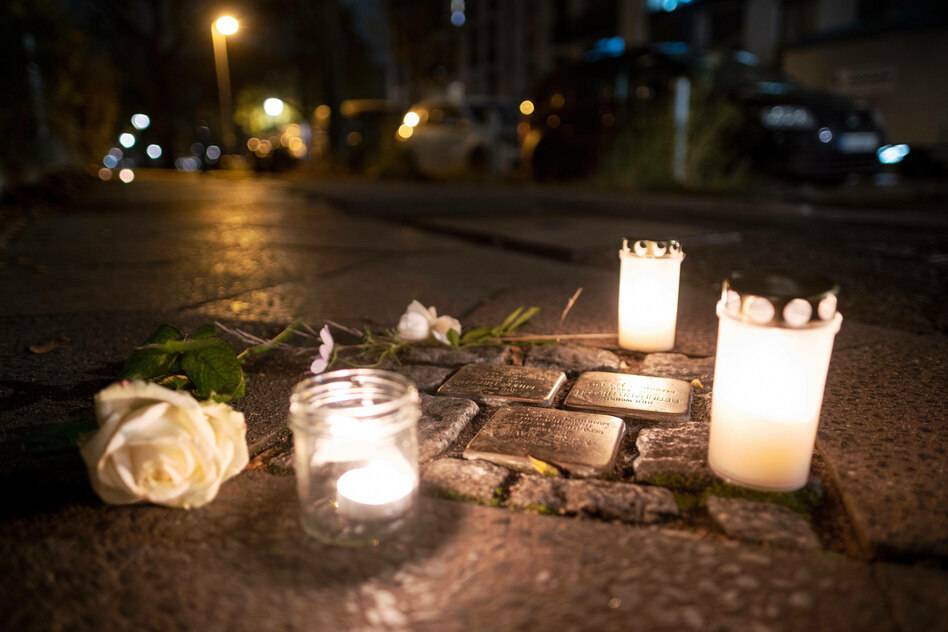
The Alternative Culture and Education Center (Akubiz) in Heidenau would like to commemorate Fritz and Martha Goldstein with two brass plaques in the sidewalk, two “stumbling blocks”. At the beginning of the Nazi dictatorship, the couple lived in the Saxon city, a few kilometers from Dresden. They were arrested, expropriated and deported for anti-Semitic reasons. But the two stumbling blocks may never be relocated in Heidenau.
On Thursday, the city council will discuss a motion that would like to prevent this form of commemoration. The local Oberelbe citizens' initiative for more democracy (BOD) explains that people ignore the names of the Nazi victims. This is not “dignified remembering”. The city should reject applications for stumbling blocks in the future. Instead, a “memorial area” should be created in the northern cemetery, dedicated to the victims of “war, terror, dictators, expulsion and especially National Socialism in Heidenau”. There is already a memorial stone there for the victims of National Socialism.
In addition to the two BOD city councilors, two members of the CDU parliamentary group, including the parliamentary group leader Cornelia Schmiedel, and five AfD parliamentary group members have signed. When asked by the taz, Mayor Conny Oertel (independent) also stated that she supported the application. Your administration, however, recommends a rejection; stumbling blocks should be decided on a case-by-case basis.
The State Association of Jewish Communities in Saxony and the Association of Those Persecuted by the Nazi Regime - Association of German Antifascists (VVN-BdA) also criticize: With a memorial area in the cemetery, the memory of the crimes of the Nazi era and the lives of those affected disappear from everyday life.
There are now more than 116,000 stumbling blocks in more than 30 countries, mostly in front of the victims' last voluntarily chosen place of residence. The project goes back to Gunter Demnig. He himself laid the five stumbling blocks that currently exist in Heidenau. The two new ones, which are intended to commemorate Fritz and Martha Goldstein, were applied for by the Akubiz in February 2025. Anne Nietschke from the association's board says she doesn't know how far her application is being processed. “We have asked several times but have not received any response so far.”
At the request of the taz, Mayor Oertel explains that the stumbling blocks for the Goldsteins will be dealt with as the city council decides this Thursday. This means that if the application goes through, the stumbling blocks will be rejected without consideration. Oertel itself is in favor of a central memorial site. Stumbling blocks are sometimes covered by leaves, dirt or snow, and people pass over them “perhaps thoughtlessly”.
The chairwoman of the Saxony State Association of Jewish Communities, Ekaterina Kulakova, sees it differently. “People notice stumbling blocks every day,” she says when asked by taz. The Jewish communities have not yet been consulted about the plan for a central memorial site in Heidenau. But, says Kulakova, those interested only go to one of these twice a year. “This is not about remembering, but about forgetting.”
When the Nazis ruled Germany from 1933, it was difficult for Fritz Goldstein to find work as a Jew. According to Akubiz's research, the couple and their child were arrested in 1938, expropriated and deported to Poland. They survived the war, but only Fritz Goldstein returned to Heidenau. He was involved, among other things, with the VVN-BdA until he died in 1950.
Kerstin Köditz, current state spokeswoman for the VVN-BdA in Saxony, believes that the stumbling blocks are about “that we encounter the crimes of the Nazi era in everyday life.” The victims were neighbors in the city, not outside. The idea of the stumbling blocks is to bring back to mind the people who were arrested, deported or murdered. A memorial in the cemetery “doesn’t represent this closeness.”
Köditz also thinks that a memorial area for “the victims of war, terror, dictators, expulsion and especially National Socialism in Heidenau” is so broad that concrete connections fade away. “How am I going to deal with certain aspects of crime if I lump everything together?” Depending on the context of the victims and the areas of phenomena, different concepts are needed. “It is different whether I talk about terrorist attacks, whether I talk about expulsion or the industrial extermination of Jews.”
But Köditz still has something bothering him about the proposal. “When I think about the constellation of supporters for this proposal, it sends shivers down my spine.”
For years, the AfD has been openly historical revisionist across the country and trying to reinterpret the culture of remembrance. It was only on Monday that chairwoman Alice Weidel repeated the lie at the federal press conference that the Nazi dictator Adolf Hitler was actually a “left-wing extremist”.
Even before the BOD application, the AfD in Heidenau had formulated a partially identical application last December. Heidenau should avoid stumbling blocks. It was signed by AfD parliamentary group leader Daniel Barthel. About 20 years ago he was active in neo-Nazi circles around the “Skinhead Saxon Switzerland” comradeship. Today he says he wants a dignified memorial. In January, on the day of remembrance of the victims of National Socialism, he placed a white rose at the North Cemetery.
But what happened to the AfD's motion against the stumbling blocks? Barthel says that the CDU and BOD factions have asked the AfD to withdraw the application so that they can then come to a joint agreement on how to proceed. The present application from the BOD citizens' initiative emerged from joint discussions.
The CDU parliamentary group in Heidenau does not answer whether this is true. But she speaks of an “intergroup motion”. The CDU city councilors have already discussed this. “It is important to us that the remembrance and history continue to be treated, honored and carried forward in a variety of ways in the future,” said the taz when asked. How the individual CDU city councilors ultimately decide is up to them. The application only puts commemoration “up for debate in the form of stumbling blocks”.
There will hardly be much debate if the BOD, CDU and AfD members are successful with their application. The first thing that would probably be rejected would be the laying of the two stumbling blocks, which were intended to commemorate Martha and Fritz Goldstein.
Read the full story at the source
Source: taz