
Politics · taz · · 1h
AfD visit to Austria: tutoring in the seizure of power
Deutsch (original) · Auto-translated to English
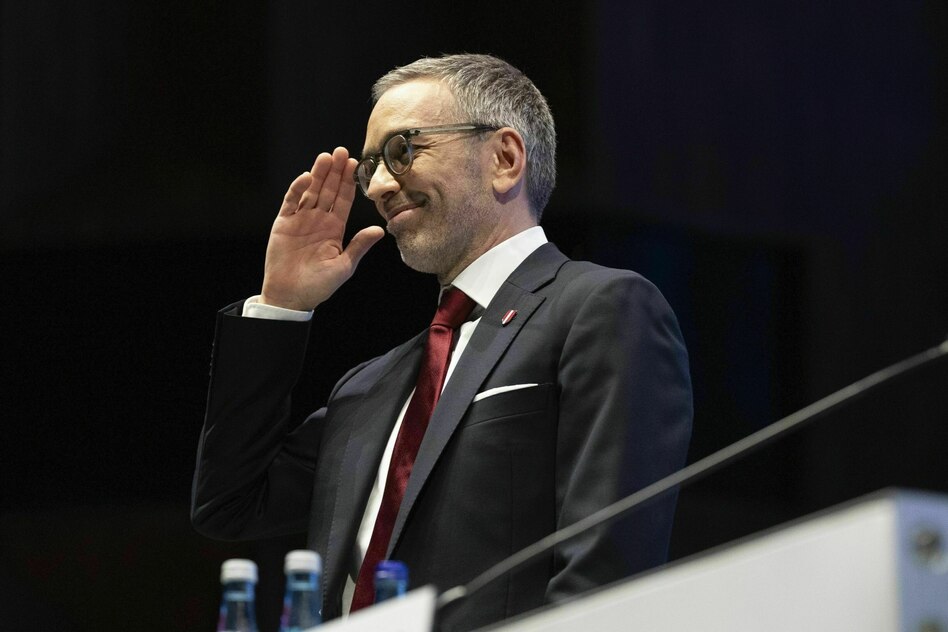
Government tutoring in Austria's capital Vienna: On Tuesday, a six-member delegation from the AfD parliamentary group in Saxony-Anhalt visited high-ranking colleagues from the FPÖ. AfD state party leader Ulrich Siegmund and FPÖ leader Herbert Kickl also met. The content of the meeting was not disclosed and there was no press conference.
The AfD parliamentary group in Saxony-Anhalt wrote on social media that they exchanged ideas “in order to gather valuable experience for the upcoming government work.” What connects the two parties? “The love for our homeland and the conviction that politics must once again be made consistently for our own citizens,” said Kickl. Everyone agrees that a “real system change” is needed. The shared exchange was “really good and appreciative”.
Recently it sounded a little different. In the ORF summer talk on the day after the election in Saxony-Anhalt, Kickl irritably rejected the term “sister party”: Anyone who talks about it should “tell him who the common parents are.” There are similarities, but also “many differences”. Specifically, he only mentioned nuclear power, which plays no role in Austria anyway. However, there are overlaps in asylum, immigration and energy policy. In the same broadcast, he celebrated the AfD victory as a “democratic great hour”.
Siegmund played down the fact that the FPÖ had previously distanced itself to some extent in the Austrian tabloid channel oe24. The CDU and CSU are a sisterhood, but not the FPÖ and AfD, which come from different countries with different cultures. Siegmund: “We support each other because we have a common goal.” The FPÖ argued in a very similar way: there is no close relationship like that of the CDU/CSU. The contact between the two parties is still friendly.
In terms of content, the two are nevertheless close to one another. They rely on a tough asylum and immigration policy, have adopted the right-wing extremist term “remigration” in their election programs and reject ambitious climate policy. Differences can be seen in the details: the AfD wants to get out of the euro and go back to nuclear power, the FPÖ doesn't. They sit in different factions in the EU Parliament.
Strategically, the FPÖ, founded in 1956, is ahead of the AfD. After decades full of ups and downs, the FPÖ has long since become the third major party. In the 2024 National Council election, it became the strongest party with almost 29 percent of the vote. She also governs in five federal states, and in Styria she even provides the governor. There was never a firewall in Austria anyway.
It is precisely this know-how that the AfD is looking for. It is not enough to be the election winner, you also need “the technical skills,” said co-parliamentary group leader Oliver Kirchner. They want to learn which mistakes to avoid, but they don't want to copy the FPÖ, Siegmund told oe24. He “definitely” described Kickl as his political role model.
For both of them, the solidarity comes in handy: With Hungary's former Prime Minister Viktor Orbán, they lost their most successful ally in Europe after his election defeat. The AfD is now delivering new success stories - at least until the hoped-for FPÖ election successes in Upper Austria and Tyrol in a year.
The meeting benefits both: the FPÖ can present itself as a pioneer and at the same time ride the wave of success of the AfD. The AfD adorns itself with a party that has long been established and co-governs. There is no need for joint projects or content. Photos of beaming party leaders and a few short lines on social media are enough.
Read the full story at the source
Source: taz