
Germany · taz · · 2h
Quotas in public broadcasting: Subservient to the viewer
Deutsch (original) · Auto-translated to English
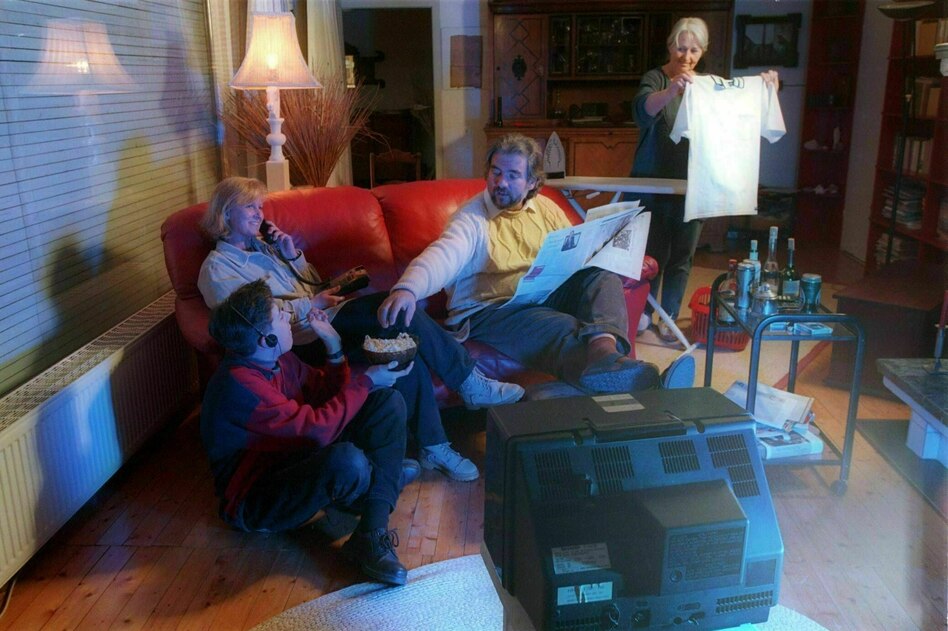
The editorial teams of the public broadcaster (ÖRR) have been fearful for a long time. Since the advent of private broadcasters, their focus has been on audience ratings. The viewer controls the program using his remote control.
When I, as a screenwriter and editor, think about stories, the viewer is always there. It is important to obey him ahead of time.
Editors usually quote him when manslaughter arguments are needed. Because if the viewer doesn't understand or appreciate something, then it has to be completely different or, better yet, completely removed. Or it needs to be explained more precisely or presented in a more pleasant way. In any case, in such a way that the viewer doesn't become uncomfortable on his couch, so that he doesn't have the idea to switch on, switch off or not switch on at all.
If you think that this powerful spectator is you, I'm sorry to disappoint you. Most of you will not have the device at home that AGF Videoforschung GmbH distributes to panel households to measure what the approximately 11,000 test subjects watch. Streaming behavior is now also measured, although linear broadcasting remains the basis for the quota and is on the table in the editorial offices every day.
If a program falls short of expectations, it is thrown out. Often immediately. If the quota is correct, the formats are continued. Some forever. Or you can do the same thing in green. Which explains why there are more and more crime dramas on the ÖRR. The viewer now has a second screen in his hand. He has difficulty following complex stories because he's swiping on his cell phone at the same time. So you have to keep the story simple and summarize it again and again. To be honest: I preferred to pay attention to the viewer who was ironing in front of my films.
But the most difficult viewer is the one who is outraged by the ÖRR. Because the broadcasters fear a shitstorm even more than a bad rating. There's nothing mainstream behind it, but that doesn't stop broadcasters from fearing that certain content could trigger viewers. Then the viewer uses their cell phone to write nasty comments, and that should be avoided at all costs.
Because of his fatigue with the crisis, the viewer doesn't want anything political, according to the ÖRR editorial team. If it absolutely has to be done, please do it in such a way that it doesn't polarize, doesn't shake up the viewer too much or if it does, then only through crime suspense. Erotic or voyeuristic titillation as well as the feeling of attending an event are also welcome. In the end everything has to work out well. So that the viewer can sleep well afterwards. That is central. Because when you sleep, the viewer wants the same thing as when watching TV: to forget the dreary everyday life, including all the worries and inconveniences.
As you can see, writing for television is a complicated matter. Especially when you create entertainment on current topics, as my small survey among colleagues in the German Script Association (DDV) shows. In crime fiction, stories from the present and even politics were still possible. But the playing field is also getting smaller in this genre. Instead of talking about violence that arises from social conflicts, we prefer villains who have as little to do with us as possible. If we put them behind bars, the world will be right again.
When I come up with more complex stories, the producers usually just smile wearily. “I can’t offer the broadcasters something like that right now.” I can't blame them. Since the ÖRR massively cut the budget for the fictional program, the market has never been more competitive. Convincing people here with material that doesn't promise complete escapism is - if at all - only possible with a lot of effort and at great risk.
However, many producers don't want to afford both, their job depends too much on the next film and the audience's favor. Bad ratings and shitstorms can also have unpleasant consequences for editors, but they always have that for us creatives.
So it's no surprise that I, as a creative ego group, have struggled to invent stories that are as harmless as possible and suitable for ratings. So far things have been going rather poorly. Not only do I hardly have any ideas, I also can't think of an argument why 1.5 million euros of public money should be spent on this. That's at least how much a primetime film costs.
However, the following thought bothers me even more: What if the viewer who just doesn't want to see anything political, dark or irritating and who I and my colleagues are so diligently following along with is perhaps an AfD supporter, conspiracy theorist or other populist?
Reasons for rejecting proposals or ready-to-shoot projects indicate this to us. Just like how scared the ÖRR is of this viewer. It's so strong that you don't even want to think about how you could entice him to go into a foreign world for a while and imagine yourself in characters who live, act and think differently.
Too bad. Because that is what defines the quality and strength of fictional stories. Especially now, when worlds are drifting further and further apart, television films could provide a very low-threshold and approachable look beyond the bubble into the diversity of our society. The viewer could come to surprising conclusions such as: They are people too and not that different from me! That would ensure understanding and empathy and perhaps even help to overcome some gaps. And thus contribute to social cohesion. The latter is also part of the ÖRR's program mandate. But he's long since lost sight of it because of all his quota fixation.
Yes, yes, I know: the ÖRR's anxious maneuvering has a serious reason. The roar of those calling for the ÖRR to be abolished is getting louder and louder. With the success of the AfD in Saxony-Anhalt, the withdrawal of a federal state from the state media treaty has become threateningly close. Yes, even our Minister of State for Culture is thinking out loud about massively downsizing the ÖRR.
But whether it is wise to engage in auto-censorship out of fear of those who want to get rid of you is more than doubtful. To clarify: Censorship in the sense of political influence is prohibited in the ÖRR and does not take place, even if some politicians would like it to be different.
Fixing quotas is also not very smart from a professional perspective: quota successes cannot be planned on the drawing board. No matter how hard you try, you can tailor products to target groups using the media user typology of the market and social research institute GIM. It's also difficult to write with a pair of scissors in your head, especially when a whole crowd is snipping along - a script passes through several hands on a broadcaster. You can't make films that you're still thinking about a week after they've been broadcast this way. They are made elsewhere. Which means that the ÖRR will be digging its own grave in the long run. Because at some point, even those who still value it and consider it necessary will neither want to use it nor finance it.
But back to the question: What does the ÖRR's quota fixation mean in times when the viewer harbors authoritarian thoughts? As storytellers for the ÖRR, don’t we also have a responsibility that goes beyond our mere survival? I think: yes. Which is why now, as I banish the many stories that the present throws at me every day into the drawer, I feel guilty. Yes, given the current political situation, I feel guilty.
The American historian Timothy Snyder would probably say: You don't just feel that way, you are one. Just like everyone who submits to a viewer who only tolerates what he likes and threatens to destroy everything he dislikes. According to Snyder, our democratic societies are no better than those that gave rise to the dictatorships of the 20th century. Unlike in the past, however, today we have the opportunity to learn from historical experiences in order to counter authoritarian forces and protect our democracy, and this includes the ÖRR.
Timothy Snyder compiled the 20 most important lessons from history in his book “On Tyranny.” The first is: “Do not preempt obedience.”
Read the full story at the source
Source: taz