
World · taz · · 2h
“Aesthetics of Resistance” in Stockholm: A Bible of Left Aesthetics for the Museum
Deutsch (original) · Auto-translated to English
Can graffiti disfigure a person to make them recognizable? Anyone walking through Stockholm these days must be taken aback when they see the election posters. Because the upper lip in the portrait of the smiling Ulf Kristersson is occasionally adorned with a black Hitler beard. No wonder: in 2018, the conservative Prime Minister from the Moderaterna party promised never to work with the Sweden Democrats, which were founded by Nazis. Four years later, he allowed his government to be tolerated by the right-wing populists. Before the parliamentary elections on September 13th, he even offered them ministerial positions.
It has nothing to do with the current Swedish election campaign that the private Bonniers art gallery in Stockholm has just opened an exhibition under the title of Peter Weiss’ monumental main work “The Aesthetics of Resistance” from 1975. But the fear of the global renaissance of fascism, which is also rampant in Sweden, is already a motive behind the attempt to adapt this bible of left-wing aesthetics for the museum. Finally, the novel unfurls a magnificent panorama of the anti-fascist struggles and debates from 1937 to 1945.
Weiss's connection to Bonnier began early. The second volume, “The Defeated,” which gives the show its title, in which Weiss, who emigrated to Sweden in 1939, describes his experiences as a war reporter in destroyed Berlin in 1947, was published a year later by the publishing house that today owns the Swedish daily newspaper Dagens Nyheter, the German publishers Ullstein, Carlsen and Piper and an art gallery.
“The Defeated: The Aesthetics of Resistance 2026”. Bonniers Kunsthalle, Stockholm, until November 8th. Catalog/Reader (Bokförlaget Faethon): 12 euros
Essentially, “aesthetics” is an imaginary museum, just as its protagonists constantly interpret and question the great works of art in world history, from the Laocoon group to Albrecht Dürer to George Grosz. Fortunately, the exhibition curated by the Stockholm art critic Kim West, the curator François Piron from the Paris Palais de Tokyo and Joanna Nordin, the director of Bonniers Kunsthalle, does not work like an open book.
Even if the three provide a lot of archive material from first editions of the Weiss books to Harun Farocki's famous television conversation with Weiss in his Stockholm work apartment in 1979. Rather, she manages to trace the paradigmatic path of Peter Weiss and his wife Gunilla Palmstierna-Weiss from artists who worked in seclusion in the ivory tower at the beginning of their careers to politically committed artists.
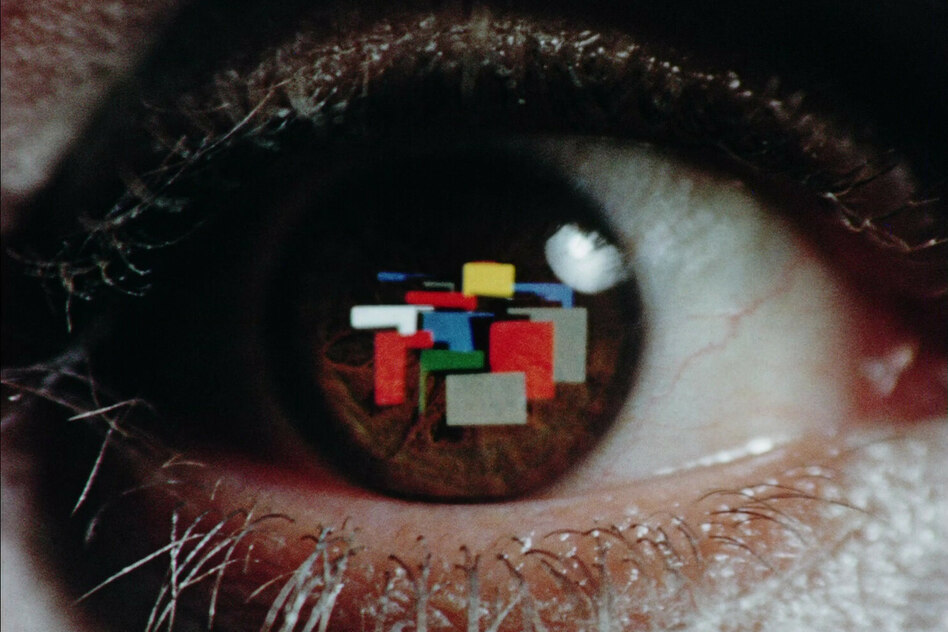
It begins in a cave-like exhibition room with the early works: collages, Weiss' experimental film “Fata Morgana” from 1959 and paintings. In the second room, bright as day and illuminated, as it were, by the light of the Enlightenment, they display pictures of Weiss' major projects such as “Viet Nam Discourse” or “The Investigation”. In the legendary oratorio from 1965 he dealt with the Frankfurt Auschwitz trial. At this point the show becomes an insightful journey through time into the history of documentary theater, which today is almost only associated with names like Milo Rau or Rimini Protocol.
The curators briefly connect these chapters with contemporary art. Like the work of the artist couple Hamedine Kane and Valerie Osouf, which is inspired by the famous Géricault painting “The Raft of the Medusa” mentioned in the “Aesthetics of Resistance”. They have drawn a huge sail spiraling through the room, on which images of liberation movements and moments from world history are sewn together.
Despite the exhibition organizers' blunt question about the "vision of resistance against fascism" in a situation "in which a new extreme right and new fascisms are gaining strength", "The Defeated/Aesthetics of Resistance" is not an activist exhibition. In addition, most of the 43 works of art appear too abstract.
Christoffer Paues’ six designs of anti-fascist banners with motifs from the “aesthetics of resistance”, for example. Kateryna Lysovenko's oil painting “Madness of Fascism,” in which a little boy holds a skull in his hand. Or the two sculptural fragments placed one on top of the other with which Ali Cherri breaks the heroism of this classic representation of power.
Zbyněk Baladrán wants to go beyond the aesthetically contemplative. For his work “Oracles,” the Czech artist painted 50 canvases leaning against the wall in earth colors using a divination method called “geomancy” to predict the locations of the next bombing of Gaza. In Peter Weiss documentary style, he flanked them with diagrams and logos of the weapons suppliers to Israel.
Placed in the anti-fascist context of the exhibition, Baladrán's work runs the risk of being read as equating Israel's war policy with fascism. But the artist himself pursues a different goal: namely, to imagine the impending horror in order to prevent it. As a result, the curators give the show a strange imbalance: a work on criticism of Israel is prominently placed, while those on rising right-wing populism, the actual opponent, are missing.
Despite all this, “The Defeated: Aesthetics of Resistance” is an unusual exhibition project worth seeing. Not only because the show once again raises the eternal question of political art, for which Weiss's “aesthetics” serves as a general reference, but because it seeks to define the currently much-invoked anti-fascism from the reflexive side.
Weiss' novel is an example of anti-fascist self-education with the help of art. Seen in this way, progressive cultural policy that makes this resource available to as many people as possible and protects its institutions would be an indispensable part of practical anti-fascism. For curator West, Weiss’ work demonstrates the “deep connection between critical, experimental and artistic creation and political freedom.” With the rise of right-wing populists, this connection, which is essential to democracy, is being severed.
Read the full story at the source →
Source: taz