
World · Jacobin · · 1h
The Beatles Belong to Us
English (original) · Read in Deutsch ⇄
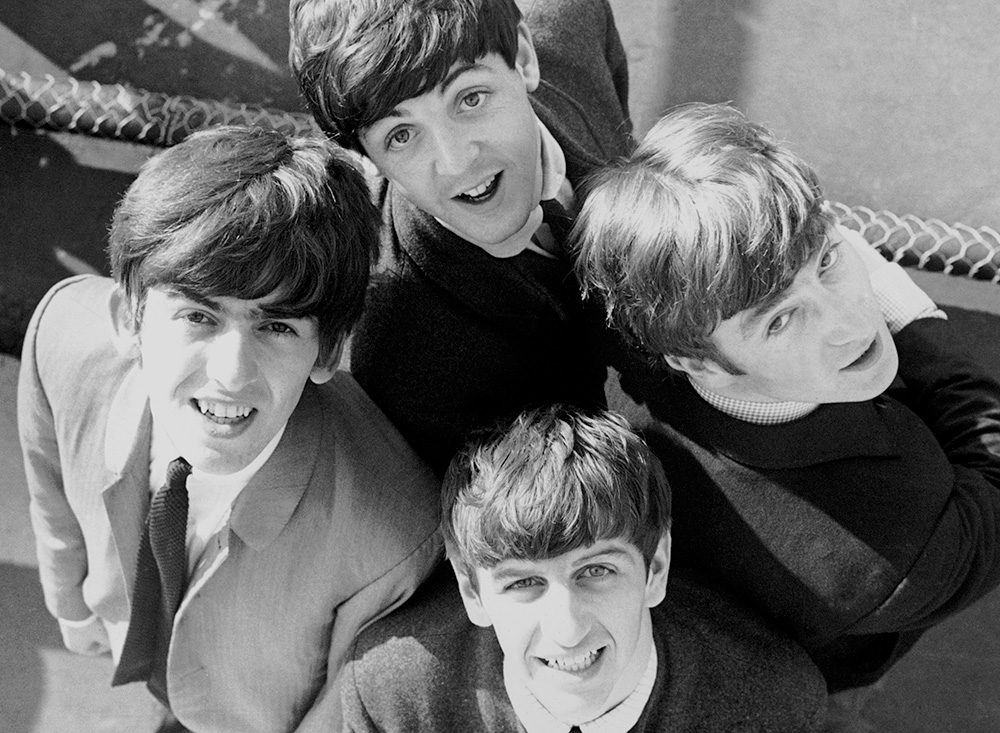
As we enter the late 2020s, the legacy of the Beatles — history’s biggest band, by any measure — is facing a final reckoning. Paul McCartney and Ringo Starr, the group’s last surviving members, are now eighty-four and eighty-six, respectively. This should remind us that what might be called the “Beatles generation” is reaching the end of its natural lifespan, its icons departing the stage to become musty archival heritage. All things, as the late George Harrison once acknowledged, must pass.
Partly as a result, the second half of the decade looks set to be a heyday of fabology (that is, critical appraisal of the Fab Four). But many of the retrospectives, gratingly, will seek to claim the Beatles for the cause of cultural liberalism. The last few years have seen a rash of books by “centrist dad” media figures, from Ian Leslie’s John & Paul: A Love Story in Songs to Stuart Maconie’s With a Little Help From Their Friends (the titles sum up the soggy, middlebrow bias of these texts). Even more ominously, a blockbuster Beatles biopic is now in production. Directed by Sam Mendes, a filmmaker who churns out vaguely progressive-nationalist fare in the vein of 1917, Britannia, and the James Bond movies Skyfall and Spectre, “The Beatles — A Four-Film Cinematic Event” will likely trigger a British Invasion for the TikTok era when it drops in April 2028.
The battle for the soul of the Beatles, and their sociopolitical significance, is well and truly on then. On the one hand, there is something understandable, even appropriate, about attempts to locate the band at the cuddlier end of capitalism. The first mass-marketed boy group, the Beatles undoubtedly began as front men for the consumerist strain in postwar social democracy. A bolder thesis is that they saved American capitalism from itself at a crucial moment in the mid-1960s, pacifying a populace that had been destabilized by the civil rights movement, the Vietnam War, and John F. Kennedy’s assassination, and helping to downgrade a radical zeitgeist into a harmless hippie bacchanal that ultimately served the socioeconomic status quo rather well.
This, more or less, was the view of the critic Ian MacDonald, whose 1994 book Revolution in the Head: The Beatles’ Records and the Sixties is often judged to be the definitive study of the band. In MacDonald’s telling, the counterculture the Beatles embodied “divided America against itself more violently than at any time since the Civil War and came within a whisker of sweeping the French government out of office” — however, “its actual achievements were meagre: a few curriculum changes and some minor additions to civil rights legislation.” Writing in the ashes of the Ronald Reagan and Margaret Thatcher era, MacDonald judged the Beatles phenomenon (if not the band itself) to be a dress rehearsal for the neoliberal turn. For him, the deification of “individual self-determination” in the Beatles narrative and the wider 1960s scene was a sort of cultural Mont Pèlerin moment.
A glance at the record sheet throws up plenty of support for this theory, from the proto-monetarism of “Taxman,” Harrison’s Toryish whine of 1966, to the left-baiting grouches of “Revolution,” John Lennon’s counterrevolutionary take on 1968, culminating in the more recent missteps of the elder Beatles, such as McCartney’s acceptance of a knighthood in 1997 and his performances at Queen Elizabeth II’s jubilee concerts in 2002 and 2012. However, the idea that the Beatles were in thrall to the capitalist establishment and godfathers of modern individualism has real limits.
To understand the Beatles’ political side, we must first examine their tribal roots. While the Irish ancestry of the band members is well-known, surprisingly little has been made of the fact that both Lennon and McCartney were descendants of migrants from Ulster, one of many violent historic epicenters of British colonialism. This was hardly irrelevant. While McCartney responded to the 1972 Bloody Sunday massacre in Derry by composing the strident “Give Ireland Back to the Irish,” Lennon (who had once claimed the Beatles were “all Irish”) offered vigorous support for the Provisional Irish Republican Army in the same period.
In fact, while McCartney’s politics were basically those of a natural, if unaligned, socialist (support for civil rights, vegetarianism, refusal of private schooling for his children), Lennon’s were often militantly leftist. Despite much easy sneering about the millionaire who dreams of a world without possessions in “Imagine,” Lennon was authentic in his engagement with the radical left. His political journey in these years is yet to be fully mapped, but the dialogue he maintained with New Left Review editors Tariq Ali and Robin Blackburn in the early ’70s and the products of this relationship — the ultraleft “Power to the People,” and attendance at a 1972 Troops Out of Ireland demonstration with a “For the IRA, Against British Imperialism” banner — are well attested.
Remarkable in themselves, these biographical morsels highlight a more essential aspect of the Lennon and McCartney worldview. As Irish-coded natives of Liverpool — a culturally working-class northern city where “Scouse not English” is a common rallying cry — the Beatles were fundamentally at odds with the traditionalist core of bourgeois England. With a history of famine, slavery, and industrial hardship in mind, they were disinclined to view Anglo-Saxon capitalism as a static, essentially benign entity (as does the average English liberal). Through many twists and turns, this was the grounding of the band’s basic allegiance to iconoclastic, historically un-English values like modernism, egalitarianism, and political rebelliousness.
Whether this deeper cultural identity is useful as a framework for understanding the nuances of the music itself is a more expansive question. While we have to be careful not to reduce aesthetics to pure ideology (after all, musicians are not political theorists), there is surely a case to be made that the power and resonance of the best Lennon and McCartney songs derives from their central themes of mutuality, cooperation, collectivism, and love — in other words, the cornerstones of socialism. But that debate is for another arena. The more urgent task facing us is to somehow rescue the Beatles from the cynics and the centrist dads before Hollywood poisons the well forever, and to recover the buried implications of their radical art.
Read the full story at the source →
Source: Jacobin