
Germany · taz · · 2h
Gay teacher on coming out: “As if a bomb had exploded”
Deutsch (original) · Auto-translated to English
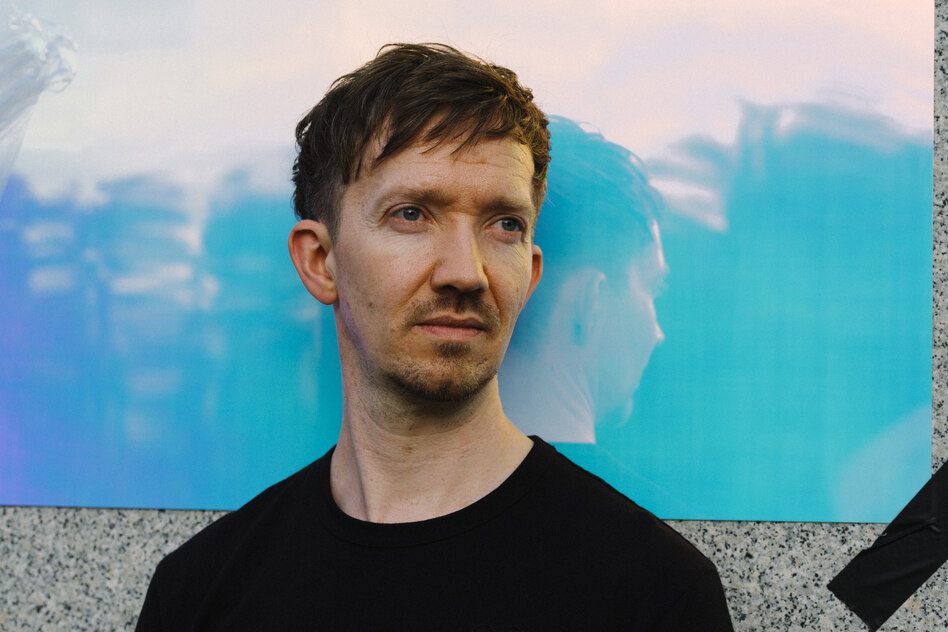
taz: Mr. Begler, you have been a teacher at a Berlin elementary school for eight years. When did you come out as gay there?
Jörg Begler: That must have been in the first or second week. I was still in my traineeship and had just come out of college.
Jörg Begler, born in 1980, grew up in a small town in Rhineland-Palatinate, in the Eifel. After graduating from secondary school, he began training at the Federal Finance Administration in Koblenz. He then completes his 13-month community service at a clinic in Cologne and supports a civil peace project in Serbia. There he gets to know working with children. He finally got his Abitur at the evening high school in Cologne and studied to become a teacher in Siegen. In 2018, Begler moved to Berlin for his traineeship and has been working at a Berlin elementary school since 2019.
It is not a given that gay teachers come out. Ten years ago, a survey by the Federal Anti-Discrimination Agency showed that not even half of LGBTIQ+ teachers had come out. Today there are slowly more. Jörg Begler is a member of the “Gay Teachers” working group in the GEW-Berlin. The network was founded in 1978, on the one hand to take action against hostility, but also to make sex education in lessons more sensitive to discrimination.
taz: At the age of 37, you started teaching relatively late. You previously worked at the Federal Finance Administration in Koblenz.
Begler: In order to be able to study to become a teacher, I first took my Abitur at evening high school. During this time I decided that I wanted to live and work as an openly gay person in my next job. I had my personal coming out as a teenager. A student made the decision about when to come out at primary school for me.
Begler: That was during a break, I was supervising in the hallway. A sixth grader spoke to me. “Are you actually gay?” This came as quite a surprise to me. I hadn't spoken to anyone about the best way to deal with a situation like this. We then talked for a while. I asked him what he knew about the term and what it meant to him.
Begler: I didn't know the student at all. We then talked about it again when I was supervising. The topic didn't let him go. At some point I said to him: Now we know each other a little. You're right, I'm gay. His reaction was: Now you're just saying that. I then left it in this situation.
Begler: I suspect that word has gotten around in certain groups: We have a gay teacher at our school. At first I didn't have my own class. It was more boys, fifth or sixth grade, who asked me the question in substitute situations. Sometimes completely frontal. I think it was a bit of a test of courage too. When the question came, often during a break, the classroom would suddenly become completely silent. But there were also quite violent confrontations. Disrespectful comments have already been made in the schoolyard or in passing in the hallway.
Begler: I try to create conversation situations in which I answer the children's questions. I always discuss this with my colleagues. We also have a diversity group at our school, where I am one of the contact persons for sexual and gender diversity. We think about it a lot.
This text first appeared in wochentaz, our weekly newspaper from the left!
Every week, wochentaz is about the world as it is – and as it could be. A left-wing weekly newspaper with a voice, attitude and the special taz view of the world. New every Saturday at the kiosk and of course by subscription.
taz: The elementary school is located in downtown Berlin. What kind of family background do the children have?
Begler: I work in a relatively enlightened neighborhood that also includes rainbow families. But there are also families that come from environments where homosexuality is a taboo, where it is not allowed to be discussed and where it is not a legitimate form of existence. We experience the full spectrum of the population at our school. We have Palestinian children with relatives in the Gaza Strip, children from Jewish families, Russian children and Ukrainian children. All the controversial issues in the world are brought to school with the children.
taz: When you take over a new class, how do you introduce yourself to the children?
Begler: Just like many of my colleagues do. They say, for example, I'm married, have two children, my wife is a doctor, or I'm single and live in such and such a district. But when I say that I'm with a man, it's sometimes as if a bomb has exploded: That's not possible, two men, that's disgusting.
taz: What kind of reactions do you experience at parents’ evenings?
Begler: It's very different. From many enlightened parents, I experience above all benevolence and approval. Families from a more conservative background are critical or negative about being gay. This was particularly noticeable a few years ago.
Begler: I took over a new class in which the parents were sometimes more traditionally conservative and religiously determined in the families. After the parents' evening, I learned from a mother that some of them didn't want their children to be taught by a gay teacher. A family then left school. The official reason for this was a change in school format.
taz: You are active in the GEW gay teachers working group. The majority of queer teachers in Germany do not come out to their students. Do you understand the motives?
Begler: Certainly! This is a very personal act. Nobody knows how an outing goes, how the people around you react. Depending on the situation, you become a little more vulnerable and vulnerable. And you potentially provide a point of attack. We are fully in the public eye and have to justify our work to everyone: to the management, to colleagues and parents and, last but not least, to children and young people. We also represent the state, the state of Berlin and the Basic Law, our constitution. Some queer teachers may also be afraid that this could weaken their authority.
taz: You could also take the position: My sexual identity is nobody's business.
Begler: I hear this argument often, even from heterosexual colleagues. They wouldn't tell you they're heterosexual. That's absurd. If a heterosexual colleague wears a wedding ring or brings his wife to the school party, that also says something about his sexual identity. Of course this also applies to me.
taz: What exactly is your coming out about?
Begler: Even during my studies I was aware that there were problems in society and also in schools, with anti-queer sentiment and homophobia. This is becoming more and more acute. As a primary school teacher, I have an important role; I am present from the first grade onwards, when the children come into contact with the state institution of school for the first time. There is compulsory schooling. It is fundamental to a democratic society that we accept and respect one another. I think it's super important that children experience and learn this early on. And I have the opportunity and a responsibility to teach them that. This includes taking away their fears.
taz: Are you a living example, so to speak?
Begler: School children always find it more interesting when they are given practical examples. When we fill out worksheets or read a book, it is a form of learning. But when we go to a gardening school or invite a policewoman or a photographer or an antiquarian or an opera singer, it's always much more exciting. The children really have a lot of questions, and it's the same with me. I'm the expert who comes to school as a gay man, but I'm at home at the same time (laughs).
taz: Do you also want to be a role model for the children?
Begler: I don't want to convince anyone to become an ally of the LGBTQ+ movement. But it can be, and statistically it is the case, that in every class one child is homosexual, bi or trans. Of course I want to be a role model for these children so that they are not alone. But I'm still growing into my role.
taz: What was it like for yourself? Did you also have gay role models when you were young?
taz: You were born in Rhineland-Palatinate in 1980 and grew up in a small village in the Eifel.
Begler: We had television at home, there was no internet yet. The word gay or lesbian did not exist in my family or school. I only remember hearing the term once from grown men in town. That was noticeably ridiculous and meant to be negative. In the 9th or 10th grade, my classmates once asked whether I was gay.
taz: You had never asked yourself that before?
Begler: I found boys of the same age more interesting than girls, but I couldn't classify it. Between us children we only ever talked about heterosexual relationships. There were no gay or lesbian couples in my peer group. And that's why it was like a forbidden feeling that wasn't allowed to exist.
Begler: When I saw the broadcast of a CSD from Cologne on WDR for the first time. It hit me that there is a completely relaxed movement of gays and lesbians. I was 18 then.
taz: It sounds like you spent your childhood behind the forest.
Begler: I think that still exists today. Even the internet doesn't change the fact that there are young people who grow up without a connection to themselves or positive role models who help them clarify their identity.
Begler: In the fall or winter of the same year, I revealed my gayness to my dance partner from the dance club. She was the first to do that. I think it was painful for her too, she was probably hoping that we would get together as a couple at some point. But she was incredibly empathetic and supportive.
Begler: After the 10th grade, I left school, started training at the Federal Finance Administration and did community service. So it happened that I lived in Koblenz, Münster and Cologne. Suddenly there were meeting places and cafés where young gay people came together - youth groups, young adults who networked, planned projects and went on trips. This increased my self-esteem and also the courage to come out. This wasn't easy for me with my parents; they had to struggle with it quite a bit. It took about a year before we could talk to each other normally again. But we can now speak very openly.
taz: You didn't stay with the tax authorities. What made you decide to become a teacher?
Begler: During my community service, I worked, among other things, in a gay and lesbian education project at schools in Cologne. Sitting in an administrative office again afterwards was pretty boring. I wanted to continue working with people and be active in socio-political matters. An internship at a school convinced me that teaching is a very rewarding, challenging career.
Begler: I think there should be a lot more men in elementary schools - not necessarily more gay men, but also gay men. 80 or 90 percent of the lessons there are still taught by women. Apart from their fathers, the children rarely meet any male caregivers until high school.
taz: On July 25, 2026, a suspected Islamist assassin drove a minibus into a group of people on the sidelines of Christopher Street Day in Berlin. One woman was killed and many people were seriously injured. The 21-year-old suspect is said to have shown significant behavioral problems even in elementary school. What went through your mind when you heard this news?
Begler: That was a shocking moment. One of my thoughts was, are there children with a similar background possibly in my school life? And: To what extent am I actually putting myself at risk of becoming a target of hate crime as an outed teacher?
taz: You hadn't thought about that before?
Begler: Yes, but rather abstractly. I hear from teachers at other schools who have come out that they also face hostility from parents and students. A high school colleague was beaten by a parent on the edge of school grounds. But then I negotiated the idea.
Begler: If I don't want children and young people to develop homophobia, I have to work against it even more intensively. For me and for society, because I still believe that we can sort things out before hatred arises. That's exactly how I started the new school year.
taz: You have a school entry class again. How did your coming out on the first parents’ evening go?
Begler: I was a little nervous. What I saw was a benevolent, positive smile from the parents, and also a collective understanding.
Begler: It's always a little jolt that goes through my stomach. With every new person entering the school, you have a new coming out. I'm becoming more experienced, but it still takes effort. But I accept that.
Read the full story at the source
Source: taz