
Germany · taz · · 1h
The home visit: “Pub is a feeling”
Deutsch (original) · Auto-translated to English
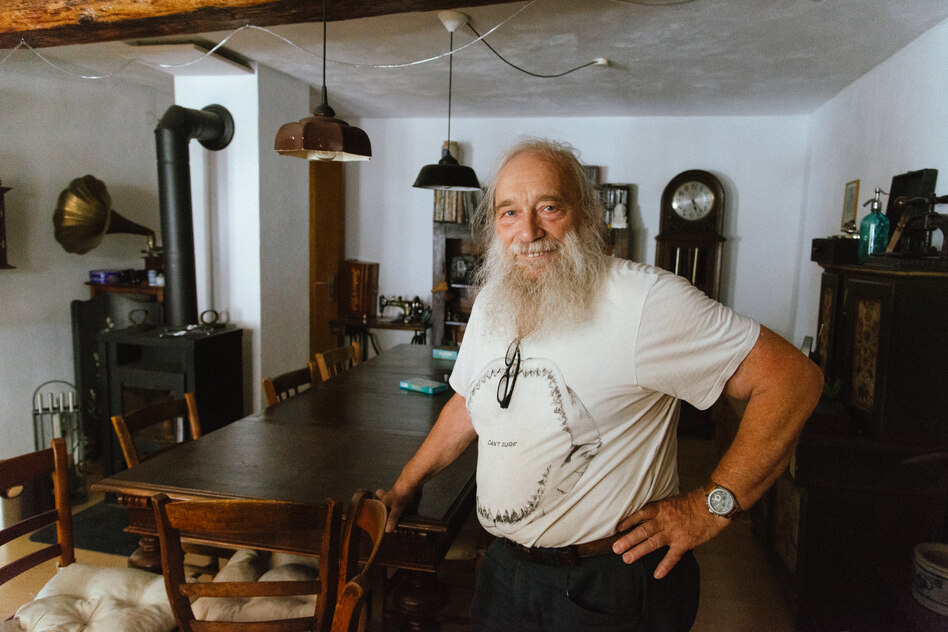
He couldn't find a job as a social worker. Then he opened a music bar in the province. This meant he could also do something for young people.
Outside: The wine lane in Enkirch on the Moselle is narrow, it runs through a row of old half-timbered houses, where dark beams frame light plaster and cobblestones in front. The houses are close together. Some seem as if they have clung to each other over the years and become a little out of kilter. If you don't know the place, you'll hardly get lost here. Or to put it another way: Whoever is here has a reason. Warm light shines from the windows of Tom's music cellar. The pub is open.
Inside: Opposite the entrance is the bar. On the walls hang guitars, a few other instruments, and photos from evenings long over. People often come without knowing why, says innkeeper Thomas Schlaadt. They order a beer, stop, and the conversations begin without reason or purpose. They come little by little, at first there are just a few, then there are more.
This text first appeared in wochentaz, our weekly newspaper from the left!
Every week, wochentaz is about the world as it is – and as it could be. A left-wing weekly newspaper with a voice, attitude and the special taz view of the world. New every Saturday at the kiosk and of course by subscription.
The pub: “Bar,” says the 72-year-old, “is a feeling.” One that is difficult to understand and describes his life. One always came at five, the other shortly before eight. One sat naturally in his place at the counter, another in the back corner. Customers were friends and the daily routine was based on them. Always regulars' table on Thursdays. And in the back, in the music cellar, there have been over 500 concerts over the past 30 years - since Schlaadt has owned the place.
The Tom: When he answers the phone, he doesn't say "Thomas Schlaadt", he says: "The Tom." That's what everyone calls him. He bought the house thirty years ago. Since then he has been standing here at the counter, on his own initiative, calm and reliable. He lives upstairs, people work downstairs. “I always enjoyed doing it,” he says.
Huge house: His parents' house was large, his father was a doctor, his mother was a teacher, and he has five siblings. His brother always took him to concerts, to the legendary Burg Waldeck Festival or to the Loreley, “the Lott”. And he camped in his parents' garden with friends from the Boy Scouts. “There were often twelve or more of us at home.” The doors opened and then didn't close all the way. Friends came, went, pressed the handle into each other's hands. “If you have so much space, you have to share it,” says Tom.
Pushing numbers: After secondary school, he first did an apprenticeship as a businessman. But “pushing numbers” wasn’t his world. So he got his Abitur and went to Mönchengladbach to study social affairs. He never had a “straight plan.” He was just kind of drawn to where he could work with people. He completed his recognition year as a social worker in the Wittlich youth prison on the edge of the Eifel. Dealing with difficult people was actually fun for him. But he didn't get a permanent position.
The innkeeper: In 1984 a friend offered him to run the pub in Zell, the Altes Eichamt. His thought: “Then just do something for the young people in a bar.” He was just 30 and there wasn't much on the Moselle back then. He often rode his motorcycle to the American pubs in the Eifel or Hunsrück. “There was something going on, there was movement in it,” he says, as if it was a long time ago but never disappeared from his heart. This is how his shop should be. One where young people come, “just a place where something happens,” he says.
The detour: As soon as he said that, a memory came to him. As a child he once went hiking with his father. They actually wanted to visit someone, but then they ended up unplanned at the Burg Waldeck Festival, the birthplace of the new German songwriter scene. Hannes Wader made his first appearance with his back to the audience because he was so excited, and Tom, ten or eleven years old, was in love with this world. “Musicians from all over the world and languages you’ve never heard before, people came from everywhere!” And Schlaadt in the middle, “like a kid.” They stayed all afternoon.
Concerts: Anyone who came from Enkirch and wanted to go to concerts had to travel far. 60 or 70 kilometers to Kaisersesch, Trier or Koblenz. He wanted to change that. Because music, as Schlaadt himself has always experienced, “is what makes people stay.” So he brought music to the Moselle.
Drummer in the fireplace: The Old Eichamt didn't allow that, it didn't have a stage, so we had to improvise every time. “The drummer usually sat in the open fireplace.” The first band that played for him was called Fragile, a punk rock band from the same place. Friends of the innkeeper. And then it got crowded. The people came from Wittlich, from Daun, from Simmern, “from everywhere”. And Tom reliably tapped the beer, made another schnapps and made sure that people left the shop with a smile.
Second half: In 1997 he went to Enkirch and bought the building of a former wine cooperative there. On the most beautiful evenings, says Schlaadt, it was as if time had stood still. And when the guests left the pub, he locked the door from the inside and he and the musicians went up - “Martin Gerschwitz, for example”, keyboardist for Eric Burdon, Iron Butterfly and Bon Jovi. Then the evening went into the second half. She usually started with a nightcap. Thomas Schlaadt cooked something for the band, they drank and laughed and talked until the early hours of the morning.
Travel: He was doing well during these times. The pub was full, there was no more space at the bar and the beer and money flowed by themselves. Those were years when everything simply worked. People came, stayed, brought friends with them - and those who were there once came back. And if things went well, Tom would simply be away for a few weeks: Thailand, Indonesia, Malaysia, Portugal, Spain, ten weeks in Australia, wherever it was warm. “We traveled a lot,” says Schlaadt.
The partners: By “we” he means himself and his ex-wife. Every year they were away for at least six weeks. That was the time when everything happened at the same time, going to the pub and being out and about, working and living. But life isn't just about vacation. A pub eats up time. The marriage broke up because of this. And also his last relationship. It was so beautiful in the beginning. But that's over.
Memories: The memories remain. The most beautiful, says Schlaadt, was Sri Lanka. And then he talks about the trees, the tea plantations, the mountains. “The Lord of the Rings, the Enchanted Forest, I would have filmed it there.” You feel like a dwarf anyway. And the people, he says, had nothing in their huts, “but they still offered us the chairs and their food.” He still does it that way in the pub to this day. And if he pays extra for the musicians, he says, “whatever it takes, it’s bad luck.” Moselle-Franconian doesn't have big words for something like that.
Humidity: Oh, how he would love to travel to Sri Lanka again. But that doesn't work. Since his heart attack in 2010, he can no longer tolerate the humidity. When he rides his e-bike over the foggy vineyards, he finds it difficult to breathe. Then he has to move his bike up a notch. No, traveling is no longer good.
Bar death: The bar also went downhill, starting with a construction site in front of the door. For a year the only way to get to Tom was through secret routes. Things haven't really started since then. And Corona almost finished him off. The bars closed, and when they reopened, people didn't come back. It was emptier on Thursdays too.
The pension: Today he doesn't open often. At the regulars' table, of course, even if it's smaller and the group has shrunk anyway because the friends are getting old and some are no longer there. It's not really worth it anymore. His pension is just under 60 euros. That's why he now also works as a social worker again. And then he's still standing behind the counter. But how much he would love to go to Sri Lanka again.
Read the full story at the source
Source: taz