
Germany · taz · · 2h
Muslim anti-Semitism: An enemy image with complex roots
Deutsch (original) · Auto-translated to English
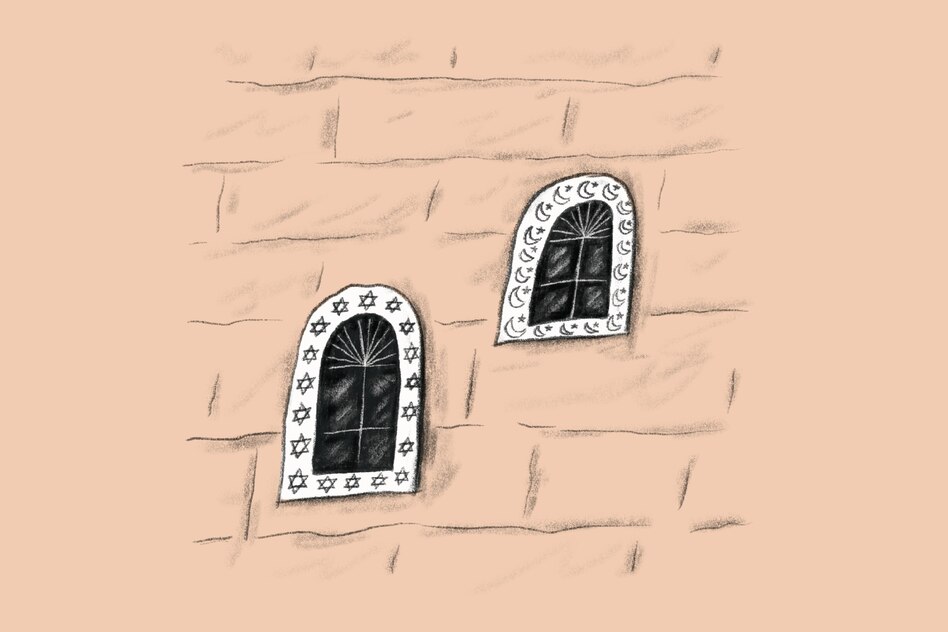
It's Ramadan in Egypt: After breaking their fast, families gather in front of the television. The series produced especially for this month shape conversations, memories and political ideas. Two of them show how differently Jews are portrayed in the same cultural space.
In “Rider without a Horse” from 2002, Jews appear as members of a sinister global conspiracy. The basis of the script is the “Protocols of the Elders of Zion”, the fake made up in Tsarist Russia about the alleged Jewish plan for world domination. When the series is broadcast, millions of viewers encounter old European enemy images, adapted and embedded in a familiar Arabic context.
“The Jewish Quarter” from 2015 is completely different. The series takes you to the city of Cairo in the 1940s, when Muslims and Jews lived next door to each other. Jews appear as neighbors, not strangers - as part of a lost Egyptian world. Coexistence is threatened by Islamists who sow hatred. Both series belong to Arab popular culture. One demonizes, the other reminds. Muslim anti-Semitism is neither an immutable part of Islam nor can it be treated merely as a European import.
The taz is an independent, left-wing and opinionated daily newspaper. We have been arguing in our comments, essays and debate texts since the taz was founded in 1979. We often cannot and do not want to agree on an opinion. That's why you'll find some completely opposing positions here - all part of the very broad left-wing spectrum of opinions.
For centuries, Jewish communities lived in Islamic societies as dhimmis, in German: those under protection who were allowed to freely practice their religious rites, but at the same time were legally subordinate. It was neither equality nor a lasting idyll. And yet: Muslim-dominated societies generally offered Jews stable living spaces, while Jewish life in Christian Europe was repeatedly threatened by expulsions, accusations of ritual murder and pogroms - up to and including the Shoah. Jewish doctors, traders and philosophers worked in Baghdad, Cairo and Córdoba.
This past was neither a golden age nor a history of eternal enmity. It is precisely their inconsistency that refutes the idea that Muslim societies are necessarily anti-Semitic. A key moment in the rise of anti-Semitism in the Arab world was the Damascus affair of 1840. After the disappearance of a Capuchin monk, Christian clergy and the French consul accused Jews of ritual murder.
The legend came from the European Middle Ages and was largely foreign to the Islamic majority society. However, to assume here that anti-Jewish suspicions are imported is not enough. Ideologies are not simply adopted. They are translated, adapted to local conflicts and further developed by local actors. Colonial power politics, European anti-Semitism, social crises and, last but not least, the conflict over Palestine fundamentally changed the perception of Jews in the Middle East.
is a historian at the Martin Luther University in Halle and author of the book: "Muslim anti-Semitism. Where it comes from, how it works and what we can do".
After the creation of Israel and the Arab defeat in the 1948 war, this process gained new momentum. The flight and expulsion of Palestinians, the loss of Palestine and the political impotence of Arab regimes fueled the need for simple explanations. The “Protocols of the Elders of Zion” provided a tempting answer: a supposedly all-powerful Jewish conspiracy was responsible for the catastrophe. Translated into Arabic, the “Protocols” gained new political impact.
Under Gamal Abdel Nasser they were politically enhanced and taken up by state propaganda. School books and radio broadcasts increasingly blurred the boundaries between Jews, Zionists, Israel and imperialism. In this way, European anti-Semitic enemy images were translated into Arab nationalist interpretation patterns.
After 1967, the religious charge of the Arab-Israeli conflict increased. Conflicts between the Prophet Mohammed and Jewish tribes in the Medina of early Islamic times were increasingly removed from their historical context and interpreted as timeless statements about “the Jews”. European conspiracy myths were linked to experiences of colonial rule and violence, Arab nationalist narratives, Islamist interpretations and the ongoing Middle East conflict.
In this network, anti-Jewish sentiments and enemy images directed against Israel increasingly merged. This interaction explains why anti-Semitic interpretation patterns have been able to persist so persistently in parts of Muslim societies.
After October 7, 2023, it became clear how powerful such interpretations are in Europe. While Israel mourned those murdered and abducted, people in Berlin celebrated the Hamas attack as a victory for the “resistance.” At demonstrations and on social media, Jews were collectively blamed for the bombing of Gaza and the deaths of many Palestinians. October 7th did not create this anti-Semitic idea, but rather activated it.
There is no third space in the German public in which the Hamas massacre and the Palestinian suffering can be discussed equally without pitting one against the other. An attitude that unequivocally rejects anti-Semitism and at the same time recognizes Palestinian suffering cannot be found. Instead, the discussion all too often turns into a contradiction that shouldn't be there: Anyone who mentions Muslim anti-Semitism is quickly suspected of condemning Muslims across the board.
And anyone who talks about anti-Muslim racism is accused of relativizing anti-Semitism. But the two belong together: anti-Semitic attitudes in parts of Muslim milieus must be clearly identified without placing Muslims under general suspicion. The talk of “imported anti-Semitism” exonerates Germany from its own history and obscures the diverse interconnections from which current enemy images arise.
The Middle East conflict is not just a background factor. Israel's occupation and settlement policy, the discrimination against Palestinian citizens of Israel and the massive destruction in the Gaza Strip are also putting a strain on Jewish-Muslim coexistence in Germany. All of this must be open to criticism. But none of this justifies making Jews in Berlin, Paris or London representatives of Israeli governments. The political context helps to understand why anti-Semitic interpretations are mobilized; He can't excuse her.
Even prevention often remains trapped in the logic of narrowness. Young Muslims are expected to commit to Israel before a conversation even begins. Bans can protect Jews and limit hate speech. They do not create insight. Anyone who only addresses young people as suspects creates defensiveness rather than responsibility. Historical knowledge opens up a different approach. The fact that the Jewish philosopher and scholar Maimonides lived in medieval Cairo and wrote important works in Arabic is more than a historical footnote.
It points to a world of cultural translations and Jewish-Muslim neighborhoods. In doing so, he makes it clear that Jewish history has always been part of the history of Muslim societies. Anti-Semitic readings cannot only be contradicted from the outside. Islam's linguistic, theological and ethical traditions, as well as its shared history, provide means to reject them.
Hostility towards Jews then does not appear as a necessary consequence of a Muslim self-image, but rather as a narrowing of its history and its possibilities for interpretation. Such an expanded historical approach must find a place in schools and universities, in Islamic theology, in mosque communities and in memorial sites.
Jewish-Muslim relations deserve to be understood as an independent historical and social field of knowledge. This requires permanent places where research, education and the public come together - not as a backdrop for symbolic reconciliation, but as spaces for new questions and unexpected perspectives. Furthermore, the German culture of remembrance becomes broader when people with Arab or Muslim family histories do not appear in it as mere additions.
The singularity of the Shoah is not relativized, even if colonialism, migration and the Nakba find their place in public memory. It is neither about equating nor competing with victims, but rather about bringing different historical experiences into conversation with one another. Memory is not a one-way street: Where different family histories become visible in public memory, responsibility for the shared present can grow. It is not enough to repeatedly call for Jewish-Muslim dialogue.
Jews and Muslims should not only appear in the German debate as those affected, parties to the conflict or recipients of appeals for reconciliation, but as active participants. With Vikuach (Hebrew: argument) and Munazara (Arabic: debate), Jewish and Islamic traditions of debate, they can bring in their own forms of thinking and discussion. In doing so, they expand the German debate culture with an almost forgotten possibility: to remain in contradiction with one another without declaring the other an enemy.
Muslim anti-Semitism did not fall from heaven. It developed historically, was spread by people, instrumentalized by states and legitimized by religious authorities. That's why it can be changed. Countering it requires historical knowledge, clarity in the face of anti-Semitic enemy images - and the courage to detach Jewish-Muslim relations from the logic of current camp struggles.
Read the full story at the source
Source: taz