
Germany · taz · · 2h
Forest scientist on forest fires: “The trend is towards mega fires”
Deutsch (original) · Auto-translated to English
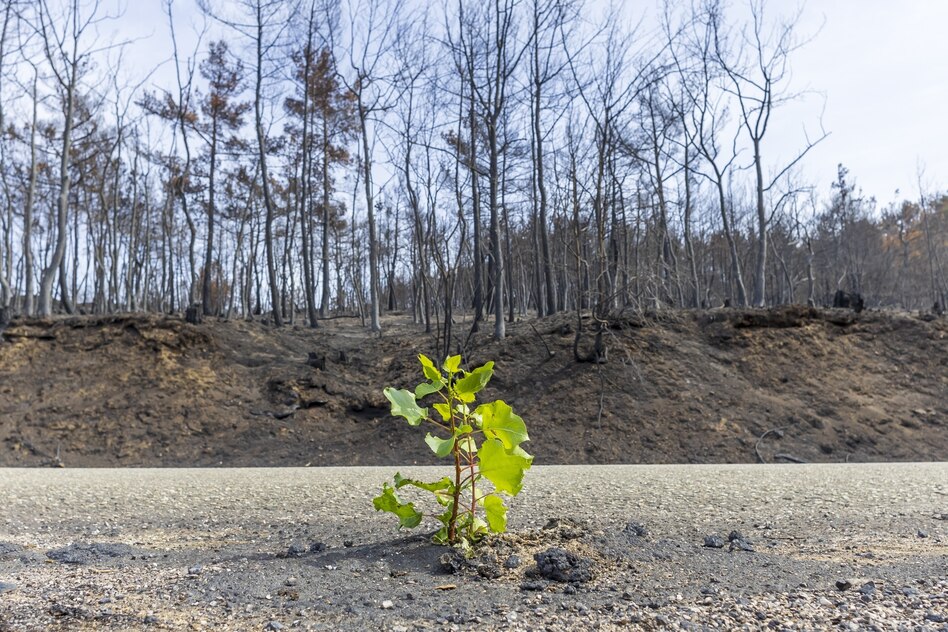
taz: Ms. Pleniou, 2026 is already considered a forest fire year. Are there really more and stronger fires in Europe every year?
Magdalini Pleniou: In Mediterranean ecosystems such as Greece, the total number of fires does not increase every year, in some areas it has even stabilized or decreased due to better detection and control. But the fires are becoming larger, more intense, more frequent and more difficult to control. The trend is toward megafires that spread rapidly, create their own weather, and overwhelm even the most sophisticated fire suppression systems.
taz: It sounds like it's almost impossible to get the fires under control.
Pleniou: You don't necessarily have to. Forest fires are not inherently destructive. Fire is a natural and necessary process for many ecosystems, and some even require fire to remain healthy. However, fires can become destructive if they are too frequent, too intense, or occur under extreme conditions. That's why we have to work preventatively, for example with firebreaks.
taz: How can local people prevent fires?
Pleniou: The locals are the ones who manage the vegetation, care for the land and are often the first to spot fires. A successful example of this collaboration is the targeted grazing operation in Spain and Portugal, where farmers create firebreaks with their livestock and thus reduce combustible mass. This provides an effective, cost-effective fuel management strategy while supporting local economies and traditional livelihoods.
taz: So the most fire-safe forest is one that is sustainably managed by people?
Pleniou: Without locals to graze livestock, harvest wood and maintain the forest, the landscape contains more flammable materials, which can subsequently lead to catastrophic forest fires. Involving local communities ensures better decisions, reduces conflict and leads to more sustainable outcomes thanks to their knowledge and support.
taz: You do research in Greece. How well does the government there support you?
Pleniou: The central question is how resources and financial resources are distributed. Research shows time and time again that we spend money on fighting fires, while significantly less is invested in long-term planning and reducing the amount of fuel. The government's approach often prioritizes the immediate safety of people and property, which is of course necessary. In contrast, environmental groups focus on the long-term resilience of the ecosystem.
taz: How can political decisions specifically help reduce the risk of forest fires?
Pleniou: Spatial planning, for example, is one of the most effective instruments for managing these high-risk areas. The tragedy of the 2018 forest fire in Mati, near Athens, is a notable example. The area was densely developed and often unregulated and there were too few escape routes. Because of this, rapidly spreading fire could develop into a huge disaster with high loss of life
taz: So much for prevention. How can the regeneration of forests after fires be specifically promoted?
Pleniou: Many people believe that the solution after a fire is to plant trees immediately. However, research shows that natural regeneration is more effective. Planting too many incorrect tree species in dense rows can hinder ecosystem recovery and even increase the risk of future fires.
taz: So just leave everything as it is?
This text first appeared in wochentaz, our weekly newspaper from the left!
Every week, wochentaz is about the world as it is – and as it could be. A left-wing weekly newspaper with a voice, attitude and the special taz view of the world. New every Saturday at the kiosk and of course by subscription.
Pleniou: It's not that simple. Reforestation may be necessary in severely damaged areas where natural recovery is not possible. But first we have to protect the soil. Erosion is often the greatest threat to recovery. It is enough to leave burnt vegetation in place, build small barriers on slopes and not use the areas too intensively as pasture in the first few years.
taz: Are there turning points at which a forest can no longer recover?
Pleniou: Many Mediterranean species are adapted to fire and can regenerate or germinate from seeds without human help. In these landscapes, fire is not a catastrophe per se, but rather a mechanism of renewal. Therefore, it is crucial to prevent repeated fires, as young ecosystems are very vulnerable. If another fire occurs too soon, it can permanently transform the landscape into bush or grassland.
taz: You also did research in the Dadia National Park. The largest forest fire in the history of the EU occurred there in 2023. What did you observe?
Pleniou: In the Dadia forest, the analyzes allow a clear conclusion: the severity of the fire is the most important factor affecting regeneration after a fire. In areas with low to moderate fire severity, living roots and seeds are preserved and the areas can mostly recover on their own within a few growing seasons. In contrast, areas of high fire severity are typically associated with vegetation loss and damaged soils. In such cases, natural regeneration is less likely.
taz: How can you tell whether the forest is really recovering?
Pleniou: In Mediterranean ecosystems, after a fire, seeds either germinate, for example from pine trees, or new roots sprout from roots that have survived, as is the case with oaks and shrubs. Many species are adapted to fire and rely on it as part of their life cycle. Stable regeneration is only achieved when the new generation of trees has reached reproductive maturity and can produce its own seeds - a process that takes around 15 to 25 years for Mediterranean pines. If fires occur too frequently or are too intense, especially when combined with drought and land degradation, some slow-growing or fire-sensitive species locally may not return at all.
is a forest scientist and works at the Forest Research Institute in Thessaloniki. She specializes in the regeneration of forests after forest fires.
taz: How well can a critical forest fire year be predicted based on data?
Pleniou: We can predict the risk factors quite well using weather and climate indicators, temperature deviations and drought values. For example, if we see a warm summer and low rainfall in the winter, the probability of a critical forest fire year increases significantly. However, there are important limitations. Forest fires are still often caused by humans, whether intentionally or not. They are also affected by short-term weather conditions such as strong winds. Therefore, while climate data can indicate that a season is very dangerous, it cannot reliably predict whether a given year will be disastrous.
Read the full story at the source
Source: taz