
Germany · taz · · 1h
Unity celebration in Bremen: A city finds itself well
Deutsch (original) · Auto-translated to English
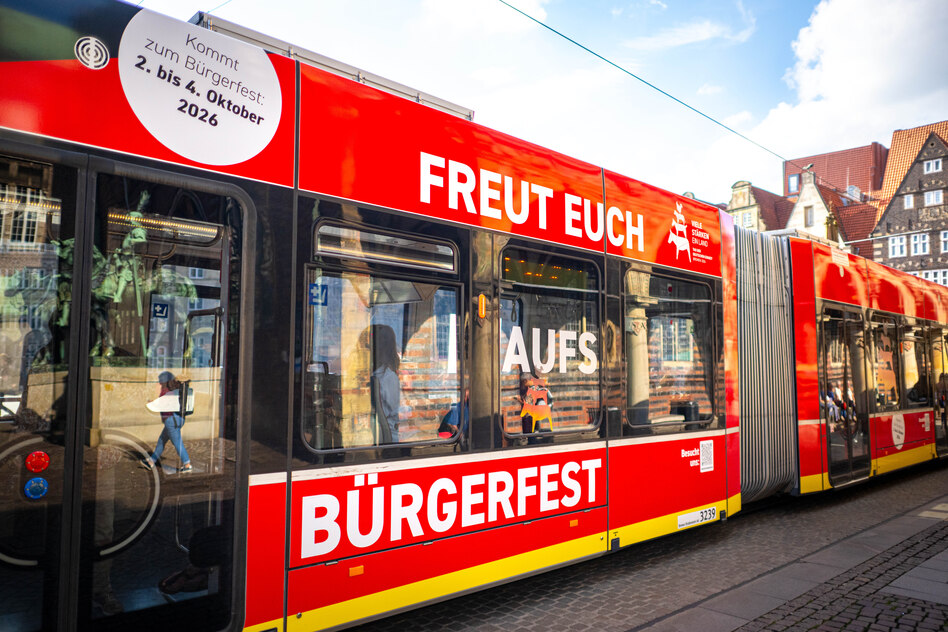
The day before the celebrations for German Unity Day begin, Bremen's mayor Andreas Bovenschulte (SPD) leads a small group of journalists through the city of Bremen. The “Citizens’ Festival” is celebrated there from Friday to Sunday on the occasion of October 3rd. This takes place in a different federal state every year.
Bovenschulte chats with the craftsmen involved in the construction and is happy about the blue and white sign “Industry and Mobility”, which is reminiscent of a motorway exit and which shows the way to exhibitors from this industry high in the air. Directly behind it is the Mercedes pavilion - but how long the Bremen plant will continue to exist given the company's austerity measures is unclear.
There are no black, red and gold flags to be found, which is a bit of a shame for those who want to “tear down the flag and let it burn” from the “imperialists”. This is how a “red league” announced it on the Internet and, in the heat of the hoped-for battle, forgot the pronoun.
The Germany colors can only be seen as a discreet pennant on high white flags, while others are emblazoned with the logo of the unity celebration: The Bremen Town Musicians, in an origami look, change in a color gradient from light yellow to orange and red to a warm brown, and next to it is written: “Many strengths – one country”.
“Donkey, dog, cat and rooster have pooled their different skills for common strength,” says the website. And: “The Day of German Unity 2026 in Bremen stands for a modern and united Germany that lives diversity – and that recognizes the strength of the whole in the power of its regions.”
Between these two sentences there is nothing about this Germany and something about the state of Bremen. For example, “Bremen and Bremerhaven are economically strong, have an internationally renowned scientific community and an engaged civil society.”
Even when walking through the city with the mayor it becomes clear: This is a three-day, big Bremen show, and those in charge don't hide that at all. It's about showing what you have: There are two spacey igloos in the Liebfrauenkirchhof, where the aerospace industry presents itself. Everything that can be summed up under “science” is exhibited in the former Kaufhof building and container after container is lined up along the Weser between two intersections - it's about ports and logistics.
The soft location factors also have a place, what the organizers call “the committed civil society”, and this includes art and culture, sports clubs, churches and whatever other organizations, clubs and initiatives there are.
Only the far left groups are missing, of course, because they think the unity day is stupid. That's why they want to demonstrate on Friday evening - against nationalism and its direct descendants "social cuts, militarization and anti-feminism". Anyone who celebrates German Unity Day would also celebrate all of this, according to a press release.
On Saturday afternoon the “anti-imperialists” want to protest against the annexation of the GDR by the “heirs of Hitler”. According to the published text, this means everyone who is not “the peoples”, difficult terminology, but no matter, you will know for yourself whether you have rejected Hitler’s inheritance.
But, as I said, you will have to look for nationalism this weekend and you could almost forget that Unity Day is supposed to commemorate the reunification of the Federal Republic of Germany and the German Democratic Republic, if the Christian fundamentalist Martini community didn't do that.
She's sitting in the middle of the festival mile; In a beautiful old brick church it towers over the Weser and on its facade hang meter-high banners with the inscription “We owe German unity not primarily to political decisions, but to the prayers who trusted in Jesus Christ”.
This is a clear slap in the face to all those Christians who not only prayed for the end of the GDR, but also risked their lives when they took to the streets for their freedom and that of their less courageous fellow human beings.
If you leave the church on the left and walk towards the Weserstadion, you will come to the “Ländemeile”. There the other federal states can show what they can do. Osterdeich is the name of the road along the Weser, and it is actually located on a dike. Halfway there you can read “The Länd” in purple on yellow: Baden-Württemberg has spread out a very large plastic sheet with this lettering on the heat-damaged turf. It is best seen from the other bank of the Weser - or from the air.
The other southern Germans have pitched their tents directly behind the Ländle and make this clearer than any other federal state. BAVARIA is emblazoned across the street in wooden or perhaps just wood-colored letters – a wooden hammer turned into writing.
Berlin is also represented, with a real-looking garbage dump on Ostertorsteinweg parallel to the Osterdeich - but no, that's just a meter-long and high illegal garbage dump that exists not only in the capital, but throughout the country.
The employees of the Bremen city cleaning department are currently clearing them away: garbage bags and paint buckets and shoes and baking molds and a scrubber, and there is also enough laminate to cover a two-room apartment, but it looks very used. “Not that it will end up being set on fire,” says one employee.
Because that can also happen: that there will now be a repeat of the riots from 1994, when Bremen hosted the unity celebration for the first time. 16 years later, at the next ceremony, the riot was announced, but then canceled due to a lack of participation.
This year too, both the Weser-Kurier and anonymous groups or individuals have been whispering for months that it could happen again this time, although the local newspaper has recently been more concerned with the traffic restrictions. A left-wing riot from the CDU and the FDP, which called out the left-wing extremist danger at the beginning of the year with a lot of enthusiasm and active support from the local media, would fit well into the mix.
This is also what Bremen diversity is all about: there are not only right-wing extremists here, but also others. Let's pray.
Read the full story at the source
Source: taz