
Germany · taz · · 3h
Measures after the attack on CSD: repression and a bit of prevention
Deutsch (original) · Auto-translated to English
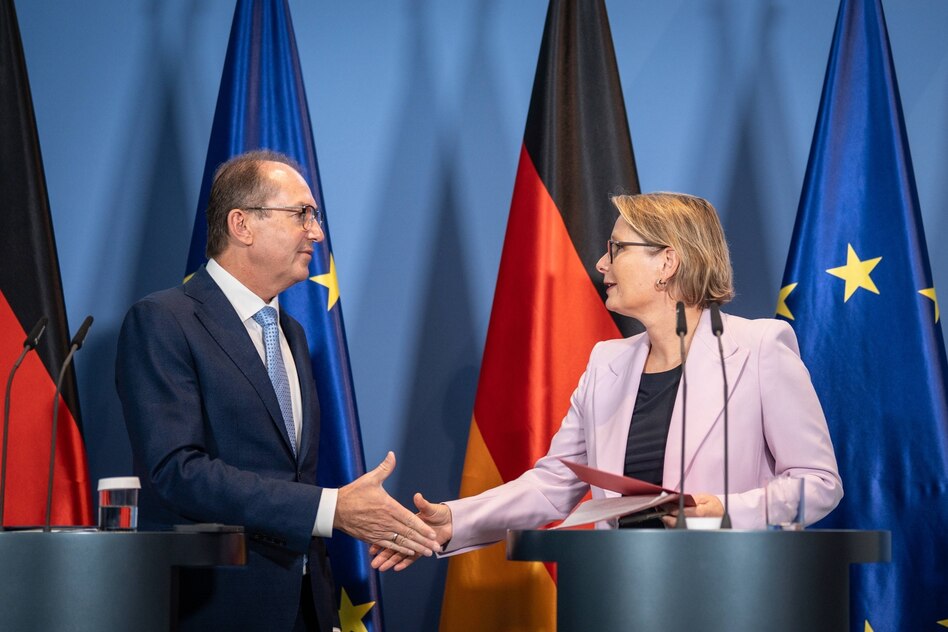
Closer surveillance, more shackles, higher penalties: After the attack on the Berlin CSD, the federal government wants to take tougher action against Islamist terror in the future. When presenting a ten-point plan in the Chancellery on Wednesday, Federal Interior Minister Alexander Dobrindt (CSU) once again referred to the Islamist terrorist act of July 25th. At that time, Abdul B. “went hunting for people in a vehicle.”
B. injured 31 people and then attacked passers-by with a machete. He killed a woman. The day after, B. was caught by the police in an allotment and shot. It was then made clear, said Dobrindt, “that we want to take stronger measures against Islamist terror.”
The 21-year-old perpetrator was already known to the authorities as a threat and was only sentenced in May 2025 by the Tiergarten District Court to a youth sentence of one year and ten months for preparing a serious crime that was a threat to the state. He traveled to Lebanon to join IS and is also said to have spread IS propaganda. The court had also sentenced him to take part in a six-month de-radicalization program as part of a preliminary probation. This should determine whether the youth sentence is carried out or suspended.
The measures decided by the cabinet are essentially aimed at greater repression: perpetrators who are clearly classified as dangerous should be monitored more closely and given ankle bracelets more often. There should also be higher penalties for knife attacks. In addition, it should be possible in the future for state authorities to be able to store data such as IP addresses for longer. The 10-point plan is to be introduced to the Bundestag next week.
Justice Minister Stefanie Hubig (SPD) said when presenting the plan: “Islamist terrorism remains a threat to our coexistence.” Terrorists rejected “respect for the person, equal freedom for all people and equal dignity,” said Hubig. After the memorial service following the attack and the subsequent commission of the crime, they jointly decided to draw political conclusions.
The measures were also accompanied by stricter punishments: in the future, the dissemination of propaganda for the “Islamic State” should be consistently punished. To this end, the criminal offense of using the symbols of terrorist organizations will be expanded. In addition, fundraising for terrorist purposes should also be punishable. In the future, court decisions on probation should take greater account of the population's safety interests, said Hubig.
A direct lesson from the CSD attack is likely to be that the exchange between security authorities and the judiciary in the case of dangerous individuals is improved - especially when it comes to parole decisions. In addition, prevention work remains central to dissuading young people from their path to extremism, says Hubig. That's why they also want to strengthen extremism prevention and expand programs.
The Green interior politician Marcel Emmerich called for less “hasty answers” and announcements, but instead more consistent clarification: “The Interior Minister must finally explain why the crime could not be prevented, even though the perpetrator was known to the authorities, was considered a high-risk person and was being monitored.” The open questions belonged to an investigative committee in Berlin.
Clara Bünger from the Left also criticized: “To now reflexively tighten criminal law does not lead to more security.” The proposals to expand prevention are also not very credible given the impending cuts in this area.
Jamuna Oehlmann from the Federal Working Group on Religious Extremism (BAG Relex) fundamentally welcomed the fact that prevention and deradicalization are part of the package of measures. However, she noted an imbalance in favor of criminal law, control and security: “That may be necessary, but it mainly starts where radicalization is already well advanced.”
Civil society prevention starts earlier and reaches people, families and communities before they even become a case for security authorities, says Oehlmann. Approaches to digital prevention and the involvement of Muslim actors are also welcomed, said Oehlmann: “Those who work close to the lives of young people recognize new radicalization trends early and can further develop prevention accordingly.”
Read the full story at the source
Source: taz