
Germany · taz · · 2h
Conflict between Saudis and Houthis: Saudi Arabia looks around for help
Deutsch (original) · Auto-translated to English
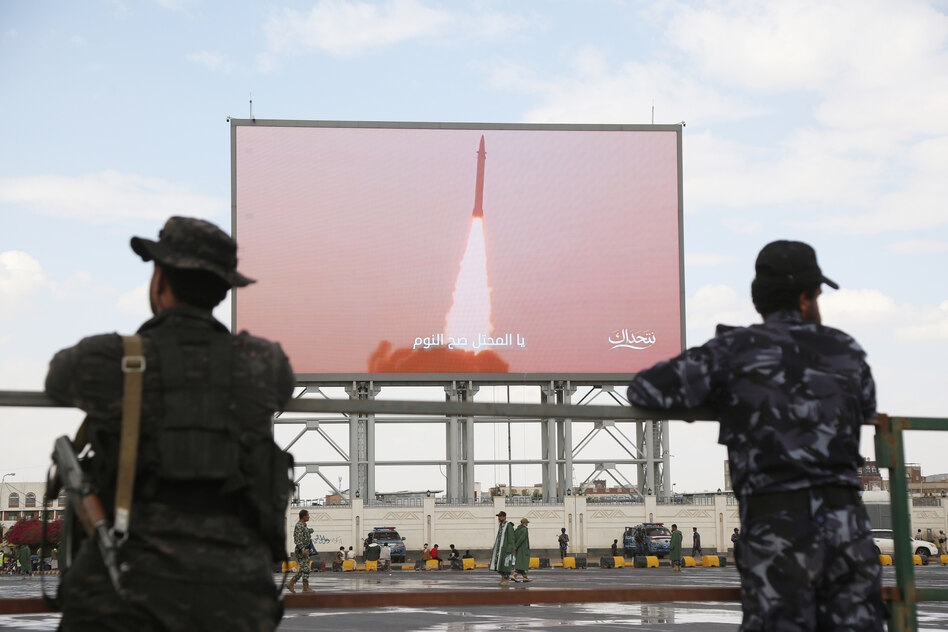
Last week was something of a Saudi nightmare come true. The peak of the escalation between the Houthi militia in Yemen and Saudi Arabia was a missile and drone attack on the Saudi capital Riyadh and its airport on Saturday. Several rockets were also intercepted elsewhere in the country, Saudi officials said. No information was given about the number of attacks or the damage.
The attack on the airport, which hit a fuel depot but did not cause much damage, may have had primarily psychological aims; The images of smoke over the airport were probably intended primarily to sow a feeling of insecurity among the Saudi population. The Houthis described the attack as a response to Saudi airstrikes on their positions in Yemen.
The attack is not an isolated incident. Other strategic Saudi targets have already been hit this month, with massive implications for the Saudi oil economy. The most dramatic was the attack on a pumping station on the Saudi east-west oil pipeline, the main bypass of the Strait of Hormuz. There, the oil produced in eastern Saudi Arabia is not pumped via the Arabian Gulf, but rather via a pipeline across the country to the Red Sea.
The attack was probably carried out by Shiite militias in Iraq and resulted in the pipeline being temporarily closed. It is now running again, with what capacity is unclear. The next day, the Houthis in Yemen captured the island of Perim in the Red Sea, located on the Bab El-Mandab Strait, from Yemeni government troops. Yemeni government troops are supported by Saudi Arabia.
Within 36 hours, the Saudis had first temporarily lost their pipeline and shortly afterwards the security of a strait that, along with the Strait of Hormuz, is crucial for the export of their oil.
The question now arises as to how Saudi Arabia will respond to the attacks. Saudi Crown Prince Mohammad bin Salman called US President Donald Trump twice last week and demanded military support from him. At least publicly, Trump said nothing shortly before the midterm elections. It is possible that the US offered reconnaissance in target selection for the Saudi Air Force, but no direct deployment of US personnel in Yemen.
For help, the Saudis are also looking to the countries of the Mecca military pact, which was concluded just last month between Saudi Arabia, Turkey and Pakistan. The Saudis want to diversify their security architecture after the US bases in Saudi Arabia offered more attack surface than protection in the Iran war.
But no concrete military help against the Houthis has materialized in the Mecca Pact either. From Turkey they say they are ready to help. Turkish Foreign Minister Hakan Fidan said that the Saudis needed military support in some technical areas and that Turkey was ready to provide it. What this entails is unclear; but certainly no Turkish troops.
Lt. Gen. Ahmed Sharif Chaudhry, a spokesman for the Pakistani military, also told the Saudi newspaper Arab News on Thursday that Islamabad was diplomatically and "physically" on Saudi Arabia's side. However, his subsequent explanation of the word “physical” makes numerous interpretations possible. “We will go as far as necessary,” he said. The Saudi attempt to put together a maritime alliance with Egypt to protect shipping in the Red Sea has also shown few concrete results so far.
It remains to be seen what fruit the Saudi efforts to provide military support will ultimately bear. However, neither the USA nor Turkey, Pakistan or Egypt currently appear willing to participate directly in the conflict between the Houthis and Saudis.
Read the full story at the source
Source: taz