
Germany taz
Encounters in the big city: longing for the stories of others
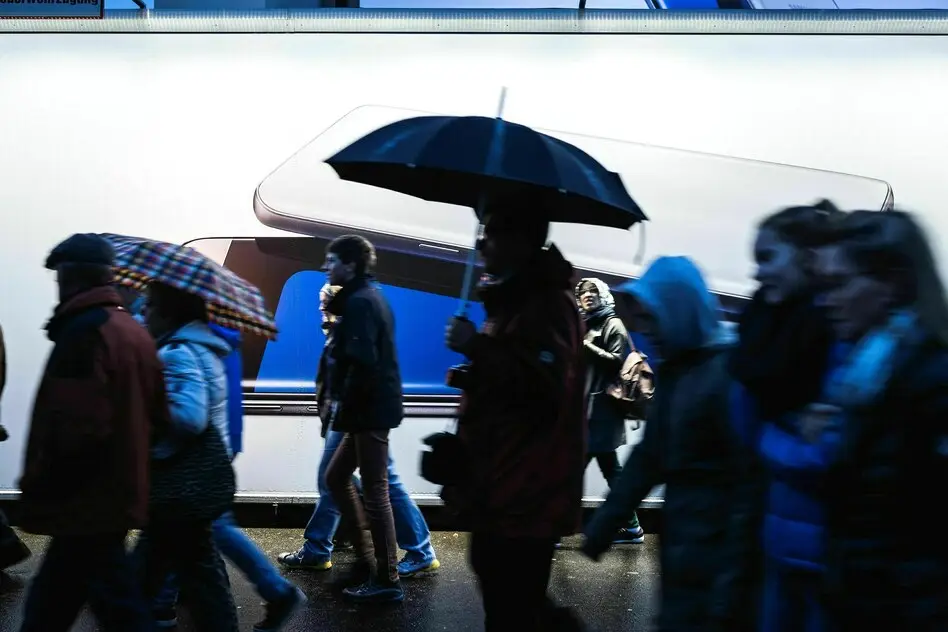
Young people run through the streets justifiably self-absorbed. At some point later you notice that these are other people. Who have something to tell. more...
Deutsch (original) ·Auto-translated to English
Where I grew up, in Würzburg, Bavaria, there were no secrets. As a student, if I skipped class, secretly strolled through the city center with my friends, or stuffed myself with milkshakes and cheeseburgers at McDonalds, my mother would know about my offense that same day.
Someone had discovered me, a friend or a work colleague, and betrayed me. Later, my mother tried to break me with a psychological trick and, with a knowing look, asked about my lessons. And I, who after years had seen through her game, didn't show anything and lied to her face.
Big city, Berlin, that was the promise of personal freedom after I graduated. Get lost in the crowd. No social control. Nobody would know when I went where, yes, nobody would care! So I walked around the city for many years, focusing primarily on myself, as youth requires, and taking little interest in the people around me in everyday life. I learned: A big city works when we leave each other alone.
Today things are different. Maybe I'll go soft. Or I feel freer with myself and with Berlin. In any case, I've come to long for other people's stories. After small moments of everyday life in which you exchange a look, smile at each other, talk to each other until you move on, each back to your own world.
Sabine from the summer stuck with me. I sat on a bench and waited for friends. She came towards me with her walker and I made room for her. This is how our chat began. Sabine talked about growing up on the wall. She pointed to a street: a tram used to run here; and at a Volksbank: Prostitutes hung out there, everyone knew that.
From Sabine I learned why there wasn't enough money anymore as she got older, and how difficult it was to get into the fourth floor of her stately old apartment (an old rental agreement, of course) since her hip operation. Her husband once decorated the walls with wallpaper so she could feel like she was on a burlesque stage. Even though life was difficult, Sabine said, she wanted to treat herself to something every day. So she walked the 86 steps - she counted - down to Lidl and bought herself a sweet treat every day, which she ate at home on her balcony.
I thrive on these moments. Sometimes I think they're countering the world the tech giants are working on: one in which social isolation has become a business model.
I don't want to sound like someone gripped by nostalgia who wants the analogue world back, but what concerns me is how we can still feel connected in the face of so many crises.
We don't have to be friends with everyone; perhaps it's enough to see the other person as a fellow human being, as a real counterpart, not as a disruptive factor or even an enemy. Isn't that the desirable form of community, I ask myself? Not the big, pathetic one that embraces one another at demonstrations or affirms common convictions. Instead, the small, everyday one.
I take my neighbor Mr. F. as a role model. He seems to have mastered something that has become important to me: the naturalness of approaching others. When people see Mr. F., they light up. Even the grim woman next door. At almost 90 years old, he knows everyone in the neighborhood and always has time for a chat.
Do you sometimes feel alone? I asked him recently very directly. He smiled, as only people who have inner freedom smile, and shrugged his shoulders.