
Germany · taz · · 55m
Africa's Sound for the World: Recognition on the Global Stage
Deutsch (original) · Auto-translated to English
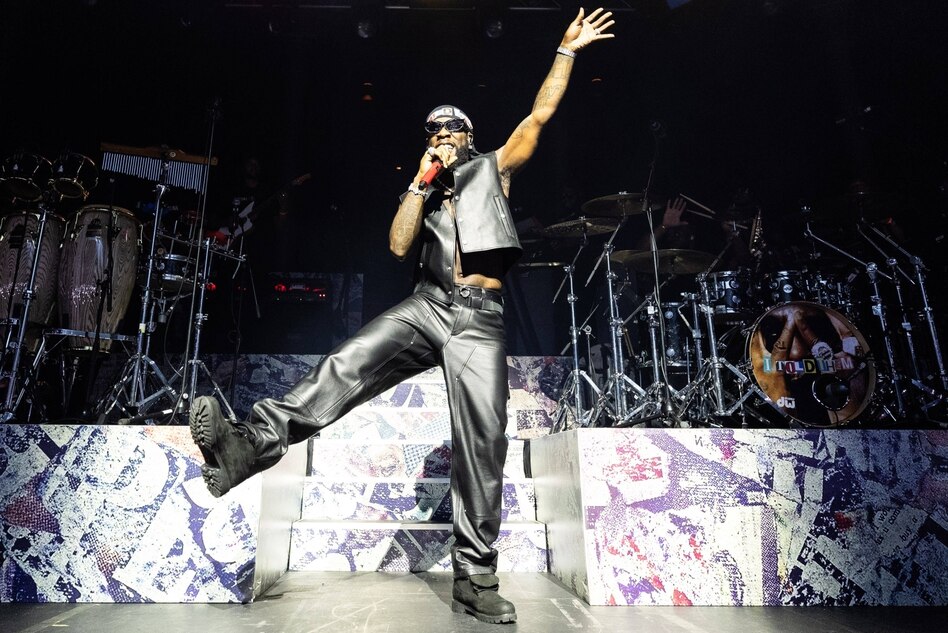
When Burna Boy takes the stage at the packed London Stadium on June 3, 2023, the atmosphere is electric. The Nigerian singer sings global hits such as “On The Low” and “Last Last”, and the audience sings along to his songs, from the first to the last line. Burna Boy, whose real name is Damini Ebunoluwa Ogulu, is one of the superstars of Afrobeats - a collective term for new pop music from West Africa.
It's a historic day. With the sold-out concert at West Ham United's stadium, Burna Boy becomes the first African artist to fill an 80,000-seat arena outside the continent. He will repeat the feat in 2024. At the World Cup final at MetLife Stadium in New Jersey in July 2026, he will perform at halftime with pop icon Shakira.
Burna Boy is part of a movement that also includes Afrobeats singers like Davido, Wizkid and Rema. They have achieved worldwide success with their bouncy grooves and syncopated African rhythms, sweet melodies and whispering voices in autotune mode. This is how Afrobeats became probably Africa's largest cultural export.
Colleagues from 16 African countries are taking part in the 5th Africa workshop of the taz panter foundation. This also creates a 64-page, elaborately designed magazine. It can be ordered by email to stiftung@taz.de with the subject “Africa Magazine” and your name and postal address. Thank you!
The magazine's texts also appear here on taz.de.
Would you like to support the taz Panter Foundation:
• or via the foundation’s account details:
But the music industry in Africa is also experiencing an upswing and a creative boost, not least thanks to cheap digital production technology and distribution channels. Traditional instruments are electrically amplified - and their sound is thereby brought into the modern era. Bands like Arka'n Asfrokor from Togo wear dreadlocks and play hard heavy metal. And at a festival like Nyege Nyege in Uganda, the talents of East Africa's electronic underground perform. For example, DJ Travella from Tanzania with his driving singeli electro at high speed - or KMRU from Kenya. The producer has made a name for himself with spherical house music, for which he often uses his own field recordings. KMRU is the grandson of legendary Benga musician and political activist Joseph Kamaru - in his memory, KMRU recently released two compilations of his raw-sounding gospel and funk songs from the 1960s.
Joseph Kamaru's late appreciation is an example of how one's own musical heritage is again receiving greater attention in Africa today - in times when questions of identity and cultural self-assurance are becoming increasingly important. In Zambia in southern Africa, for example, Zamrock has come back into fashion, a distinctive fusion of rock, psychedelic music and African rhythms - created in the 1970s as a powerful expression of a post-independence country struggling for its identity. Now Zamrock is once again inspiring a young generation of musicians in Zambia after the first records by Zamrock pioneers WITCH were reissued by a label in Los Angeles.
Support the taz panter foundation and its international projects with a donation. Learn more
But the growth engine is Afrobeats. Their success is accelerated by social media and digital streaming platforms such as Spotify, Apple Music, Boomplay and YouTube. Nigerian superstars Davido and Burna Boy and South African singer Tyla have millions of streams, and in 2021 Burna Boy became the first Nigerian artist to win a Grammy Award.
Modern popular music owes a lot to Mother Africa: whether highlife and soukous, blues and jazz, house and hip hop, reggae and rumba, salsa and samba - all of these musical styles would be unthinkable without African influences and rhythms. However, the continent has had little of this financially so far. This is now changing with Afrobeats. According to Eddie Hatitye, director of the Music in Africa platform, African music is currently experiencing unprecedented global attention and is growing rapidly. He explains this with the young audience in Africa, improved internet access, the increased use of digital platforms and the international success of some genres such as Afrobeats and Amapiano from the townships of Johannesburg and Pretoria in South Africa.
However, Hatitye criticizes the fact that most African artists are not sufficiently compensated by the platforms. “Streaming has made it much easier for African artists to reach global audiences without relying on traditional gatekeepers,” says Hatitye. “That’s a big advantage.” But music rights management systems in many countries are “still in development and the payouts generated by streaming are too low.”
Revenues from music recordings in Africa are growing steadily and the entire music industry, including live events, is expanding. According to the International Federation of the Phonographic Industry (IFPI), revenues in sub-Saharan Africa exceeded $100 million for the first time in 2024 - with growth of over 20 percent. In 2025, the trend continued as they rose 15 percent to $120 million. Nigerian singer Wizkid became the first African artist to reach more than 11 billion total streams on Spotify. Despite such high figures, financial returns in Africa remain far behind those achieved elsewhere. In some African countries, a million streams only bring in around $300 to $400 - in the USA, however, ten times as much.
This is mainly due to the different prices for streaming subscriptions, the income from which the rights holders are compensated. In countries where users are paid lower monthly fees, smaller royalty pools arise. In Nigeria, Spotify only costs around $0.50 per month - compared to up to $14 in high-income countries. Artists in Africa earn correspondingly less for the same number of streams.
However, the low revenues are also related to the structural weaknesses of the African music industry, such as inadequate enforcement of copyrights. There are also too few places for live performances - especially outside of the big cities.
But despite all the challenges, the rise of African music into the global spotlight is one of the continent's greatest success stories. Artists from Africa are breaking streaming records, filling large arenas, winning international awards and influencing pop far beyond Africa's borders.
For Hatitye, it is now crucial to build more African-owned businesses across the value chain. This is the only way to ensure that a sufficient proportion of the proceeds from the music business benefit artists and companies on the continent. “If we get this right, the music industry’s economic impact will be as great as its cultural impact.”
Read the full story at the source
Source: taz