
Germany Perspektive Online
EU Western Balkans summit: Germany supports faster accession procedures
On Thursday, Chancellor Merz traveled to Montenegro to discuss the role of various Balkan states in the context of the European Union. The summit is primarily intended to strengthen
Deutsch (original) ·Auto-translated to English
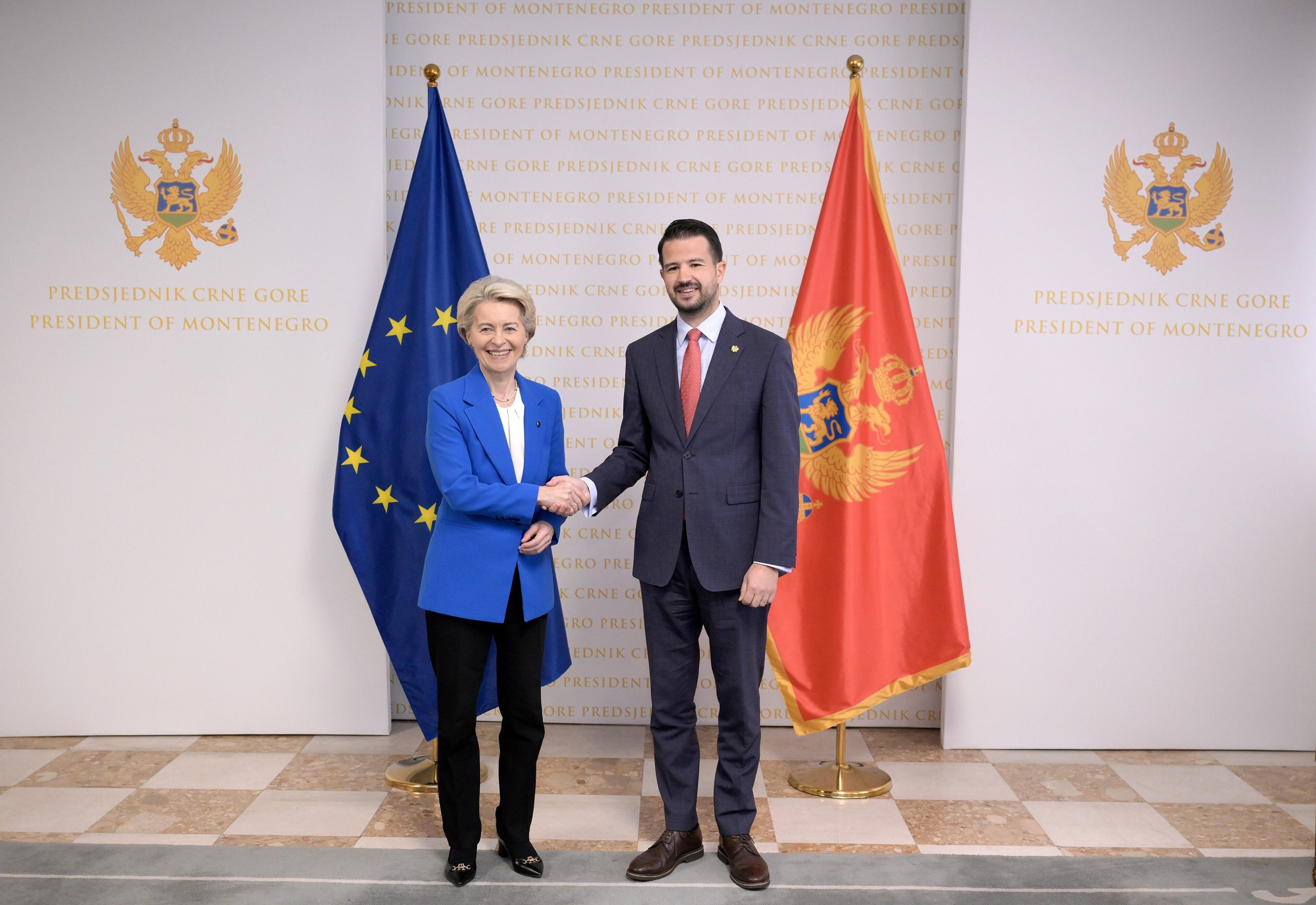
On Thursday, Chancellor Merz traveled to Montenegro to discuss the role of various Balkan states in the context of the European Union. The summit is intended primarily to strengthen the economic and political relations of the Western Balkan states with the EU. But several Balkan countries are currently experiencing violent protests against their own government.
Under the motto“Region in Motion – Owning the Change”This year's meeting took place between the EU and some Balkan countries. Thematically, the focus was primarily on the question of faster accession procedures for the Western Balkan countries to the EU and the importance of economic relations and trade routes with one another.
At a joint press conference, Chancellor Merz emphasized that it was particularly important that the EU expand under the current political conditions and that the political and geographical affiliation of the Western Balkans with Europe must also lead to concrete results.
He particularly highlighted the development of Montenegro and emphasized that, for the first time since 2013, there was a situation in which a new country was about to join the EU in the near future. Montenegro is well on the way to accession.
Others would have to and would follow. Milojko Spajić, the Prime Minister of Montenegro, wants to complete the negotiations by the end of 2026 and join the EU as the 28th member in 2028. Merz pointed out that the previous week the European Council had supported gradual integration wherever possible.
Particular importance for Germany and the EU
Specific results of the summit have not yet been published. But at a joint press conference at the end of the summit it became clear that the summit has particular significance for the German federal government given the current political conditions.This is how Merz explainedthat the enlargement of the EU is also necessary in view of the war in Ukraine. The summit is a clear sign that the EU must take concrete steps in order to be perceived and recognized as a power factor under the current conditions.
He also emphasized that the Western Balkan states are also important for Germany's investments and the development of new production locations. However, this requires a uniform legal basis at the EU level, which also makes the expansion of German production attractive.But for the EUThere are many more reasons to express an interest in faster accession of the Western Balkans. Because German interest in the Western Balkans is not new. The EU had already promised the region an accession perspective in Thessaloniki in 2003.
New Eastern Europe offensive: Wadepuhl wants the Balkans for the EU
After the Balkan route was largely closed to refugees, the region initially lost its importance for the EU, according to an analysis by the Institute for European Politics. Current EU negotiations withAlbaniaand other Western Balkan states via Frontex agreements show that the EU's political interest in negotiations with the Western Balkans will continue to increase in the future. The negotiations are intended to give staff executive powers such as border controls.
Protests in Balkan countries
Unity and unity were emphasized at the summit, both from Germany and the Western Balkan states. However, this contrasts with the actual political developments within the Western Balkans in recent months. With its long, eventful history, the Western Balkans are characterized by contradictory political developments. The question of the relationship between the EU and Russia is always in focus.
Especially in the last few months, the ongoing protests in various places have shown that there is no unity and unity between the government and the population. That's how it came inSerbiaSince 2024 there have been repeated mass protests against the government. The early election will take place there on October 25th. President Aleksandar Vučić announced his resignation in June but is running again.
It is seen as pointing the way for the future of Serbia. The old ruling party SNS and the student list that emerged from the mass protests are facing each other. And there has also been a new wave of protests in Albania in recent weeks. There, protests against the sale of land for tourist purposes have developed into a mass movement against the Albanian government. The current protests come as anti-government protests spread across Europe.
The postEU Western Balkans summit: Germany supports faster accession proceduresappeared firstperspective.