
Germany taz
Before the EU-Canada summit: Canada will not become an associated EU member for the time being
Chancellor Merz and other heads of government are putting the brakes on von der Leyen's Canada plans. Planned commitments for closer ties to the country are being weakened. more...
Deutsch (original) ·Auto-translated to English
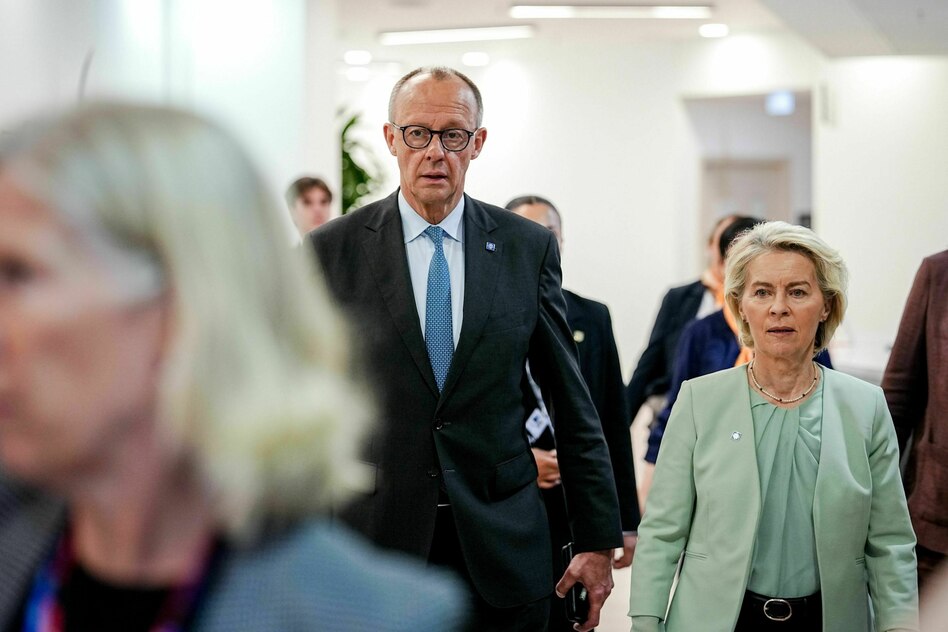
dpa | EU Commission President Ursula von der Leyen has failed for the time being with her push for associated EU membership for Canada. As the German Press Agency learned from diplomats in Brussels, Chancellor Friedrich Merz and several other heads of state and government from EU countries ensured that the terms “associated membership” and “associate member” were deleted from the draft of the planned final declaration of the EU-Canada summit starting this Thursday. Originally planned far-reaching commitments to financial market integration and mutual preferential treatment in economic security measures have also been weakened.
Instead, the text now says that a concept for “ever closer ties between Canada and the EU” is to be developed by the EU-Canada summit next year. It was adopted by the EU states in a written procedure on Wednesday evening and is due to be published on Friday at the end of the two-day summit in Montreal.
At the meeting in Montreal, EU Commission President Ursula von der Leyen actually wanted to officially launch Canada's “associated membership”. She had previously proposed it in a speech in September in the presence of Canadian Prime Minister Mark Carney, attracting a lot of attention. In addition to Carney and von der Leyen, EU Council President António Costa and a number of EU Commissioners are also taking part in the summit in Montreal.
EU diplomats cited the unclear meaning of the planned special status and the insufficient prior coordination between the Commission and the Council of Member States as the reason for the resistance of member states to the use of the term “associated membership”. It was also viewed as problematic that the term was already being used in connection with Ukraine's EU accession process.
In June, Chancellor Merz proposed “associated membership” for Ukraine as an interim step on the way to regular EU accession. According to his ideas, Ukraine could regularly take part in summit meetings or specialist councils of ministers before accession.
Von der Leyen then used the term completely differently in September, apparently without consulting Merz. From their point of view, in the context of Canada, it should make it clear that a non-EU country without a legal opportunity to join will be linked as closely as possible to the EU. In principle, it is planned that both sides will coordinate their policies even more closely with one another in areas such as energy, climate protection, technology and security. In addition, Canada should be more fully involved in EU programs for research, education and defense.
The general goal is to represent common interests more effectively and to reduce dependencies on other states. The background is also the loss of trust in the USA under President Donald Trump. Customs conflicts and Trump's territorial claims have increased doubts on both sides of the Atlantic about the reliability of the previous partner.
In his initial reaction, Trump described Canada's push for associated EU membership as ridiculous. If it were deemed to be a “hostile act” that harmed US interests, he threatened consequences. He would then impose high tariffs or stop trade with Europe in many areas, he warned.
An earlier draft of the final declaration of the EU-Canada summit specifically stated that Canada would in future participate as an “associated member of the Union” in exchanges and consultations on important political and regulatory initiatives. “The full scope of this associated membership will be determined by the EU-Canada Summit in 2027,” it said.
Some economic commitments were also originally planned to be stronger. Instead of guaranteeing each other favorable treatment when it comes to economic security measures, both sides now only want to try to limit negative effects on each other as much as possible. The explicit goal of greater integration of the financial markets was also eliminated. According to diplomats, in addition to Germany, Italy and France, among others, also expressed concerns about the original text.
This is now dominated by the term “Alliance for the Future”, which has so far been used primarily by Carney. With it, both sides want to reduce trade barriers, facilitate investments and ensure that important raw materials, medicines and technologies remain available even in times of crisis. A new economic council should bring companies from both sides together. According to the text, an investigation is also planned into the question of whether additional liquefied gas exports from Canada to Europe are feasible.
Carney initially did not attach great importance to the deletion of the term associated membership. He said of the dispute in the EU: "It's not about specific names or terminology. What's important is what difference it will make to the lives of Canadians.