
World · Jacobin · · 51m
Agitslop
English (original) · Read in Deutsch ⇄
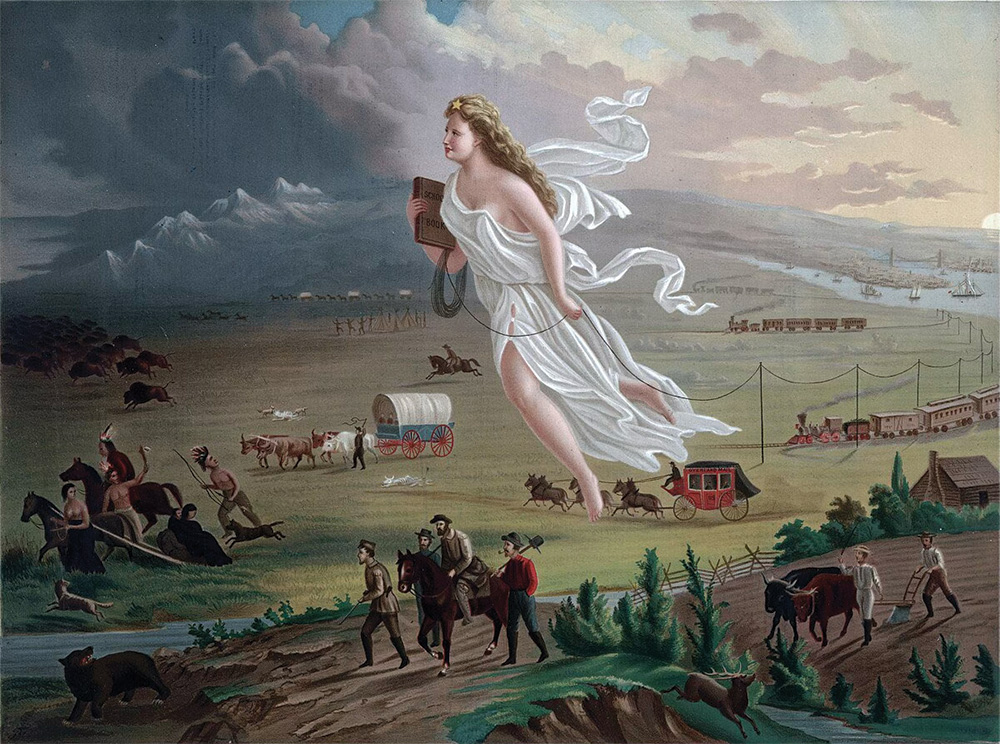
In 1872, George Crofutt, a publisher of travel guides advertising the American West, commissioned a painting from the German-born John Gast: an idyllic depiction of westward-bound American pioneers. Floating above them is Columbia, the female personification of the United States that inspired the following decade’s Statue of Liberty, bearing a textbook in one hand and a telegraph wire in the other. In her wake come the hallmarks of American modernization that would lend the painting its name: railroad, ships, and farmers, all illuminated by a rising sun marching inexorably westward across the sky. This is perhaps the single image most associated with manifest destiny, which held that the United States had a divine right to occupy the whole of North America — at the expense, of course, of the Native Americans who already inhabited those lands.
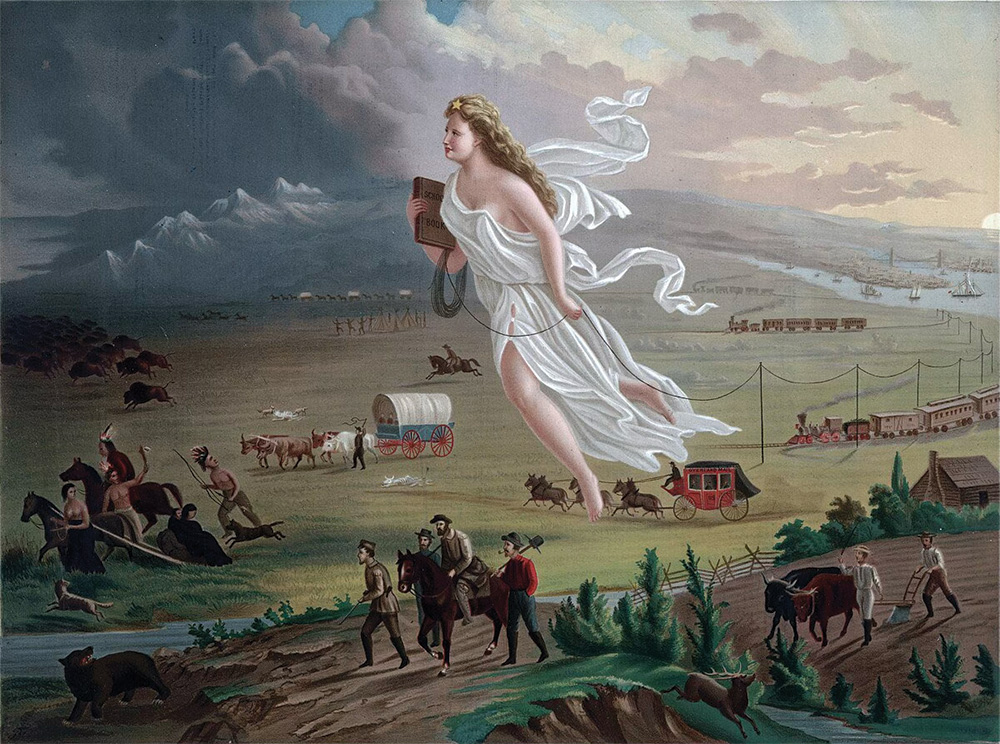
American Progress (1872) is just one of the propaganda images repurposed by the Department of Homeland Security for Immigration and Customs Enforcement (ICE) recruitment in 2025. “A Heritage to be proud of, a Homeland worth Defending,” reads a caption accompanying the image, posted to X. Other images shared by DHS include Thomas Kinkade’s Morning Pledge (2015), which depicts an idyllic small town complete with mid-century cars, and Morgan Weistling’s A Prayer for a New Life (2020), which shows a pioneer couple admiring their newborn infant on the frontier — as well as a large number of seemingly AI-rendered riffs on World War I and World War II military recruitment posters. So many themes are invoked simultaneously in this campaign that its message becomes almost incoherent. In fact, what unites the images shared by DHS is the history of US imperialism — its excesses now directed inward against Americans at home.
Go West, Young Man
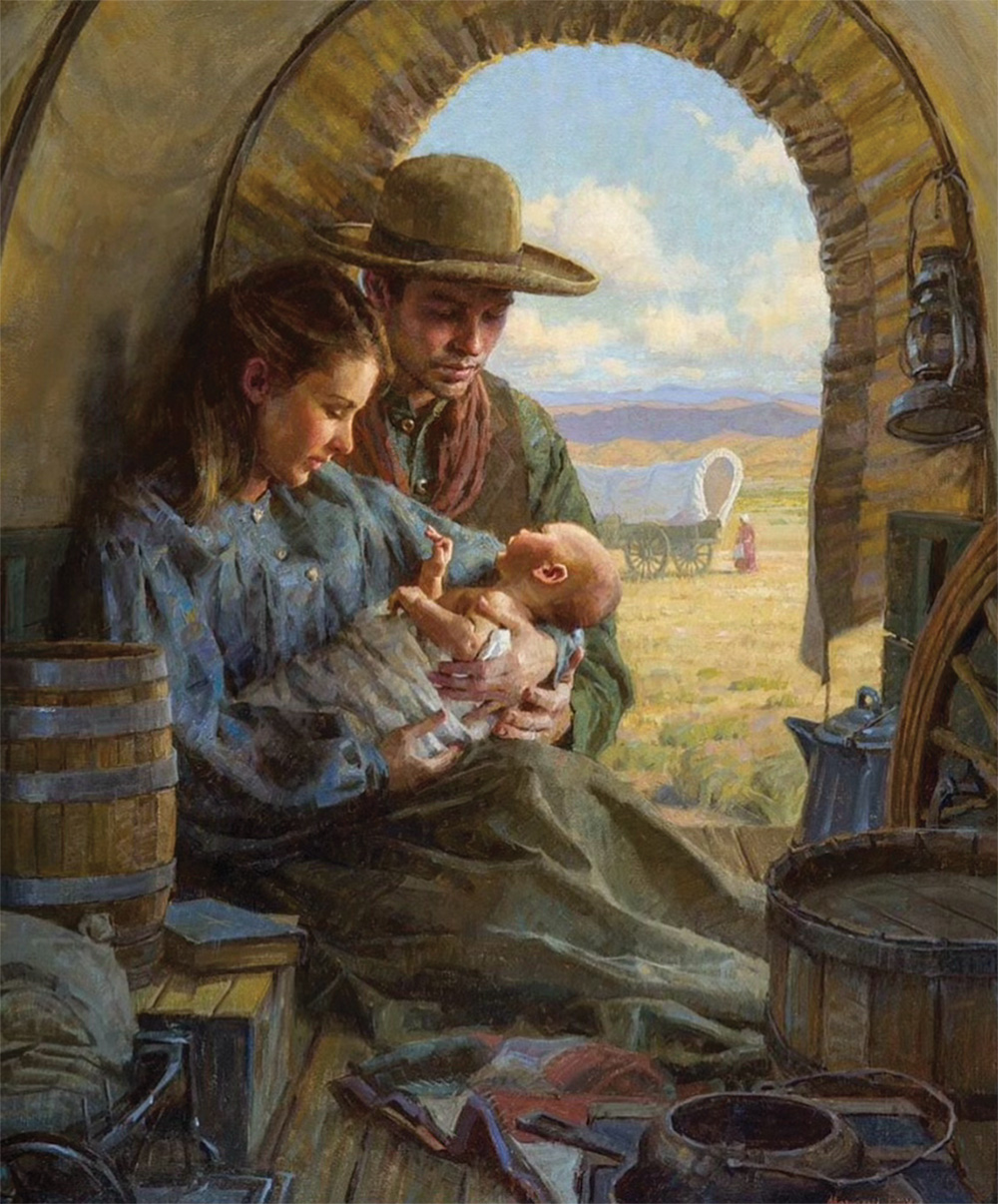
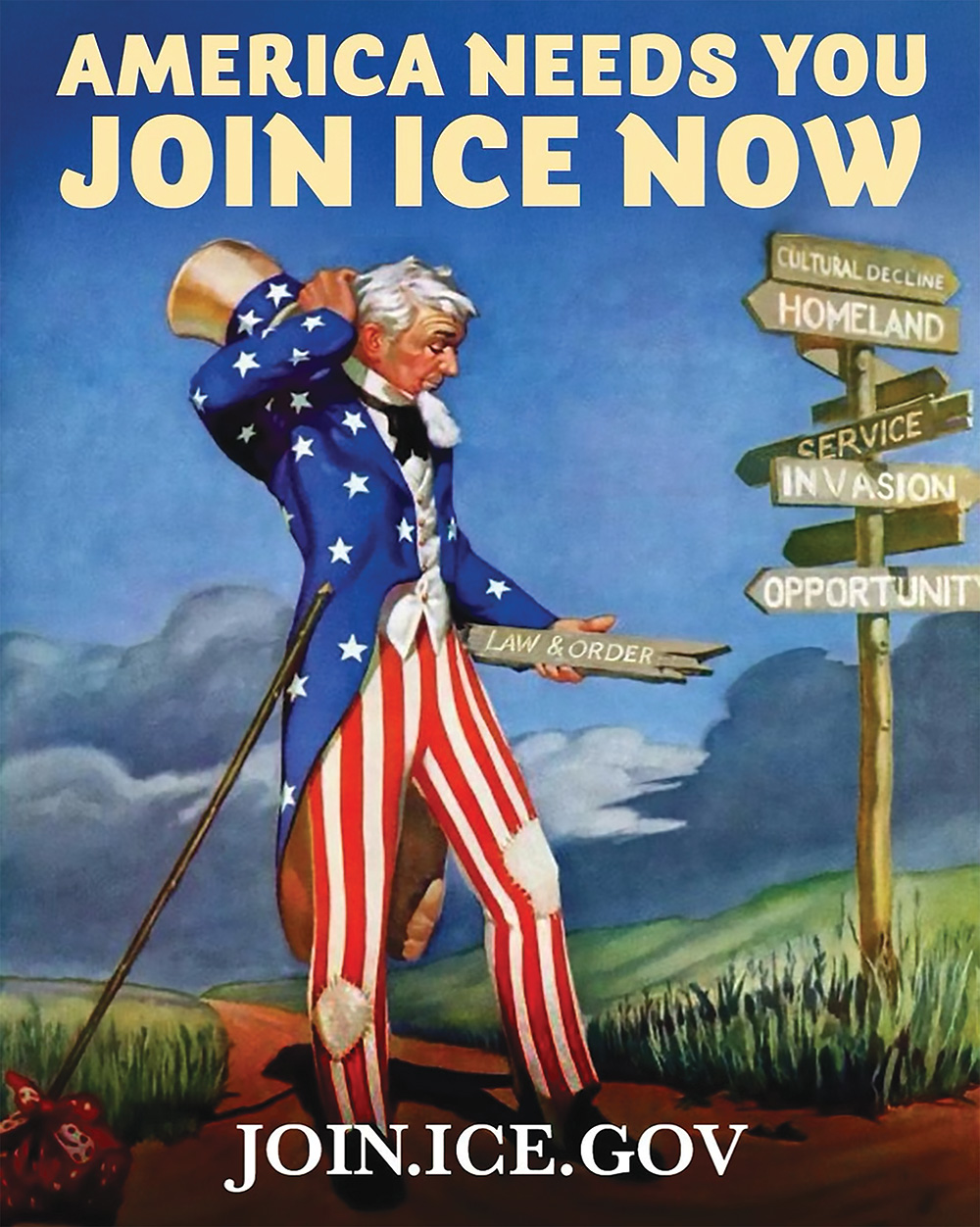
As with Gast’s American Progress, many of the propaganda posts shared by DHS invoke the image of westward expansion. Weistling’s A Prayer for a New Life depicts the interior of a covered wagon, in which a pair of American pioneers welcome a child who has been born in the process of migrating west. In the distance, another covered wagon is visible, and beyond that, vast emptiness. That same emptiness foregrounds Uncle Sam in the potentially AI-rendered “America Needs You” poster shared by DHS: the continent is depicted bereft of indigenous civilization, occupied only by European settlers. In the “America Needs You” poster, Uncle Sam stands beside a signpost indicating that both “homeland” and “opportunity” lie in the West.
WWI Redux
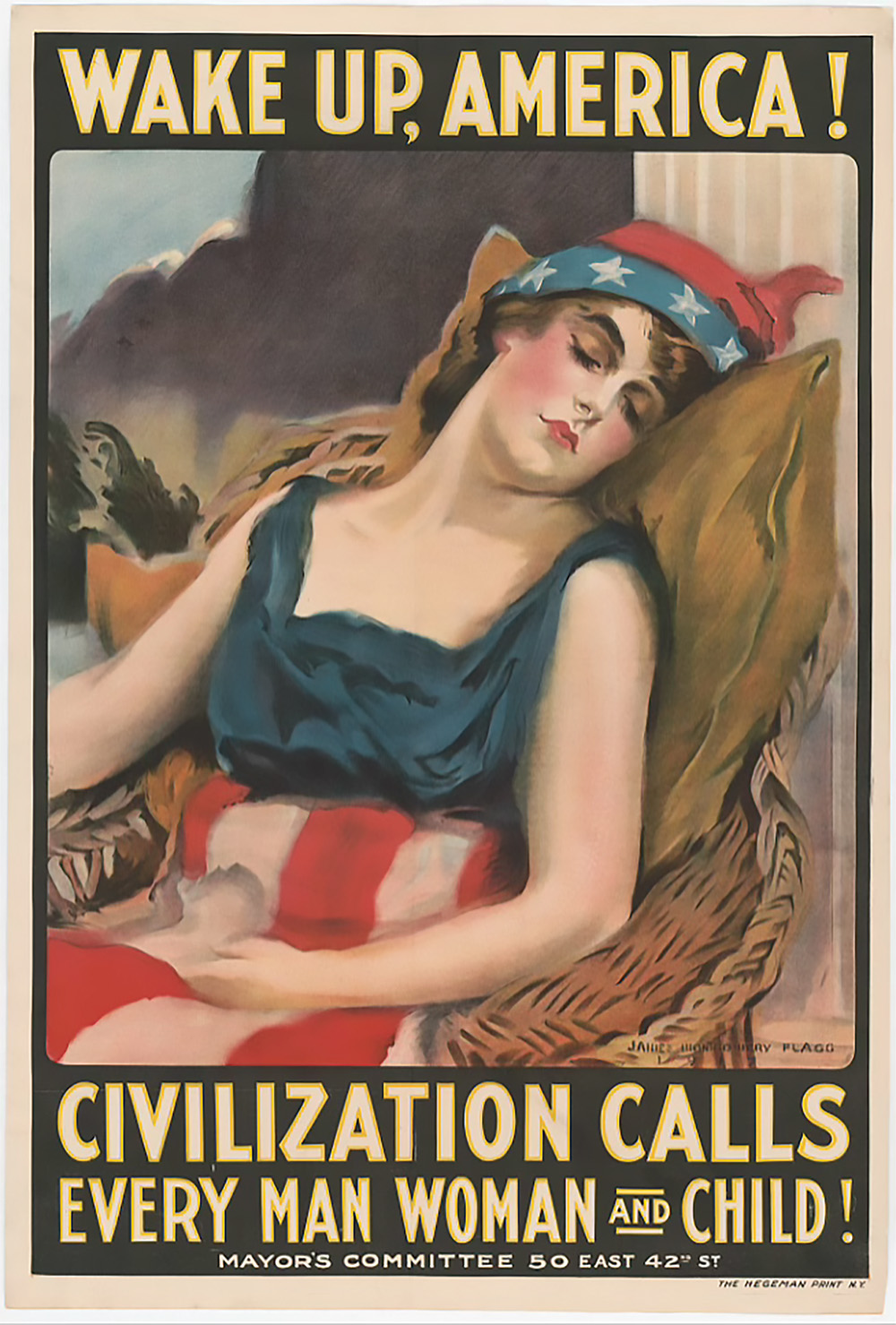
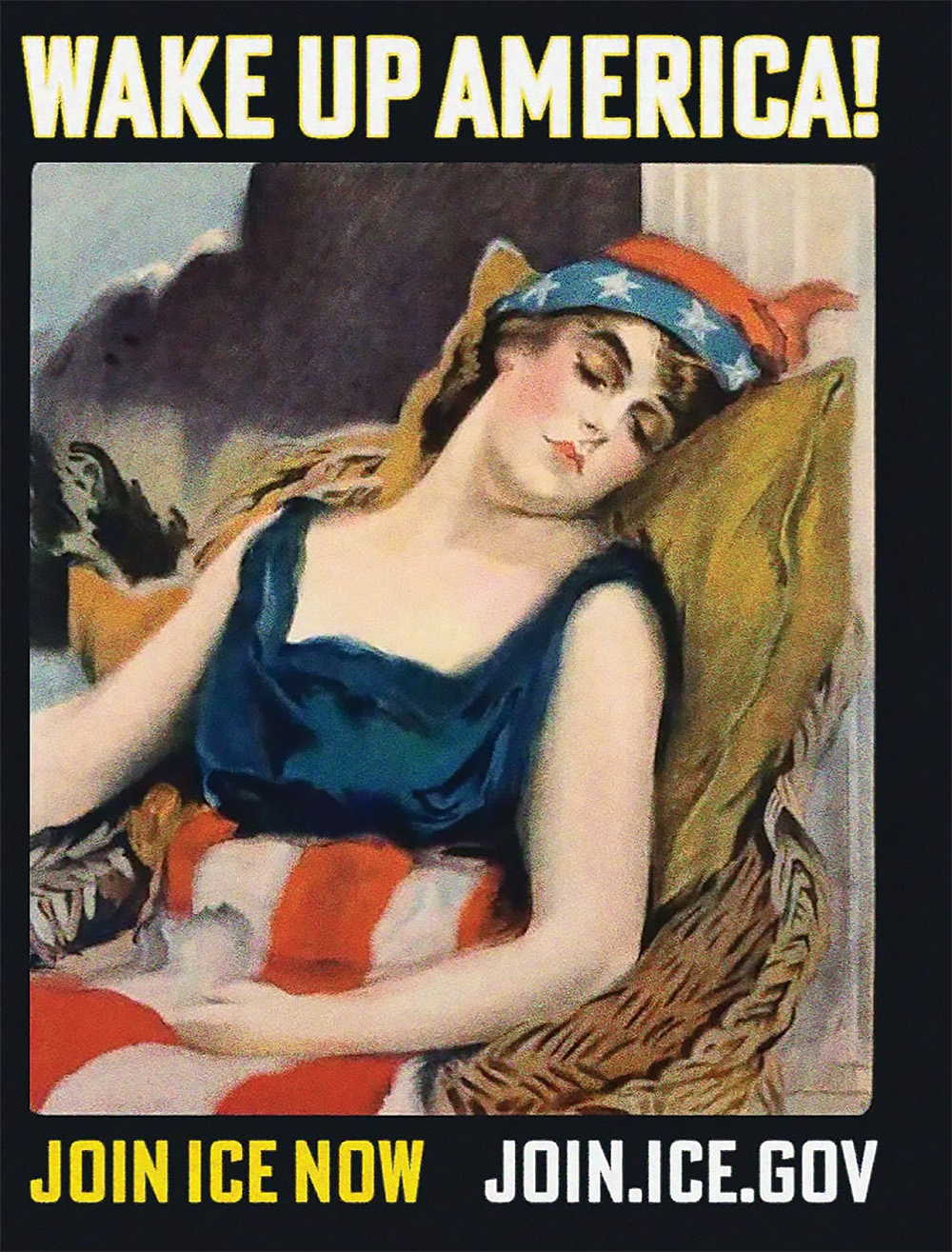
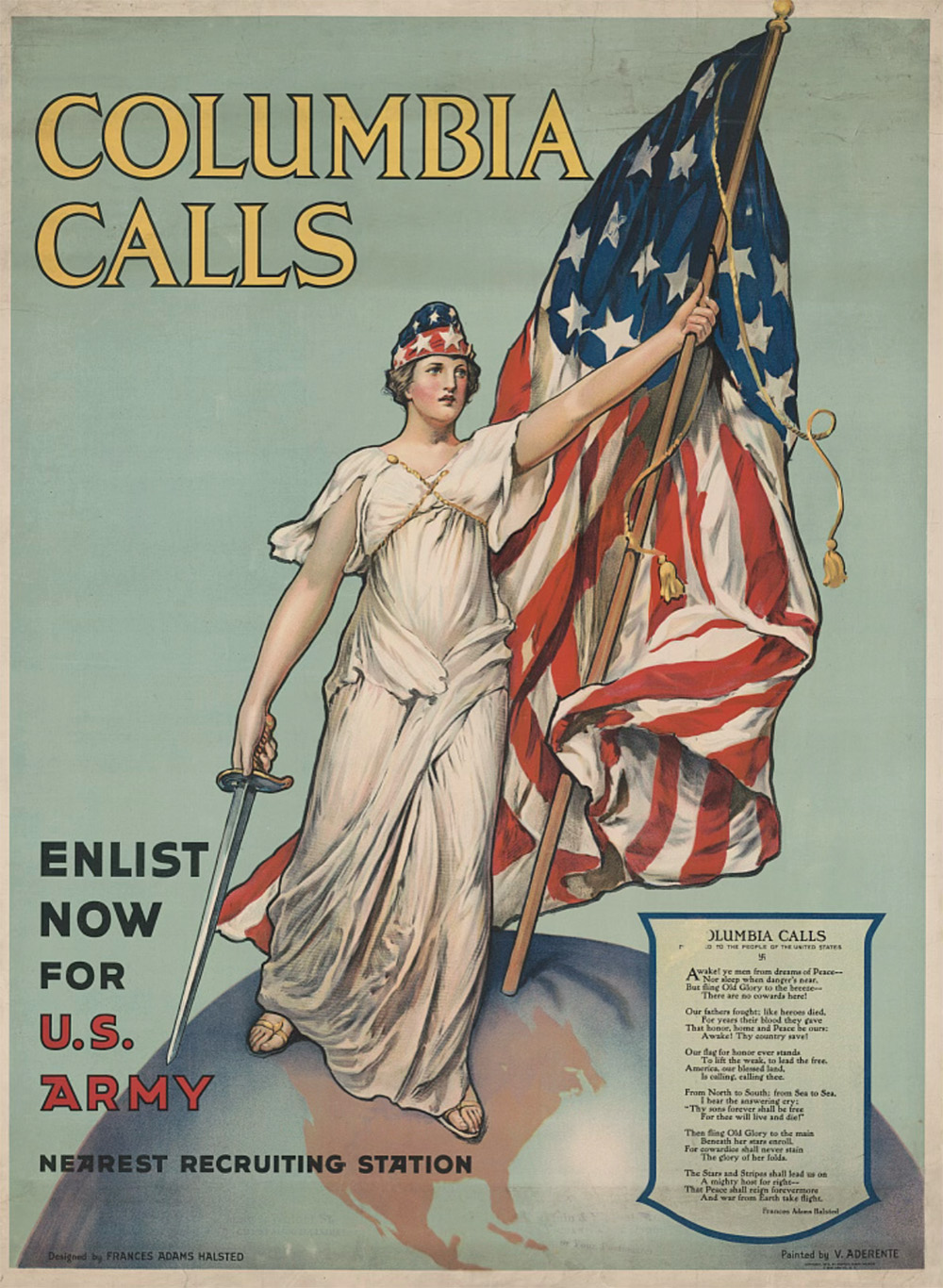
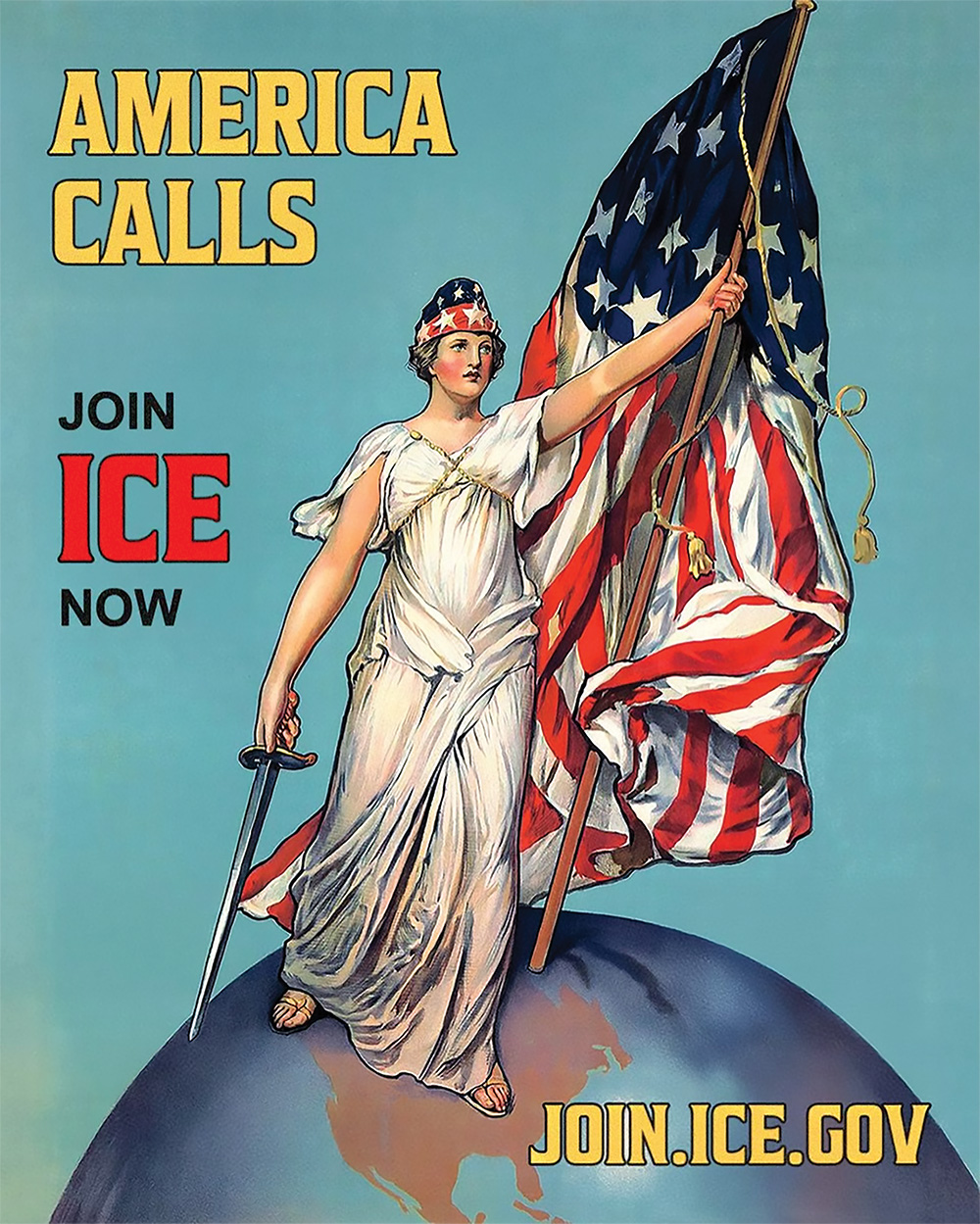
Some of the images shared by DHS for ICE recruitment ape the aesthetics of World War I posters, including Flagg’s “Wake Up, America!” and Aderente and Halsted’s “Columbia Calls,” both of which feature Columbia on the front lines of global conflict. In the former, Columbia is imperiled by storm clouds gathering on the horizon, while in the latter, she prepares to march forth from the United States to military glory abroad. Together, the two images tell a story of American neutrality that gives way to intervention only under duress — a narrative belied by US imperial activity in the years leading up to World War I, which saw the United States acquire Hawaii, the Philippines, Puerto Rico, Eastern Samoa, Guantanamo, Guam, and the Panama Canal Zone and launch military interventions in Nicaragua, the Dominican Republic, Haiti, Cuba, Panama, Mexico, and Honduras.
Read the full story at the source →
Source: Jacobin