
World · In Defence of Marxism · · 2h
Lenin, Trotsky, and the struggle for theory
English (original) · Read in Deutsch ⇄
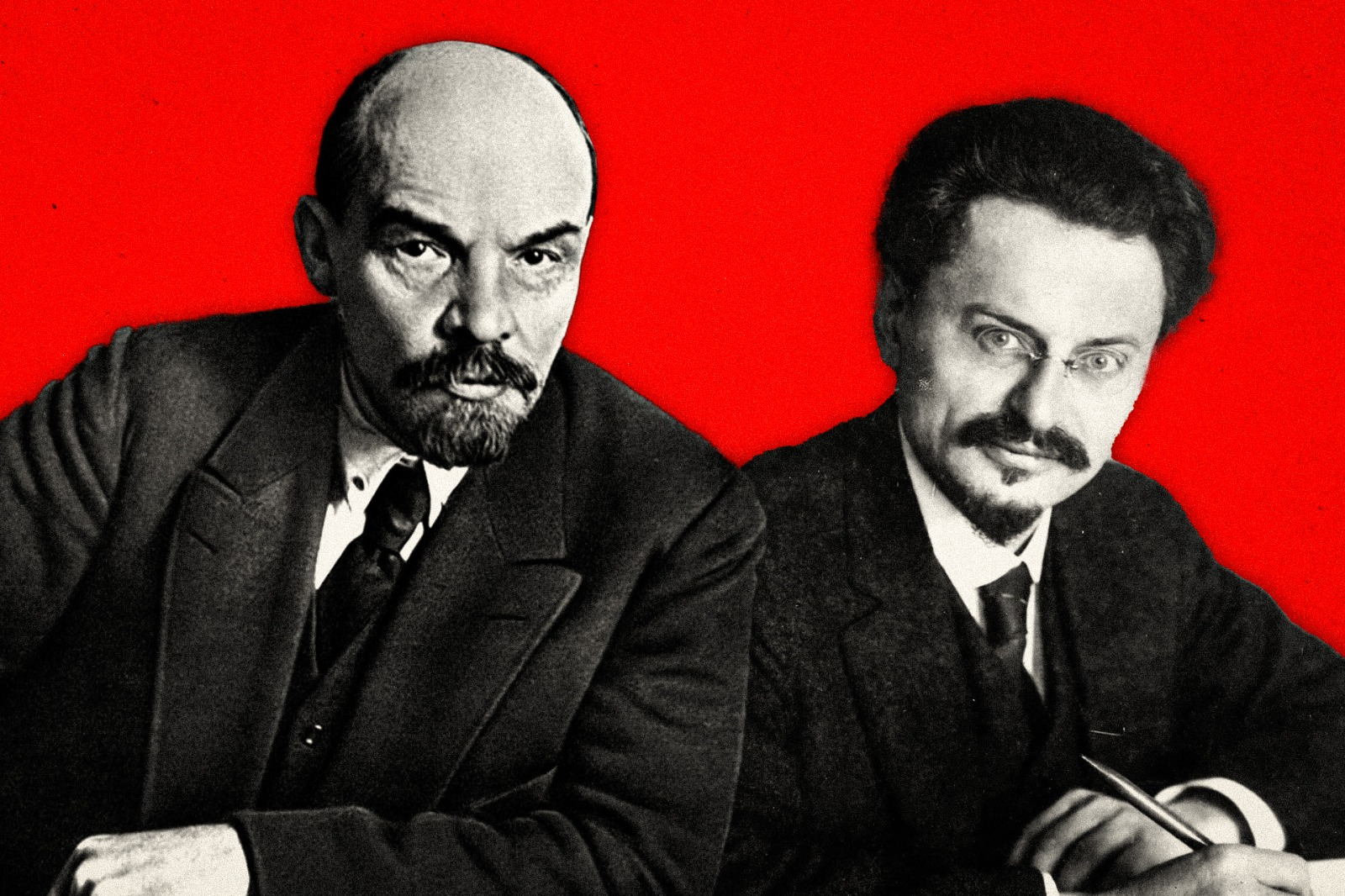
We are proud to announce that Wellred Books – the publishing house of the Revolutionary Communist International – has republished Lenin and Trotsky: What They Really Stood For. This classic text is the response of Alan Woods and Ted Grant to Stalinist distortions of the ideas of Lenin and Trotsky, and attempts to drive a wedge between the two principal leaders of the October Revolution.
We hope reintroducing comrades to this important theoretical resource will mean that it continues to play a key part in the building of the revolutionary organisation, just as it did in 1969.
The new issue was officially launched at the recent World School of Communism, where it was by far the best-selling title at the bookstall. You can catch up on the other sessions at the World School by heading to the Revolutionary Communist International’s YouTube channel, or by clicking here.
[Order your copy of Lenin and Trotsky: What They Really Stood For at wellred-books.com, or by clicking here]
Following the end of the Second World War, in which the might of the Red Army defeated Hitler’s armies, the prestige and authority of the Soviet Union in the international workers’ movement was immensely strengthened. Riding high on this prestige, Stalinist communist parties across the world became a pole of attraction for many honest revolutionaries.
But by the middle of the 1950s, cracks in the Stalinist edifice had begun to appear. At the beginning of 1956, Nikita Khrushchev – who became Soviet leader after a power struggle following Stalin’s death – delivered his infamous ‘secret speech’. Khrushchev attempted to pin the crimes of the whole bureaucracy on Stalin and the ‘cult of personality’, thereby deflecting growing unrest against the bureaucracy onto one man, strengthening the bureaucracy as a whole.
View this post on Instagram A post shared by Revolutionary Communist International (RCI) (@revcomintern)
This process of ‘de-Stalinisation’ sent shockwaves across the Stalinist communist parties worldwide, and precipitated a questioning en masse of the official (Moscow) party line. These cracks were then blown open at the end of 1956 when the Red Army crushed the Hungarian Revolution.
This movement was an attempted political revolution that sought to preserve the social gains of the planned economy, whilst removing the bureaucracy at the top. At the time, to reach out to those honest revolutionaries now questioning their Stalinist leaders, Ted Grant penned a letter appealing to these layers for an open discussion on the building of a genuine Marxist tendency.
This was compounded a decade later in 1968 by the Soviet crushing of the Prague Spring. Whilst not as far-going a movement as the Hungarian Revolution, the Soviet bureaucracy still saw in this a threat to its authority coming from within the borders of the other Eastern Bloc countries.
Alongside the shock created by the Soviet response to the Prague Spring within some of the ranks of the international Communist movement, there came the betrayal of the May 1968 revolutionary movement by the French Communist Party, which capitulated and made a deal with the capitalists. On the back of the increasing ferment within the communist parties, there was a growing interest in the ideas of Leon Trotsky and the Left Opposition.
For the past 40 years, Stalinist parties smeared Trotskyists as fascists, sectarians, petty-bourgeois radicals, and intriguers. But as the political authority of these leaders degraded, it was impossible for the leadership to prevent some of its best, thinking militants from reassessing the received wisdom handed down by the party tops on what Lenin and Trotsky stood for.
In Britain’s Communist Party (CPGB), this crisis of Stalinism motivated an article by Monty Johnstone, one of the party’s leading theoreticians, in an attempt to steer its members away from Trotskyism. Named, ‘Trotsky: His Ideas’, this article promised a ‘re-evaluation’ of Trotsky’s ideas, rather than the usual out-and-out hit-piece offered by Stalinists. And yet, the article ultimately only repackaged the same Stalinist slanders. Drawing on the time-honoured Stalinist tradition of falsifications, insults (couched in haughty language), and insinuations, Johnstone sought to bury Trotsky’s legacy, rather than engage in a genuine discussion within the party about it.
Ted Grant and Alan Woods saw the importance of reaching out to the membership of the CPGB, and in particular its youth wing, the Young Communist League (YCL). And unlike the Stalinists, they did not fear a genuine and open debate, and so with open arms they welcomed the opportunity to set the record straight, and defend the real ideas of Lenin and Trotsky.
They painstakingly answered every argument and corrected every error. This is the real method of Marxism: scrupulous commitment to the truth, aiming to understand an opponent’s position better than they themselves do, faithful presentation of the arguments made rather than cherry-picking quotes to attack a position that isn’t held.
Keeping with the Stalinist tradition, Johnstone does his best to minimise Trotsky’s role in the Russian Revolution / Image: public domain
For this reason, Lenin and Trotsky: What They Really Stood For ended up being ten-times the length of Johnstone’s 28-page article. You can compare in the book the genuine method of Marxism employed by Alan and Ted, and that of Johnstone: the difference between them is like night and day. Keeping with the Stalinist tradition, Johnstone does his best to minimise Trotsky’s role in the Russian Revolution, in line with the Stalinist falsification of history. For example, Johnstone writes:
“When the Trotskyists present Trotsky as the comrade-in-arms of Lenin and the true representative of Leninism after his death, it is important to be aware that in fact Trotsky only worked with Lenin in the Bolshevik Party for six years (1917-23).”
To someone with little knowledge of the history of the Russian Revolution, the length of time might make it seem like Trotsky didn’t play much of a role. But Alan and Ted look deeper into what those six years meant: they included the Russian Revolution, the civil war, and the creation of the Third International. Each one of these events was monumental, and involvement in any one of them would have been a test of the worth of any revolutionary, let alone one who played a leading role in all three.
Johnstone goes on to apply his ‘method’ to the history of the Bolshevik Party, the theory of permanent revolution, Trotsky’s role in the Brest-Litovsk treaty, the Left Opposition, and the nature of the bureaucracy and the Soviet Union. The response from Alan and Ted is a mature and detailed analysis of the roots, development, and trajectory of Stalinism, as well as the genuine revolutionary communism – of which Stalinism is a caricature – that connects Lenin and Trotsky.
Lenin and Trotsky: What They Really Stood For proved to be a major addition to our theoretical heritage, re-released today with a brand new introduction by Alan Woods, in which he discusses the life and ideas of Trotsky, and brings the book up to the present day.
To provide one anecdote of the power of the ideas contained within this book, through this honest and open debate we won over Jim Brookshaw, then chair of the Young Communist League – the youth wing of the CPGB – to our tendency. With him, many young members followed and grew our ranks.
Following the collapse of the Soviet Union in 1991, the forces of Stalinism worldwide are a shadow of their former selves. Today, there is no major Stalinist force that comes close to what Alan and Ted had to deal with in the 1960s. And yet, by virtue of its thorough treatment of Stalinist distortions, and its patient and deep-going explanation of the real ideas of Lenin and Trotsky, the book remains just as valuable today as it was in the late 1960s.
Read the full story at the source →
Source: In Defence of Marxism