
World · Jacobin · · 47m
Guerrilla Cinema
English (original) · Read in Deutsch ⇄
In 1969, Argentine filmmakers Octavio Getino and Fernando Solanas published “Toward a Third Cinema,” a manifesto that rejected both Hollywood spectacle (“first cinema”) and European art house auteurism (“second cinema”) in favor of something new: films made as acts of political struggle, screened clandestinely, and designed to turn spectators into participants. It became the theoretical spine of a movement that swept the decolonizing world. Here are five essential films from Third Cinema, the militant movement that turned filmmaking into anti-imperialist struggle.
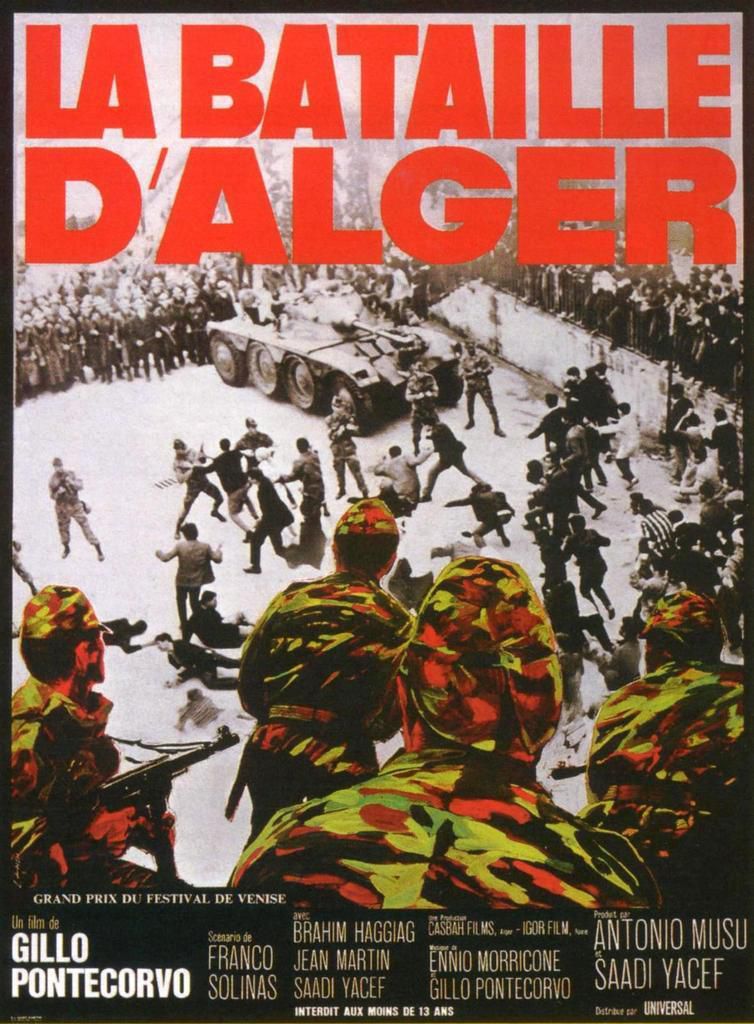
The Battle of Algiers
Gillo Pontecorvo
1966
Shot in the Casbah with nonprofessional actors, including actual FLN veterans, Pontecorvo’s re-creation of the Algerian independence struggle is so convincingly staged that the Pentagon screened it in 2003 to study insurgency (clearly it didn’t do much to help Team America). As revolutionary in its politics as it is thrilling in its cinematic language, the film recently made a cameo as the movie Leonardo DiCaprio’s character watches on TV in One Battle After Another.
The Hour of the Furnaces
Octavio Getino and Fernando Solanas
1968
This is the movement’s founding artifact: a four-hour agitprop epic on Argentine neocolonialism, smuggled between union halls under the dictatorship. Screenings typically paused mid-film for audience debate, but this practice also might have had something to do with the film’s 260-minute runtime.
Memories of Underdevelopment
Tomás Gutiérrez Alea
1968
Cuba’s legendary drama follows a bourgeois intellectual who stays behind after the revolution, too alienated to leave and too detached to join. The film was a critical hit. But when Gutiérrez Alea tried to visit the United States to receive several awards for it, he was denied entry. A revolutionary film honest enough to dwell in ambivalence, self-critical without being counterrevolutionary.
The Battle of Chile
Patricio Guzmán
1975–79
Guzmán’s three-part documentary about the downfall of Salvador Allende is perhaps cinema’s most intimate and incisive account of the dynamics of revolution and counterrevolution. Circulated in secret under Augusto Pinochet’s dictatorship, the film was also produced clandestinely: crewmembers adopted fake names and brought their cameras into the path of bullets, capturing the violence on the streets, the machinations of the right-wing elite, and the rising militancy of the Chilean left.
Perfumed Nightmare
Kidlat Tahimik
1977
Third Cinema filmmakers weren’t always serious, nor were they always from Latin America. This Filipino comedy follows a jeepney driver who dreams of becoming an astronaut and worships everything American — at least until a surreal trip to Paris shows him the rot at the heart of capitalist society. As the protagonist’s illusions crumble, the film transforms from a whimsical romp into what Tahimik described in the credits as a fiery “Declaration of Independence.”
Read the full story at the source →
Source: Jacobin