
World · Jacobin · · 1h
Kautsky Was Wrong. Then He Was Right.
English (original) · Read in Deutsch ⇄
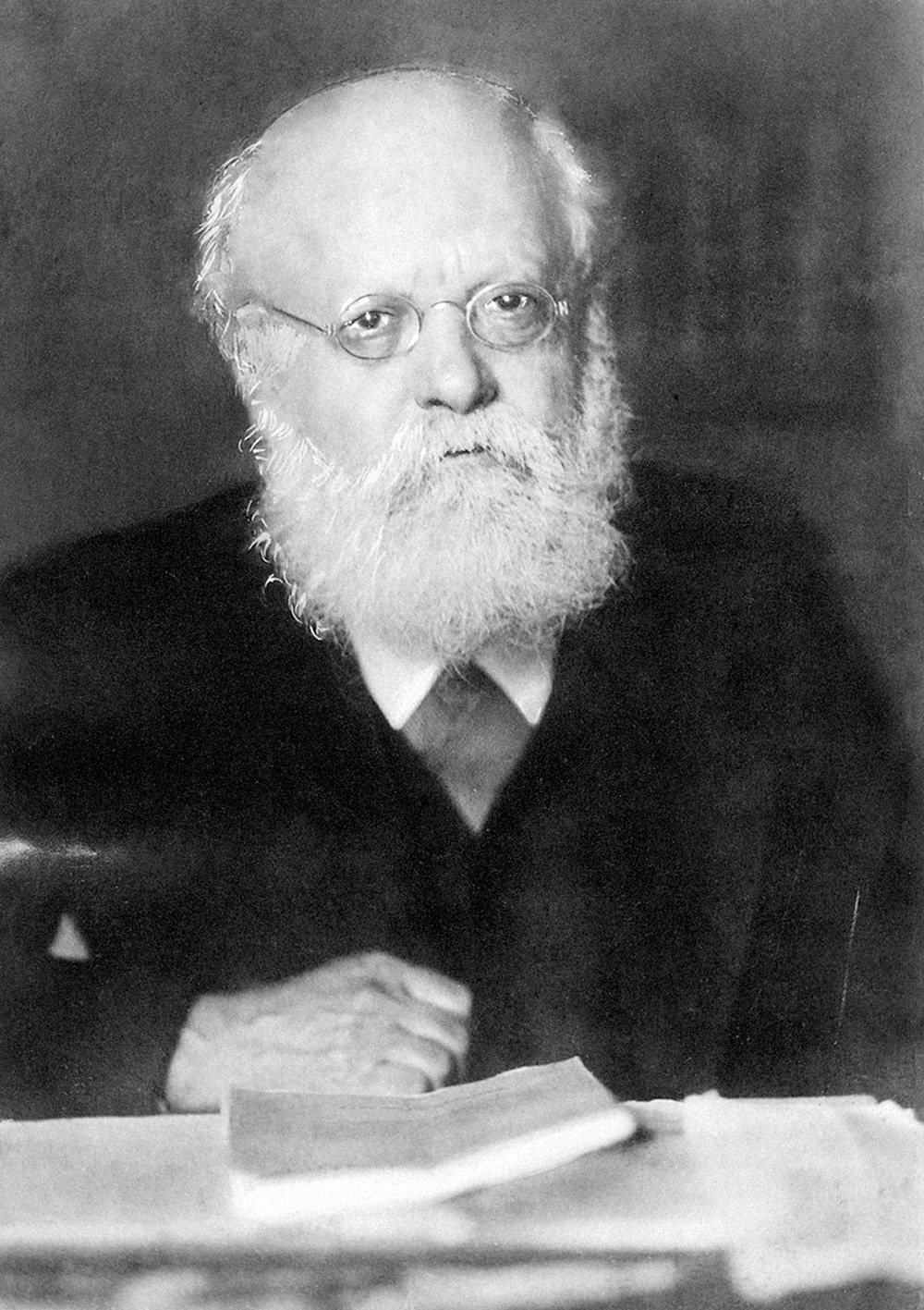
Six weeks after the outbreak of World War I, as Europe’s great empires sent millions to their deaths, Karl Kautsky published an essay predicting something almost impossible to believe. In an article for Die Neue Zeit called “Der Imperialismus,” better known under the English title “Ultra-Imperialism,” Kautsky argued that the leading powers were, despite all evidence to the contrary, moving toward not endless conflict but peaceful cooperation.
The claim quickly came to seem absurd. As the trenches filled with corpses and the war consumed an entire generation, Kautsky’s essay looked less like a penetrating analysis than a spectacular misreading of history. Today most young socialists encounter “Ultra-Imperialism” only as the foil for Vladimir Lenin’s Imperialism, the Highest Stage of Capitalism — a naive theory that mistook the realities of global capitalism and furnished an intellectual rationale for Kautsky’s increasingly centrist politics.
But before tossing Kautsky’s “Ultra-Imperialism” into the dustbin of history, it’s worth looking at what he actually had to say.
Kautsky’s theory begins with the premise that the smooth functioning of the capitalist economy relies on proportionality between sectors, in this case the agricultural and industrial sectors. The industrial sector, growing more quickly than the agrarian sector, creates a dual problem of underconsumption, where agricultural zones lack the purchasing power to buy from a growing pool of available industrial goods, as well as underproduction, where the agricultural sector is not productive enough to meet the demands of the growing industrial sector, leading to price spikes. The solution to this problem from the capitalist nations was imperialist expansion to secure new agrarian zones, leading to an era of free trade in which Britain was the indisputable “workshop of the world,” selling manufactured goods to a global countryside in exchange for raw materials and food.
Yet it was obviously not in the interest of these nations to remain agrarian, and any country that could feasibly compete with Britain in manufacturing (the United States and Germany, for example) would reject free trade and embrace tariffs to invest in their own firms. As domestic industrial capacity grew, so did the need to find profitable investments overseas, leading industrial nations to export capital abroad to the global countryside of the agrarian zone. Yet the industrialized countries had no interest in seeing these poorer nations develop on their own terms and potentially become competitors themselves — hence the need for the industrialized nations to conquer, colonize, or otherwise dominate them. This need created conflict between the industrialized nations, which engaged in an arms race and armed conflict over the control of the global agrarian zones. It is here that Kautsky finds the root cause of the policy of imperialism.
It is clear that for Kautsky, imperialism is a matter of policy, which he explicitly identifies with the arms race among capitalists in the rich industrialized countries. If the policy of free trade is to be associated with industrial capital, Kautsky associated imperialism with finance capital. Imperialism is a policy that is ultimately destabilizing for capitalism, as it not only intensifies resistance in the colonial and semicolonial world but also produces financial burdens on the proletariat in the industrialized countries. According to Kautsky, while there is an economic necessity for the continued subjugation of the agrarian zone by the rich countries — a subjugation that can only end with socialism — there is no economic necessity under capitalism for the imperialist arms race. In fact, the imperialist arms race was, in many ways, destabilizing for capitalism, a break with its inherent economic rationality.
Hence, per Kautsky, “every far-sighted capitalist today must call on his fellows: capitalists of all countries, unite!” Rather than fratricidal violence, the future of capitalism was a cartel of the rich nations united as a “holy alliance of the imperialists.” Kautsky predicted that they’d be so exhausted by the massive social dislocation produced by the coming war that they would prefer self-preservation over further self-destruction. Capitalists, for Kautsky, were ultimately governed by their own ironclad rationality; peace was simply the rational play.
Sure, this holy alliance of capitalists would still exploit and dominate the poor nations of the world as a global countryside, and Kautsky was clear that ultra-imperialism should be struggled against with as much vigor as was the more primitive phase of imperialism preceding it. But the perils of ultra-imperialism “lie in another direction, not in that of the arms race and the threat to world peace.” The exact nature of these perils is left unclear.
One can easily see why Lenin and fellow revolutionaries found fault with the political logic at play here. For one, Kautsky seems to suggest that there is an enlightened bourgeoisie that can be appealed to, at least temporarily, as a means of negotiating a more sane and rational imperialism. At the very least, it seemed to promise a more peaceful form of capitalism down the line, despite the perilous road ahead. For Lenin, any period of peace and unity between capitalist powers could only be a temporary truce between periods of violent redivision of the world.
If World War I made Kautsky’s thesis seem implausible, World War II, in which industrialized capitalist powers duked it out once again with even more terrifying weaponry, seemed to put it into further disrepute. Writing under the pseudonym E. Germain in 1955, Ernest Mandel bashed Kautsky’s theory of ultra-imperialism as being based on a “blindness to the contradictory, dialectical character of capitalist evolution, to the concentration of capital.” Concentration did not abolish competition so much as raise it to a higher level: as capital merged into national blocs, rivalry passed from firms fighting for markets to states fighting for territory.
Yet as the years passed, the world increasingly came to resemble Kautsky’s vision of ultra-imperialism. The major capitalist powers did, in fact, form a holy alliance: the North Atlantic Treaty Organization. The growing stature of the Soviet Union as a geopolitical force imposed a collective discipline on those powers’ ruling classes, uniting them under the leadership of the now global hegemon, the United States of America. A bipolar world quickly took shape while the global countryside emerged as a potentially independent force through a wave of decolonial revolutions. As newly independent states pursued their own paths of national development, they found themselves confronting a global system of multinational corporations and Bretton Woods institutions like the World Bank and the International Monetary Fund. Together, these institutions constituted an internationally integrated system of finance capital that worked collectively to keep the world’s poorer nations in a position of dependency.
For example, while Kwame Nkrumah’s 1965 Neo-Colonialism: The Last Stage of Imperialism may carry a title that echoes Lenin’s famous tract, the world he describes seems closer to the ultra-imperialism described by Kautsky. Nkrumah portrays American and European corporations, banks, and states as operating through interlocking networks that cooperate to exploit Africa’s labor and natural resources. Institutions like Deutsche Bank and the Banque de Paris no longer appeared as antagonists locked in a scramble for colonies but as partners in the shared exploitation of the newly independent nations of the Third World. Had history, despite Lenin’s confidence, ended up vindicating Kautsky after all? Had the imperialist powers ultimately united into a single bloc to plunder the developing world?
After the fall of the USSR, alternative socialist paths of development were practically foreclosed, with the United States emerging as the hegemon of a unipolar world. For some on the Left, like Michael Hardt and Antonio Negri in their work Empire, global capitalism had reached a new stage beyond imperialism, where the nation-state no longer had relevance and no country could claim to be an exploiting “core” in relation to an oppressed global “periphery.” Commentators would compare Hardt and Negri’s theory to Kautsky’s ultra-imperialism, but such comparisons misunderstand the latter’s theory, which never claimed that the division of the world between rich and poor countries would be overcome.
Yet we should not be too quick to claim Kautsky’s theory of ultra-imperialism as vindicated. Growing tensions between the United States and its European allies, together with China’s emergence as a potential peer competitor to American hegemony, suggest that ultra-imperialism might have just been a temporary phase. The limits the United States has encountered in projecting power in places like the Persian Gulf and Ukraine indicate that we may be returning to an era of arms races and interimperialist rivalry. Perhaps Lenin was right after all: periods of cooperation among the capitalist powers are merely interludes before the next round of great-power conflict. Time will tell. As of now, we can only be certain that capitalism inherently produces rapacious inequality among the nations, and that socialism alone can properly address it.
Read the full story at the source →
Source: Jacobin