
World · Green Left (Australia) · · 2h
Judy Mundey: ‘Public housing needed as housing crisis deepens’
English (original) · Read in Deutsch ⇄
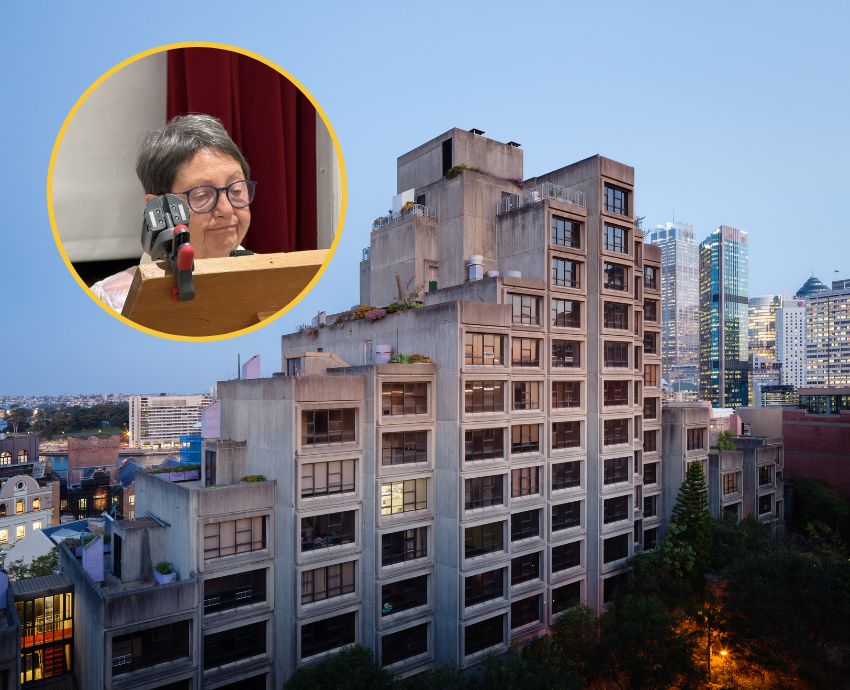
This is a slightly abridged version of a speech by Judy Mundey, housing campaigner and women's rights activist, to a meeting focused on NSW Labor’s development plan in the Bays West precinct, organised by Better Futures Coalition on September 29.
The Sydney Morning Herald, in May, referred to twin babies born to a mother who lived and gave birth to them in a tent on the banks of the Murrumbidgee River at Wagga Wagga in NSW. One died; the other had to be hospitalised.
A local councillor said the tragedy was a predictable result of systemic failures to address homelessness. He put the problem down to a lack of public housing.
The SMH editorial referred to the surge in people living in cars, tents and caravan parks, describing it as having echoes of the Depression era.
In Sydney, people are sleeping in the St James railway station tunnel, parks and other forms of less than salubrious accommodation.
Then there is the scourge of domestic violence and the desperate need for safe housing for the victim-survivors. For many women it is a choice between living with domestic violence or homelessness. The refuge system is unable to cope and thousands are on the waiting list for public housing.
Renting in the private property market also presents problems.
A recent estimate said that, nationwide, more than 1.25 million low-income households are in financial stress. Even where people can find rental accommodation, it is often less than stable.
A new report from Adelaide University said children who grow up in rental housing move every 2.3 years, on average, and that by the age of 14 a child in private rental had moved an average of six times, with some as often as 10 times.
Such frequent moves can incur or inflict other disadvantages, such as changing schools and the loss of friendship, sporting and social relationships.
We are not only in the midst of a housing crisis, we are experiencing a systemic failure to address it.
There is no shortage of promises meant to rectify the problem. Recently, NSW Labor announced some 9,400 homes would be built in the Woolahra/Edgecliff area, with towers of 32 and 34 stories. Almost all such proposals involve the private sector and that has not always gone well.
People will recall the examples of developer-built projects with serious defects, such as Opal Towers in 2018 and Mascot Towers in 2019, with some homes remaining uninhabitable.
Peoples’ lives have been ruined. They save and borrow, only to find they cannot not live in their new home but there is no financial recovery. At that time, developers were able to employ private certifiers.
The explosion of defect-riddled apartment project failures with their multi-million dollar repair bills prompted the NSW government to appoint NSW’s first Building Commissioner in 2019.
But then came the collapse of Dyldam disaster in 2020, one of NSW’s biggest apartment builders, with debts of half a billion dollars. The NSW building regulator identified serious defects in a 230 apartment development in Baulkham Hills, including defects so serious as to be labelled a threat to human life. That development is still undergoing repair work.
There are almost daily reports about the impact of these dodgy developers.
The latest dodgy developer in the spotlight is Bathla. It has collapsed, owing debts of $3.3 billion. Many buyers have been left in the lurch, losing large sums paid as deposits.
Bathla’s work was not only riddled with defects, it also engaged in unsafe work practices. It was fined $135,000 in 2018 over a serious injury on a project at Doonside and was slapped with more than 300 notices by Safe Work NSW relating to safety issues.
Thousands of partially-built properties have been left unfinished.
These collapses has inevitably had a devastating effect on those further down the supply chain — suppliers, sub contractors and employees are owed, as are those who paid deposits.
Bathla’s collapse is also a disaster for the national housing supply, as there are 14,000 apartments stalled.
The NSW target for new housing is already running well behind target.
The Chris Minns Labor government pledged to build 378,000 homes by mid 2029. This requires 22,000 homes to be delivered each year until mid 2029. There appears to be a massive disparity between the government’s promises and its actual delivery.
Notwithstanding these dodgy developer disasters, Labor seems wedded to private development.
But there is an alternative — public housing.
In the past, it was government built with controlled rents and without defects; it was secure. But now the state is not only failing to invest in public housing, the public housing that still exists is being demolished.
Labor says it will replace 750 public housing homes at Waterloo with approximately 3300 homes: 50% (about 1500) will be private market homes; 30% (about 1000) will be social housing which includes public housing managed by the government and community housing run by not-for-profits; and 20% (about 600) will be affordable housing which, after 15 years, reverts to the developer.
The social housing component appears to be the most fluid aspect of the plan. There is no guarantee that the 750 public housing homes that were lost will actually be replaced.
The project will take 30 years, with the first stage to be completed in 2030.
In the meantime, the 750 displaced families are supposed to be given priority for alternative public housing — pushing others further down the list.
NSW Labor said public housing residents in Waterloo was not “functional” and that it wants mixed tenure and diversity.
However, such estates were functional in the past.
The first purpose-built public housing estate was built at Daceyville in 1911 and 1912. Then, public housing made up around 69% of the suburb, consisting of Federation-style cottages, apartment blocks and semi detached homes.
In the 1970s, residents formed the Daceyville Preservation Society and secured a Green Ban to stop wholesale demolition. The residents clearly felt it was “functional”.
After World War II, governments built public housing to address the lack of housing for working families. Millers Point and The Rocks area contained public housing. That area had been resumed by the government, following the plague in the early part of the previous century, and the homes were occupied by working-class people, many of whom worked nearby on the wharves.
Then the Robert Askin Coalition government had a plan to demolish the homes and build high-rise concrete and glass commercial edifices. The residents decided against that plan and called on the Builders Labourers’ Union (BLF) to protect their homes.
Some housing was lost in the course of the successful battle to save the Rocks, and the incoming Neville Wran Labor government agreed with the BLF to build an apartment block for some who had been displaced.
The Sirius building was built by the government, with a government architect and government-employed construction workers. It contained 79 units ranging in size from one bedroom to four bedroom units — an example of the diversity the government wants. It was defect free, and it overlooked Sydney Harbour and the Opera House.
But after 37 years, it was sold off by the Liberal government to the highest bidders. The tenants were displaced, their communities destroyed. They were rehoused but, as with Waterloo, that meant others who were on the waiting list for public housing were moved further down the list. In August, there were 71,000 people on the waiting list for social housing, up from 59,000 in 2024.
Some Green Ban public housing successes still exist, including in Woolloomooloo and Glebe, both of which were under threat in the 1970s.
Public housing fell to 5% of all dwellings in the late 1990s and by 2023 it was 4%.
If we are going to address the housing crisis, we need less privatisation of publicly-owned land and more well-designed public housing.
The Bays West Precinct is publicly-owned land. Labor says it will provide 8500 homes. When in opposition, Labor said that properties built on surplus public land would be subjected to a mandatory requirement for 30% of dwellings to be used for social, affordable and universal housing.
But now, in government, it says in respect of Bays West that only 10% is required for affordable and essential workers homes. Public housing is not part of its plan.
This is a failure to ensure everyone has a decent, safe, secure home.
The Prime Minister was brought up, no doubt with a devoted mother, but also with the advantage of safe, secure public housing. Others deserve that opportunity.
[Judy Mundey, housing campaigner and women's rights activist.]
Read the full story at the source
Source: Green Left (Australia)