
World · Green Left (Australia) · · 50m
Pacific Islands tell Australia not to cop out on cutting emissions
English (original) · Read in Deutsch ⇄
Vanuatu’s climate minister Ralph Regenvanu has been sounding the alarm over climate change. As the four-day pre-COP31 meetings get underway in Fiji, he continues to argue countries need to take “urgent action” to reduce greenhouse gas emissions.
Regenvanu points to the United Nations Environment Program report, which, in September, found that the world is set to cross the Paris Agreement threshold in the next few years, with a best-case scenario peak temperature of 1.8°C (others suggest 2°C). The report said the impact of climate change will be increasingly dangerous, but that it is still possible to bring temperatures down to the agreed global goals.
Regenvanu also pointed to the International Court of Justice’s (ICJ) advisory opinion that countries have a responsibility to achieve the goal of limiting climate warming to 1.5°C above pre-industrial levels, but that those responsibilities extend beyond domestic emissions.
He said if emissions are not rapidly reduced within the next four years, any overshoot of 1.5°C, “even a fraction of a degree”, is not an abstract problem for Pacific nations; it will mean reefs, freshwater and land are destroyed.
Regenvanu said Australia’s argument that it is only responsible for cutting the greenhouse gases it emits within its borders is untenable. He said the ICJ’s advisory opinion specified the 1994 United Nations Framework Convention on Climate Change (UNFCCC) was not the only climate change framework countries must abide by.
The UNFCCC was agreed to when there was less understanding about the devastating impact of climate change. It aimed to stabilise greenhouse gas concentrations “at a level that would prevent dangerous anthropogenic (human-induced) interference with the climate system”. It said that level needed to be “achieved within a time-frame sufficient to allow ecosystems to adapt naturally to climate change, to ensure that food production is not threatened, and to enable economic development to proceed in a sustainable manner”.
Importantly, it put the onus on developed countries to lead the way.
The goal of the Paris Agreement, adopted by 195 parties in Paris in 2015, is “to limit the temperature increase to 1.5°C above pre-industrial levels”.
Australia is jointly hosting COP31 with Türkiye in November, and this week is hosting a pre-COP meeting in Fiji.
The Coalition, predictably, says it is a waste of money. One Nation wants Australia to adopt Donald Trump’s policy and immediately withdraw from COP.
Chris Bowen, energy minister and chief negotiator for COP31, has moved to allay fossil fuel corporations’ concerns, telling The Australian in June that he will not be using his role to push for a phase-out of coal or gas exports.
More telling about Labor’s position on COP, however, are its actions; it has approved 37 new or expanded fossil fuel projects since it formed government in 2022 on a mandate to stop dangerous climate change. The Coalition then, and now, was talking up expanding fossil fuels and uranium mining and exports.
Labor is using its “middle power” status at the pre-COP meeting in Fiji to push Pacific Island states to accept what it puts on the table.
Bowen and Prime Minister Anthony Albanese say they are listening to Pacific Island nations’ concerns about climate change being the real security threat. But Australia is using a loophole in the Paris Agreement that allows countries not to count downstream, or exported, emissions from fossil fuels it mines for export.
This allows major fossil fuel exporters, such as Australia, to pretend to be on track with their climate goals. Australia is content to exploit this loophole to allow publicly subsidised corporations to expand their exports of coal and gas. Australia is one of the world’s largest exporters of liquefied natural gas.
Australia’s 2035 climate targets may look reasonable on paper, but they are fake; they downplay the country’s actual contribution.
This is why Regenvanu is right to point to the ICJ’s — unfortunately non-binding — advisory opinion. It said that all states have obligations to “act” to stop significant hardship to the climate or environment. In other words, preventing climate harm is the duty of all countries, but particularly those of the Global North.
Pacific Islands nations have, for decades, been saying they must not be made a sacrifice zone.
But just like Australia’s aid program has for years been tied to its sub-imperial objectives in the region, so too is its climate funding. Australia is the biggest overall donor to the Pacific region for now, although China is also increasing its development financing.
This is not going to improve while Australia’s climate “aid” to the Pacific is about funding “resilience” measures, rather than a plan to cut its own emissions and tackle the actual problem. The formal “climate” negotiations in Fiji have been reduced to discussing how to encourage more donors for the “Pacific Resilience Facility” (PRF), which funds “climate resilience” projects in the Pacific.
The PRF aims to raise US$13.2 billion by 2030, to fund such projects as an early disaster response, the installation of water tanks and climate resilient agriculture and community solar energy. So far, US$180 million has been pledged by 16 “sovereign investors”. Its initial goal is US$500 million.
While such a mechanism may help out some communities on some islands, it is a rearguard market-based approach that will do nothing to stop rising sea levels — the existential threat to many small island states.
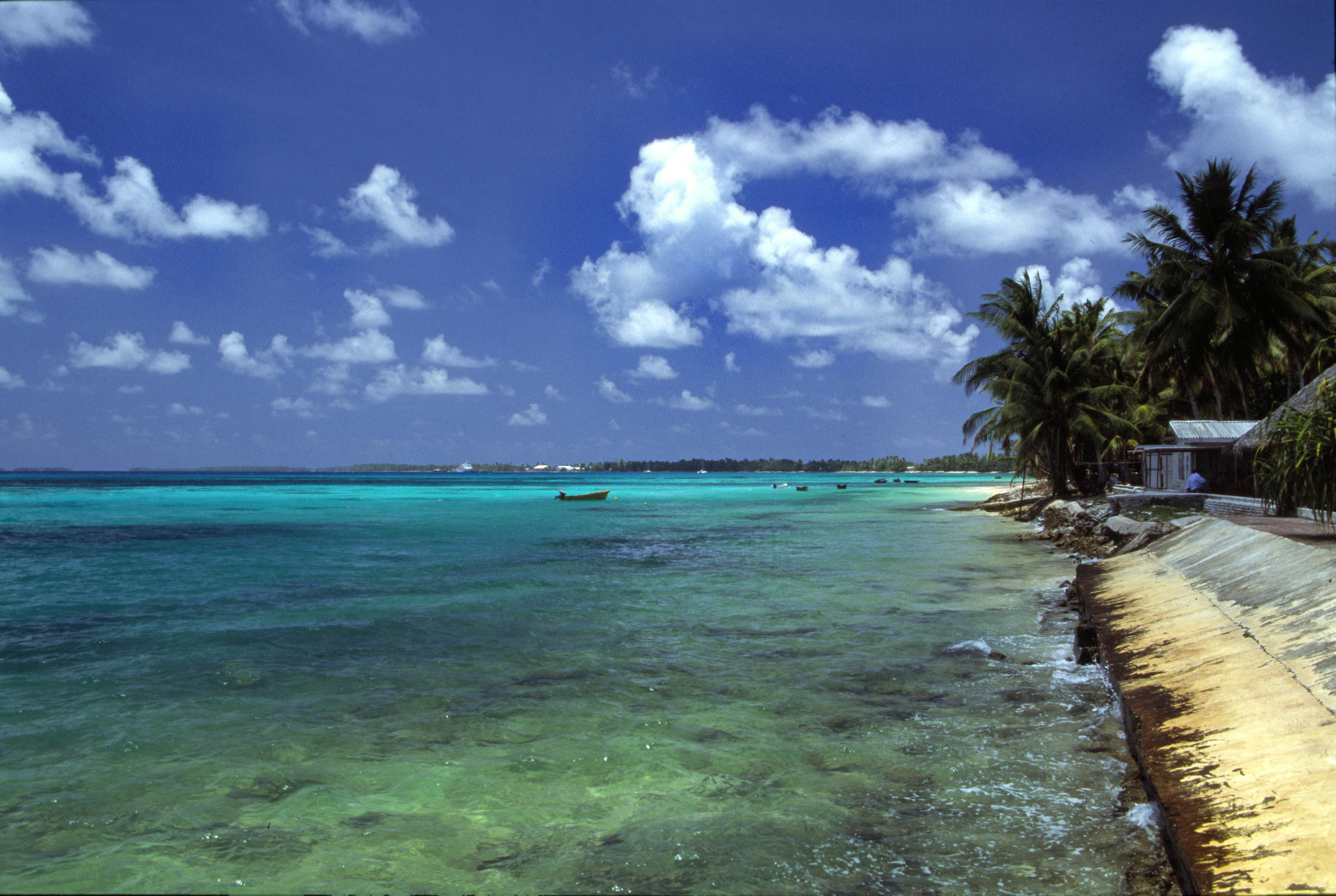
Band aid solutions will not save the 10 Pacific islands slated to disappear. NASA estimates that daily high tides will submerge roughly 50% of Funafuti, home to most of the population of Tuvalu, and major parts of Tuvalu will be uninhabitable by 2050 — when Australia says it will reach net-zero emissions. More than 90% of people in Tuvalu have applied for residency or citizenship in Australia.
The only way to force Australia to be a good Pacific neighbour is to build the climate justice moment to be able to upend Labor’s cynical pro-corporate approach.
[Sydney Students for Climate is organising a ‘No cop-outs at COP31’ rally at Sydney Town Hall on October 24.]
Read the full story at the source
Source: Green Left (Australia)