
World Autonomies
Our founder: Charlotte Wilson
From our 140th anniversary issue, an appreciation of the unfairly obscured anarchist and her profound legacy punkacademic, from Freedom News, 15/11/2026 “The key-note of the anarchist contention is th
English (original) ·Read in Deutsch ⇄
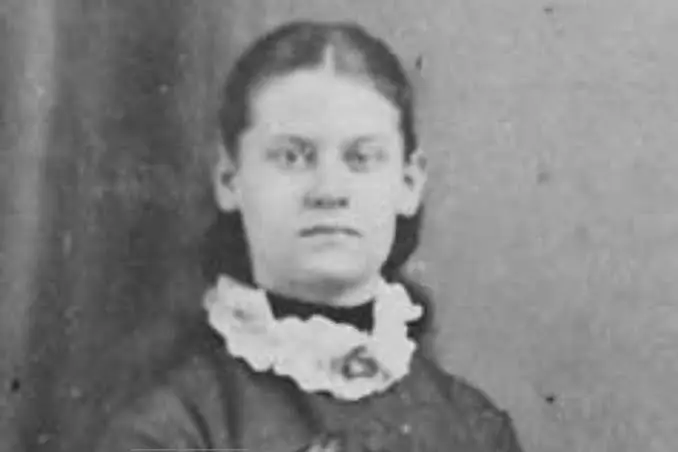
From our 140th anniversary issue, an appreciation of the unfairly obscured anarchist and her profound legacy
punkacademic, from Freedom News, 15/11/2026
“The key-note of the anarchist contention is that the vitiation of social life is produced by the domination of man by man. The spirit of domination is the disintegrating element, which, constantly tending to break up society, is the fundamental cause of confusion and disorder.” So wrote Charlotte Wilson in July 1886 – a few months before she and a group of others founded the Freedom newspaper and in turn Freedom Press.
Aside from the gendered language, Wilson’s analysis still has relevance today, as does her writing. Her emphasis on the role of domination in disrupting the social relations to which she felt human beings naturally inclined would find its echoes in more recent times.
In 1982, Murray Bookchin spoke of domination as the fundamental vice to which his social ecology stood opposed. “The domination of nature by man”, wrote Bookchin, in his Ecology of Freedom, “stems from the very real domination of human by human”. Bookchin paid tribute to a litany of male writers – Weber, Horkheimer, Adorno, Polanyi, and Kropotkin. He also named his “favourite Utopian” – Wilson’s former friend and comrade, William Morris. But of Wilson, mention came there none.
Bookchin’s assertion that before the 1960s “domination” and “hierarchy” would have been unfamiliar terms on the left would have seemed strange to Wilson. Despite the best efforts of scholars such as Susan Hinely, Hermia Oliver and our own Nicolas Walter in the decades since Bookchin, Wilson remains unfairly obscured. And yet her legacy – not least the enduring one of this periodical itself – was profound.
Born in 1854 in Worcestershire, Charlotte “Lettie” Martin (as she was before marriage) was solidly middle-class, born into an era of religious upheaval, scientific discovery, and political and economic change.
It was a period of huge extremes of wealth and poverty; Dickens’s Hard Times was published the same year Lettie was born, its soulless Mr Gradgrind as the epitome of drudgery and conformity. Lettie – our Charlotte Wilson – would not do conformity.
Hinely notes that Wilson’s heritage was evangelical, and that religious sentiment pervaded her upbringing even as she repudiated the church in favour of her secular faiths – socialism in general, and anarchism in particular. But religious language and a sense of mission characterises her writing.
She was from her youth a rebel. Her gender meant she could not vote nor receive a degree in the ancient universities where her male peers might venture. She went anyway – to Cambridge, as one of the first women to attend classes there. Married in 1876 to Arthur Wilson, a stockbroker, she lived in London and cultivated a wide intellectual circle on the left. Cambridge had been a transformative experience for her and, as Hinely shows, gave her an understanding of social science which accelerated her transition to socialist politics.
She was radicalised by a series of incidents in the 1880s. The Lyon Trial of the 66—which amounted to a purge of anarchists by the French governmen—saw the famous writer Peter Kropotkin and many others jailed for purported membership of the Black International, and was widely discussed in the press. Wilson spoke French, often travelled to France, and read Kropotkin and Elisee Reclus as she was taking her steps into the fluid socialist circles of London in the 1880s.
By 1885, she was a self-declared anarchist and penning articles for periodicals under the pseudonym ‘An English Anarchist’. By early 1886 she was in touch with Sophie Kropotkin, Peter’s wife, and following his release encouraged the family to move to London where the Kropotkins settled for the next several decades in exile.
She had resolved to found a new anarchist paper, focused on propaganda for anarchist socialism—Wilson was herself an anarchist communist—and with Kropotkin on board she took up the reins as the paper’s first editor. There is not space here to do justice to all her achievements, but she edited the paper for most of the next decade.
Her most substantive legacy is the establishment and survival of Freedom at a time when other anarchist journals foundered. But she was more than that. Wilson has been a victim of “manarchism” as Ruth Kinna has called it, or the tendency for men in the movement to reduce the contributions of women. In Wilson’s comments on domination, we can see the scope of her thought on anarchism and its applicability to our own struggles today.
She wrote on work, the family, propaganda of the deed, the philosophy and morality of anarchism, and much besides. Her writing and thought repay overdue attention. She was no sectarian, as Hinely and Oliver note, and sought to bring diverse currents in the movement together whilst maintaining her own clear stance, as her paper has done in the 140 years since.
As she said then, so we say now: “We are socialists, disbelievers in property… we are anarchists, disbelievers in government … in any shape and under any pretext.”
This article originally appeared in Freedom anarchist journal, issue 86:2
A General View (1888)
Charlotte Wilson
When we cast a broad glance upon the history of mankind, we see one distinctive feature pervading it from the remotest antiquity up to our own times. On the one aide there are the masses toiling, laboring creating wealth by the labor of their hands, and asking for nothing else -but peace, liberty, and equality among themselves. And on the other side there is a minority, sometimes of foreign conquerors, and sometimes natives of the country itself, who continually aim dominating the masses, at freely enjoying the fruits of their labor, and at rendering their own rule everlasting by means of Law and Force, by an appropriate education, and religious teachings. All the history of mankind is nothing but that struggle between the two hostile forces.
The pretext under which the rule of the minority is imposed upon the masses may vary to some extent in the course of centuries ; but in fact it remains always the same, whatever the minor differences it ,assumes. Those who pretend to rule over the people maintain that the people are unable to protect themselves against foreign aggressors; that they are unable to keep internal peace ; unable to organize themselves so as to permit to everybody the free exercise of his faculties; and that they-the minority of would-be rulers-are able to secure all this. If they restrain the liberty of the individual, it is only to give the fullest amount of liberty to society. And always through history, from its very dawn until now, we see that the minority of rulers do not keep their promise. They promise peace, and they bring war, external and internal. They promise liberty, and they bring oppression. They promise wealth and harmony, and they bring misery and disorder.
In olden times the baron arms gangs of soldiers-of robbers-in order to protect the laborer„from other gangs of robbers. “Till the ground in peace, we shall be on the watch,” he says. But soon his gangs begin to oppress the laborers worse than the supposed foreign enemy. They plunder the peasant’s house; they quarrel with one another. The peasant toils; he exhausts himself in labor to maintain the baron, his guests, and his soldiers-but be has no peace. His fields and his home are continually devastated; but he must put up with that rule, because he has no arms, and they ‘are armed ; fie has no knowledge of warfare, and they have made warfare their specialty. He bears that oppression until finally he revolts-and we witness all over Europe the peasants’ wars..
Later on, the king becomes his ruler. One of those robber-barons succeeds in overpowering the others, with the support of the masses. He promises to the peasant that he will prevent the barons from ruining the tiller of the soil by their continuous wars and exactions. Instead of the arbitrary and vexatious taxation by the barons the king introduces a kind of uniform taxation for the benefit of the Crown, which enables, him to levy and to drill an army, and to crush the rebel barons. He solemnly promises never to levy any taxes but those agreed upon by the Commons themselves. He grants full liberty to the cities, and within their walls we see wealth grow, trades develop, arts flourish. Supported by the towns and villages, the king succeeds in crushing the robber-barons who infest the country,„partly by force, but chiefly by money paid out of the pockets of the peasantry ; and soon he becomes the supreme ruler of the country.
Does a time of prosperity soon follow? No; because the peasant and the city artisan soon feel the pressure of the new power. The king has never enough taxes, and he intrigues, be creates parties to bring the council of the Commons under his personal authority. Having an army at his disposal, he involves the country in wars, and the taxes steadily grow. Be nominates officials, who are as vexatious as the barons of old. By and by he interferes with the internal affairs of the cities, creates parties within their walls, and under the pretext of protecting the poor against the rich, he breaks down their independence. After a few centuries of monarchy, peasant and citizen perceive that they are slaves again : slaves of the king and his court. Poverty and misery grow,„and a new revolt breaks out.
But revolt is already more difficult. The revolted peasants and artisans have to fight against a big army. They are opposed by thousands of men who have private interests that have grown up under the monarchy; they have to combat thousands of privileges, and also thousands of prejudices. To crush those forces they are bound to ally themselves with the growing middle classes against the court ; and they have also to reckon with newly-developed prejudices, The king has not established his rule by brute force alone. Thousands of lawyers, priests, and teachers have been busied for whole centuries in spreading ideas of submission to the royal authority, and bestowing on it the sanction of both science and divinity. Thousands of prejudices as to the benefits of that central authority have been nurtured by appropriate teachings and literature. And the revolution must be made in men’s minds, as well as in the palace. Therefore, instead of making a revolution to liberate the masses, instead of reverting to the principles of freedom and decentralized organization, a new central authority is created in the parliament,
The parliament begins with the fairest promises. Again, there will be no taxes but those freely agreed to by the nation. Like the king in the first days of monarchy, the middle-class representatives begin by promising peace, security of life, freedom. They will listen to the voice of the nation, and never legislate otherwise than in accordance with that voice. The interests of the laborer and workman will be their supreme rule. 11 Only obey the parliament better than you have obeyed the king, and all will be right.” They have seen that force alone will not do, and they try to establish their reign on persuasion. They surround parliament with a kind of sacredness; by their books, their schools, their press. they try to convince the nation of the benefits of parliamentary rule. University and pulpit unite in supporting parliament. The political powers are more and more concentrated, and the political machinery becomes so intricate as to make people believe that only men of superior intelligence, guided by a Peel, a Palmerstone, a Beaconsfield, or a Gladstone, are capable of holding the rudder of the nation amid ” the tempests.” All must be centralized in the hands of these saviors of the people.
But there comes a time when the masses begin to perceive that they have been cheated once again. The promised peace does not come; wars, and Loans to pay their expenses, become a chronic disease. The parliament becomes a nest of intrigues. It does nothing, it can do nothing. The slightest reform, like the repeal of corn laws or Home Rule for Ireland, can be obtained only by open revolt. The rule of the middle classes has resulted in oppression as bad as that of the barons of old. Industry is ruined, agriculture is ruined, foreign trade is ruined; terrible industrial and commercial crises succeed one another, and there is no better outlook for the future, And while the rulers do their utmost to maintain their rule and enforce the ideas of respect for authority, the masses lose that respect, and perceive that the rule of the middle classes and parliamentary rule altogether cannot last. New schemes are discussed; the necessity of a new departure becomes universally felt.
But what will be that new departure? Will it be a fresh remodeling of the institutions of private property, centralized government, and representation? Will it be again a repetition of the errors committed when absolute monarchy was substituted for the rule of the barons, or the parliament for absolute monarchy I Or must it be really a new departure?
The time has come for a really new departure. It becomes generally understood among the workers that the real basis of all human organization must be the equality of its members and their liberty to organize themselves according to their own needs. It becomes evident that political liberty is possible only where there is economical equality-; that the laborer who tills the ground for the landlord never will be the political equal of the landlord, nor the factory worker the equal of his employer, nor the ruled the equal of the ruler.
It becomes evident that all the wealth which we see around us has not been created by those who now possess it, but has been appropriated by them owing to a vicious social organization, And it becomes obvious that as long as all the affairs of the nation –education, industry, commerce, navigation, national defense-are left in the hands of a central government, there can be nothing but what we see now, a state of affairs which has become unbearable for the masses.
A new departure must be made in a new direction. Monarchy has centralized all the life of the nation in its hands, and parliament has merely continued what monarchy has begun. We must decentralize. Thousands of cities and villages have their own interests, and they are the best judges of those interests. As to the nation, it can be nothing but the free union of those independent units. The twenty-two independent republics of Switzerland (the centralizers call them cantons) are as well united together ; they are as much one nation„even more of a nation-than the centralized monarchies and republics. And yet they are as independent as each of those monarchies. They only make contracts for the achievement of certain common aims. But the Swiss republics are not united within themselves, because each of them has repeated on a smaller scale the errors of the big centralized kingdoms, and therefore we see within them also the growing tendency towards a return to the time when each commune was as independent as each of the little republics (cantons) is now , when the republicitself was but a federation of free communes.
But even supposing these political changes, unity within each commune will not exist as long as there are within that commune the rich possessor of wealth and the hired laborer. And therefore the next step must be-and will be-the common possession by the whole of the commune of all its wealth : houses and gardens, fields and streets, manufactories and railways.
Already now we may see municipalities in possession of beautiful public buildings, universities, theaters, gardens, libraries, gas-works, tramways, railways, grain elevators, farms, docks, and so on. For, being managed by the city instead of private individuals, they are none the worse. But all this wealth„theaters and universities, beautiful streets and gardens„remains for the use of the few ; the bare-footed boy who falls into an exhausted sleep with a bundle of newspapers under his arm on the steps of a theater has no possibility of sharing in the enjoyment of that theater, or of the intellectual pleasures of the university. The street and its brilliant illumination are no joy for him. He is an outcast of society. And yet he is as well entitled to enjoy all that as the millionaire’s son. And therefore the next step to be taken is that the city must add to its parks and theaters, to its schools and tramways, the manufactory and the dwelling house.
It must take possession of these, and, by organizing labor on the, principles of equality, it will abolish the distinction between the sons of the ex-outcast and the ex-millionaire. Both will work in the same workshop ; both will cultivate the same garden, run the same tramway. They will be equal economically and politically. And then they will be free.
The nation of the future will be the federation of these free organisms, economically and politically free. Slaves cannot easily federate ; free men can and do. Arid free communes, freely federated, will constitute a nation much more closely united than the nations which consist now of Rothschilds and paupers.
But, however limited its area, the commune must not repeat within itself the error of entrusting a few men with the management of all its affairs; it must not commit the error of creating municipal parliaments which will be as instrumental for the creation of privileges as the national parliament has been. It must organize itself on the principle of “no rulers.”