
World Freedom News (UK)
Our founder: Charlotte Wilson
From our 140th anniversary issue, an appreciation of the unfairly obscured anarchist and her profound legacy The post Our founder: Charlotte Wilson appeared first on Freedom Press .
English (original) ·Read in Deutsch ⇄
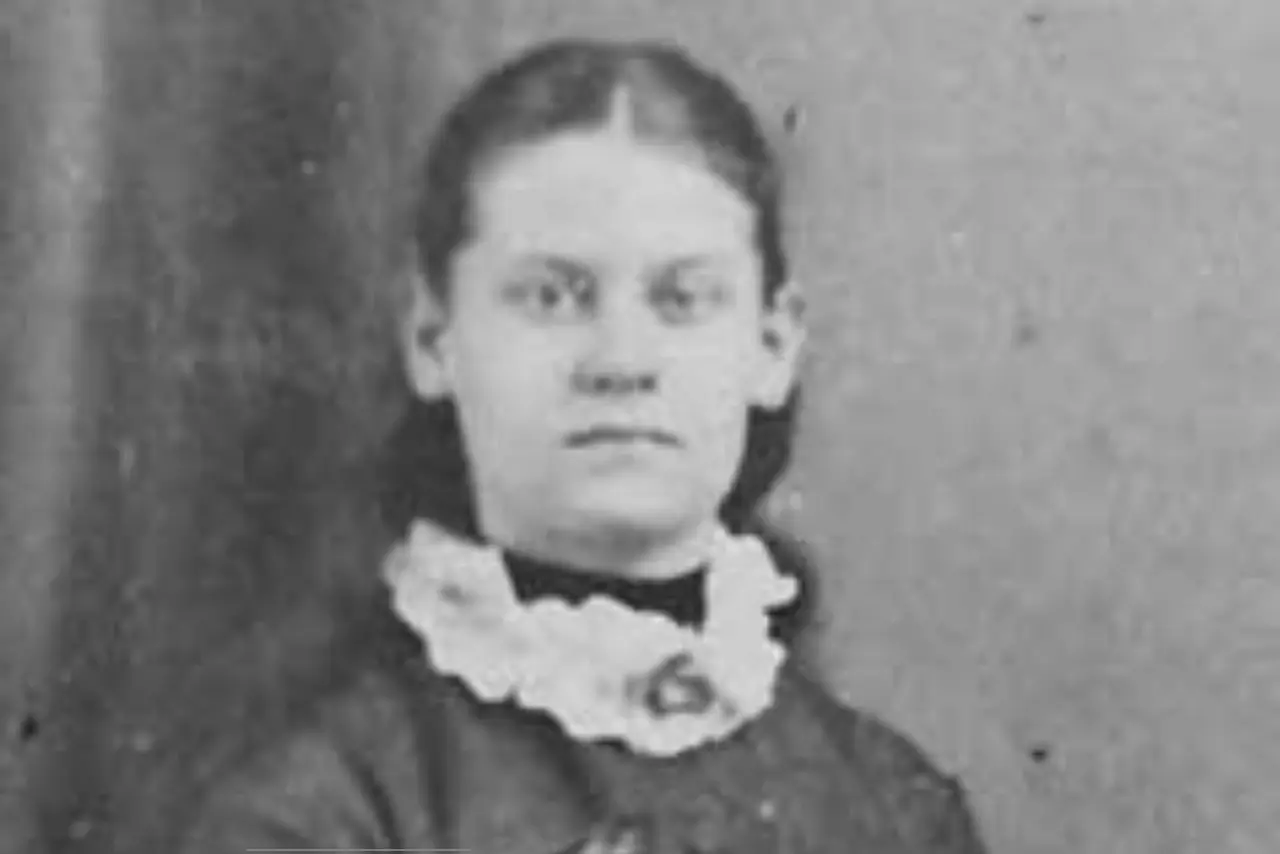
“The key-note of the anarchist contention is that the vitiation of social life is produced by the domination of man by man. The spirit of domination is the disintegrating element, which, constantly tending to break up society, is the fundamental cause of confusion and disorder.” So wrote Charlotte Wilson in July 1886 – a few months before she and a group of others founded the Freedom newspaper and in turn Freedom Press.
Aside from the gendered language, Wilson’s analysis still has relevance today, as does her writing. Her emphasis on the role of domination in disrupting the social relations to which she felt human beings naturally inclined would find its echoes in more recent times.
In 1982, Murray Bookchin spoke of domination as the fundamental vice to which his social ecology stood opposed. “The domination of nature by man”, wrote Bookchin, in his Ecology of Freedom, “stems from the very real domination of human by human”. Bookchin paid tribute to a litany of male writers – Weber, Horkheimer, Adorno, Polanyi, and Kropotkin. He also named his “favourite Utopian” – Wilson’s former friend and comrade, William Morris. But of Wilson, mention came there none.
Bookchin’s assertion that before the 1960s “domination” and “hierarchy” would have been unfamiliar terms on the left would have seemed strange to Wilson. Despite the best efforts of scholars such as Susan Hinely, Hermia Oliver and our own Nicolas Walter in the decades since Bookchin, Wilson remains unfairly obscured. And yet her legacy – not least the enduring one of this periodical itself – was profound.
Born in 1854 in Worcestershire, Charlotte “Lettie” Martin (as she was before marriage) was solidly middle-class, born into an era of religious upheaval, scientific discovery, and political and economic change.
It was a period of huge extremes of wealth and poverty; Dickens’s Hard Times was published the same year Lettie was born, its soulless Mr Gradgrind as the epitome of drudgery and conformity. Lettie – our Charlotte Wilson – would not
do conformity.
Hinely notes that Wilson’s heritage was evangelical, and that religious sentiment pervaded her upbringing even as she repudiated the church in
favour of her secular faiths – socialism in general, and anarchism in particular. But religious language and a sense of mission characterises her writing.
She was from her youth a rebel. Her gender meant she could not vote nor receive a degree in the ancient universities where her male peers might venture. She went anyway – to Cambridge, as one of the first women to attend classes there. Married in 1876 to Arthur Wilson, a
stockbroker, she lived in London and cultivated a wide intellectual circle on the left. Cambridge had been a transformative experience for her and, as Hinely shows, gave her an understanding of social science which accelerated her transition to socialist politics.
She was radicalised by a series of incidents in the 1880s. The Lyon Trial of the 66—which amounted to a purge of anarchists by the French governmen—saw the famous writer Peter Kropotkin and many others jailed for purported membership of the Black International, and was widely discussed in the press. Wilson spoke French, often travelled to France, and read Kropotkin and Elisee Reclus as she was taking her steps into the fluid socialist circles of London in the 1880s.
By 1885, she was a self-declared anarchist and penning articles for periodicals under the pseudonym ‘An English Anarchist’. By early 1886 she
was in touch with Sophie Kropotkin, Peter’s wife, and following his release encouraged the family to move to London where the Kropotkins settled for the next several decades in exile.
She had resolved to found a new anarchist paper, focused on propaganda for anarchist socialism—Wilson was herself an anarchist communist—and with Kropotkin on board she took up the reins as the paper’s first editor. There is not space here to do justice to all her achievements, but she edited the paper for most of the next decade.
Her most substantive legacy is the establishment and survival of Freedom at a time when other anarchist journals foundered. But she was more than that. Wilson has been a victim of “manarchism” as Ruth Kinna has called it, or the tendency for men in the movement to reduce the contributions of women. In Wilson’s comments on domination, we can see the scope of her thought on anarchism and its applicability to our own struggles today.
She wrote on work, the family, propaganda of the deed, the philosophy and morality of anarchism, and much besides. Her writing and thought repay overdue attention. She was no sectarian, as Hinely and Oliver note, and sought to bring diverse currents in the movement together whilst maintaining her own clear stance, as her paper has done in the 140 years since.
As she said then, so we say now: “We are socialists, disbelievers in property… we are anarchists, disbelievers in government … in any shape and under any pretext.”
This article originally appeared in Freedom anarchist journal, issue 86:2
The post Our founder: Charlotte Wilson appeared first on Freedom Press.