
World · Tribune · · 1h
Warning from Germany: It’s Socialism or Barbarism
English (original) · Read in Deutsch ⇄
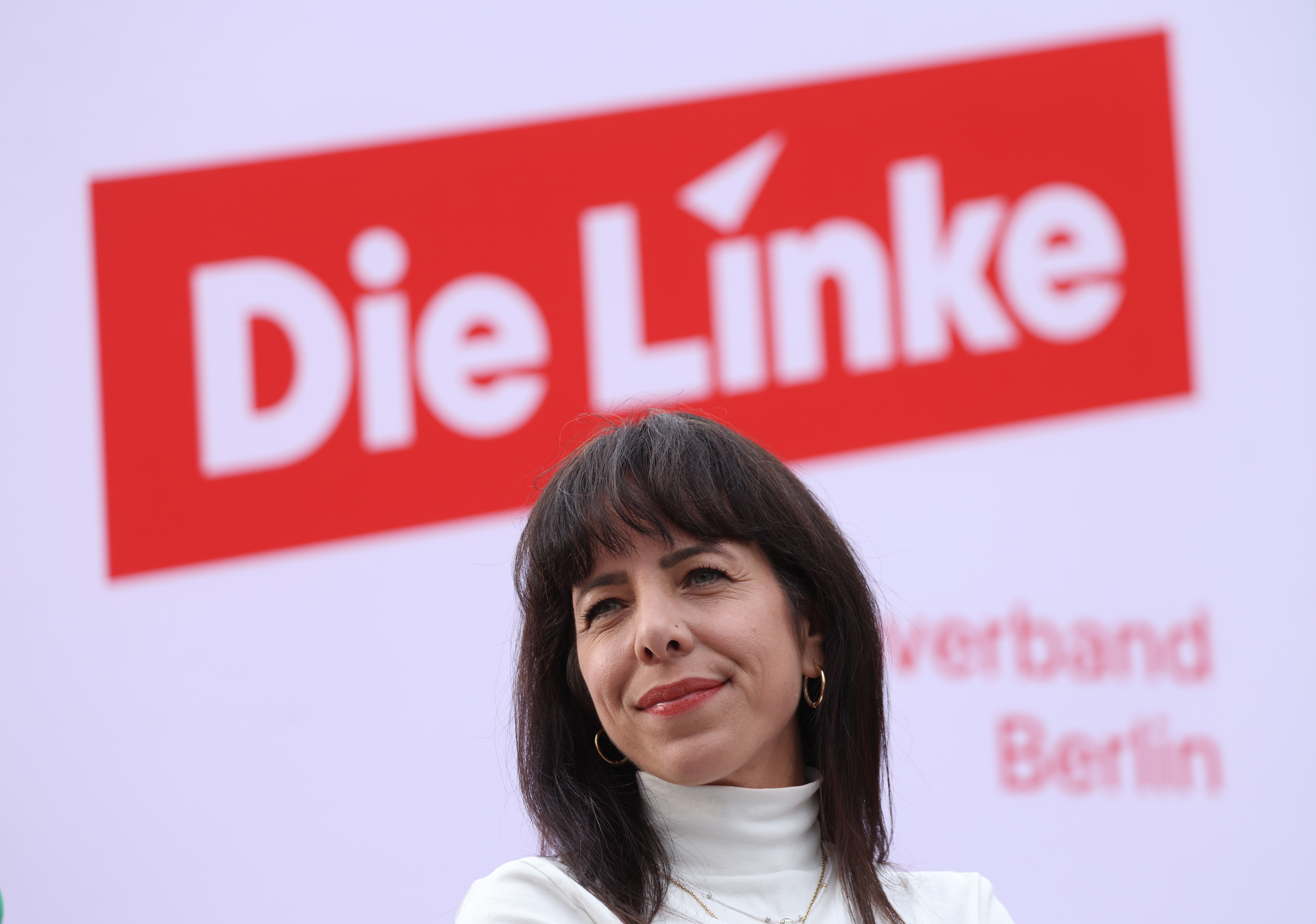
In just two weeks, the far-right Alternative for Germany (AfD) has won two state elections, in Saxony-Anhalt and Mecklenburg-Vorpommern, more than doubling its vote share and opening the door to fascist rule for the first time since the fall of the Nazi regime, even if it may fail to secure the necessary support to form a government. Meanwhile, in Berlin, The Left (Die Linke) has scored a stunning victory that should make Elif Eralp the city-state’s first mayor of Turkish origin – in Germany’s capital, home to the world’s largest Turkish diaspora, in which over a quarter of adult residents cannot vote because they are not German citizens.
The Left did best among young voters and in the districts most shaped by migration. Its victory has finally started a countermovement to the AfD’s seemingly inevitable rise, and shown that a progressive majority is possible, in part inspired by Zohran Mamdani and Zack Polanski. The reasons are not hard to see. The Left was the only party to campaign hard on social justice and affordability. As the housing crisis escalated, it pledged to honour Berlin’s popular but contested 2021 referendum to socialise more than 200,000 flats owned by major corporate landlords. Because the plan rests on a rarely used constitutional provision, it is an experiment that could open the way to socialising other basic infrastructure and social goods, forming the core of a leftist political response to the crisis of the present. Crucially, the Left was also the only party to resist the framing of migration as a problem, to insist that antiracism is essential to antifascism, to oppose Germany’s role as Israel’s second-largest arms supplier after the US, and to criticise the genocidal war on Gaza, if not always in those terms.
Its success is all the more striking because it came amid a sweeping political and media campaign painting the party as a hotbed of irresponsible radicals and antisemites. That campaign hit a new low when the CDU’s lead candidate, Stefan Evers, called The Left the party of division because of its ‘hostility to Jews and to landlords’, invoking an antisemitic trope himself (only days after Chancellor Friedrich Merz described antisemitism as a form of hatred of foreigners, symbolically excluding German Jews from the German people). The election has not ended the smear campaign: politicians and mainstream media are already escalating their demonisation, trying to prevent the Left from forming a coalition government. In a situation in which fascist majorities are a real possibility, the centrist merger of a revived Red Scare with open racism should tell you all you need to know about how seriously they mean their anti-fascism. In truth, next to the AfD’s open fascism, the real politics of division has been practised by the CDU – mired in scandals including the misappropriation of funds earmarked for fighting antisemitism – and by the historic centre-left party too, the SPD.
Fascisation: A Centrist Project
While the political mainstream insists that only the AfD puts society at risk of authoritarian or fascist regression, the last few years say otherwise. The authoritarian turn, which can be understood as a process of fascisation, is enabled by crises internal to liberal democracies: immiseration through declining wages and rising prices, spiralling inequality, the degradation of public infrastructure, a sense that the future has been foreclosed. It is driven not only by the far right’s openly fascist answers to these crises but also by the supposedly liberal centre, which has internalised and normalised new forms of anti-migrant state racism, partly out of conviction and partly out of panic. In trying to weaken the AfD by mimicking it, the centre has predictably only strengthened it.
The parties of the so-called centre (the CDU, the SPD and even the Greens — forget about the by-now-irrelevant neoliberal FDP) have not only committed to austerity and cruelty towards those perceived as socially weak. They have actively undermined or suspended basic norms of the democratic rule of law. They have shown open contempt for international law and human rights, especially when it comes to Israel and the US, restricted freedom of assembly and the right to protest, especially with regard to Palestine solidarity, attacked academic and artistic freedom, and blamed migrants for the crisis and for widespread experiences of decline. The message is twofold. The vision of a free and equal society, however limited its realisation, is passé. And if you are not among those who can hope to make it, the state and the law will not protect you. They will push you out, or keep you down, by any means necessary, including state-led violence.
Instead of treating fascism as the opposite of liberal democracy, we should see fascisation operating within it — or what is left of it — in ways that cannot be pinned on extremists alone. The differences between liberal and fascist regimes are real, but so is fascisation, especially for racialised, excluded and marginalised people. It normalises violence against minorities labelled weak or dangerous. It narrows the space for dissent, whether through the repression of protest or the neoliberal destruction of universities and other spaces enabling critical engagement. And it spreads the sense that preserving what remains of the status quo and its affordances requires abandoning the very idea of a shared future.
Contemporary Germany thus shows two converging modes of identitarian, violent retrenchment. Both retreat from the ground that emancipatory struggles have won over recent decades in broadening access to social and political rights. Both promise, defensively, to secure the material and symbolic privileges of a dominant section of the population in times of decline. The first is explicitly racist: the AfD fixes an exclusionary notion of ‘the people’ and its borders. The second comes from the supposedly liberal centre, in more salonfähig (socially respectable) tones. Here, the defence of a colonial genocide is key to a wider authoritarian turn.
The New Anti-Antisemitism
Staatsräson, ‘reason of state’, for Germany officially means fighting antisemitism and supporting Israel. It is presented as a lesson of the Holocaust. In practice it is the latest incarnation of a politics of division and a narrowing of who belongs. By massively expanding and instrumentalising the definition of antisemitism around ‘Israel-related antisemitism’, Staatsräson outsources antisemitism to migrant populations in the discourse of ‘imported antisemitism’ and uses it to attack challenges to the status quo from the post-migrant left. It becomes a tool for securing white dominance and managing the migration society in times of crisis, while maintaining a self-understanding of enlightened civilisational superiority. Instead of confronting real and rising antisemitism, especially on the far right, the hegemonic response targets migrants, the left, and grassroots pro-democracy and anti-racist initiatives, playing into the hands of a repressive, racist project.
It also lets mainstream parties have it both ways. They can position themselves against the AfD, framed as the anti-system option for white voters whose ‘legitimate concerns’ go unheard, while escalating centrist anti-migrant and anti-refugee rhetoric and policies without ceding the moral high ground. The immediate consequence is that people ‘with a migration background’ are subject to constant supervision and disciplining, pushing them out of politics, mainstream media, cultural and academic institutions. ‘Remigration’, the neo-fascist euphemism for mass deportation and ethnic cleansing, is the logical endpoint of this unacknowledged convergence.
The result is the mainstreaming of a politics of enmity, desolidarisation, separation, sacrifice and elimination as the dominant response to today’s economic, ecological and geopolitical crises. The rights, and indeed the lives, of ever larger groups of people — first racialised minorities, increasingly those seen as socially weak or unproductive — no longer count equally, or at all. They are abandoned and brutalised. The message is that this could happen to you if you do not comply with the imperatives of securing the existing order.
Who Can Beat the New Right?
In what they present as a response to the AfD, large parts of the political spectrum feed the very dynamics driving fascisation. First, the centre tails the far-right framing of migration as a problem. Horst Seehofer, then interior minister, called migration ‘the mother of all problems’ after the racist riots in Chemnitz in 2018. Treating migration as the source of the crisis is a gateway for fascisation, both rhetorically and materially: it identifies enemies and builds up a punitive and repressive state apparatus. Meanwhile, attachment to privileges that must be protected at all costs — the project of Fortress Germany and Fortress EU — grows more violent and aggressive as its subjects sense that the promise of liberation and protection offered by the fortress is empty.
Secondly, therefore, the scapegoating logic does not stop with migrants. It extends to other groups branded weak or dangerous, such as trans people and people with disabilities, who are cast as existential liabilities, threats to established claims to wealth, power and identity, and to a presumed right to control the borders protecting these claims. Rather than address real societal challenges, fascisation delivers more of the same: more division, exclusion, disenfranchisement and violence — and so deepens the crisis.
We are witnessing a fight against the multicultural society that already exists. Fascisation is anything but abstract: real people already experience it as concrete violence. The fascist pseudo-response to a misdiagnosed crisis reproduces and intensifies the structural crises and the violence they breed. It converts structural violence into direct violence, terror and domination, against and within the society shaped by migration, in the name of a racially purified ethno-nationalist community. The structural transformation that alone could answer the underlying crisis remains blocked, and the crisis keeps getting worse.
Against the fascist temptation to manage decline to the advantage of the few, a renewed left is the only hope — not only in Germany. And one of the lessons of the last elections here is that the left’s only hope is to insist on the actual possibility of an anti-nationalist, anti-identitarian, anti-fascist and non-capitalist way of living together in solidarity, beyond the destructive zero-sum logic of an economic and civilisational war of all against all that centrists seem unable or unwilling to transcend. If we want any shared future at all, it will have to be radically different from the past and the present.
Read the full story at the source
Source: Tribune