
Politics Tribune
The Budget Proves that ‘Burnhamism’ is a Sham
The government’s tiny cost-of-living measures are little help for households at breaking point.
English (original) ·Read in Deutsch ⇄
Andy Burnham is a Prime Minister desperate to present himself as a man of the people. Have you ever looked at your bills at the end of the month and realised you forgot to cancel an unused subscription? Andy has too, which is why he’s announced a ban on subscription traps — saving people a whopping £170 per year. Ever been driven to distraction by someone playing loud music on the tube? Andy has too, which is why he’s making plans to tackle noisy public transport users — as well as those who vape and litter. These little interventions have become a hallmark of Burnhamism — and his government’s first budget fits the same pattern.
Burnham has moved to scrap gas standing charges, which could save 60 percent households £45 per year; he’s extended the VAT cut on electricity bills July, which should take another £50 off; and he’s announced a £100 payment to 20 million households to account for rising energy bills. These measures aren’t particularly well-targeted, so many well-off households who don’t really need the subsidy will still be able to claim. And for those who are really struggling, these tweaks aren’t going to touch the sides. The average household is £2,400 worse off purely as a result of the Iran war-induced energy crisis — and that’s not going to end any time soon.
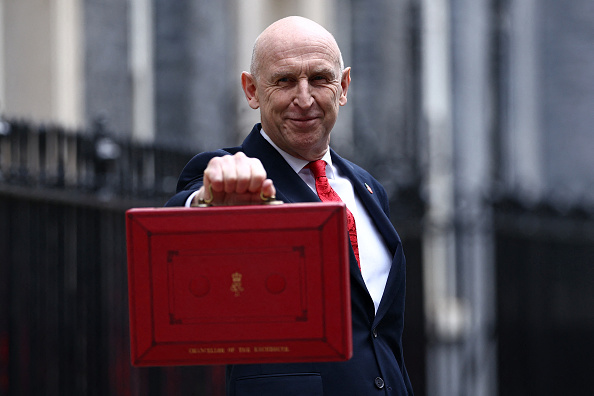
Chancellor John Healey has also been fiddling around with tax thresholds in a bid to provide struggling households and businesses with a semblance of relief. He’s raised small business rates relief thresholds for some sectors, scrapped a plan to reduce the ISA limit, and provided a new tax allowance for pensioners. These have all been presented as significant giveaways, when really they’re minor changes likely to be lost in the broader picture of falling incomes and stagnant growth.
The biggest takeaway from this budget isn’t the small giveaways; it’s the wider context of stagnation and decline. The Office for Budget Responsibility (OBR) is forecasting a fall in real household disposable incomes (RHDIs) over the next few years. It expects no growth in real earnings through 2027 and 2028. All in all, a decade after the start of the pandemic, the OBR forecasts that RHDI per person will be just 1 percent higher than it was before the pandemic.
These predictions are based on current trends — they don’t assume any more shocks. But fresh crises are increasingly common in a world marked by climate breakdown and the rise of right-wing strongmen intent on stoking geopolitical conflict. The likelihood is that we will see more extreme weather events in coming years, which will push up food prices. We could also see more wars, and therefore more supply chain disruption. And at some point in the next several years, the AI bubble will burst, resulting in an economic slowdown that could rival the Great Recession seen after the 2008 financial crisis.
When these crises hit, the costs will not be borne by the wealthy elites disproportionately responsible for causing them. The wealthy will protect themselves from the impact of war and climate breakdown, while continuing to invest in polluting industries and sponsoring politicians intent on stoking conflict. The big tech companies will see the coming AI crash as an opportunity to buy up their struggling competitors and consolidate their market power — and our client governments will likely step in to help them. But throughout these crises, ordinary people will lose jobs, see their incomes fall, and their spending on essentials increase.
Burnham claims to be a man of the people, but his government’s first budget reveals that he has little understanding of how bad things really are. The average household has experienced more than a decade of stagnation, and they don’t see an end in sight. This sense of decline is feeding support for far-right parties that prey on feelings of fear and insecurity by targeting outsiders. Burnham is clearly under the impression that he can beat Reform with a few viral TikTok videos that present him as a normal, likeable guy. But Farage isn’t on the rise because people like him; he’s on the rise because people are scared — and they think Reform can protect them. Burnham has just proved, once again, that Labour can’t.