
Politics Labour Hub
Budget reactions: “ A huge missed opportunity”
“The Budget contains welcome measures to ease the burden on households, but the Government must embrace far more radical solutions to deliver the change Britain desperately needs,” said Momentum in re
English (original) ·Read in Deutsch ⇄
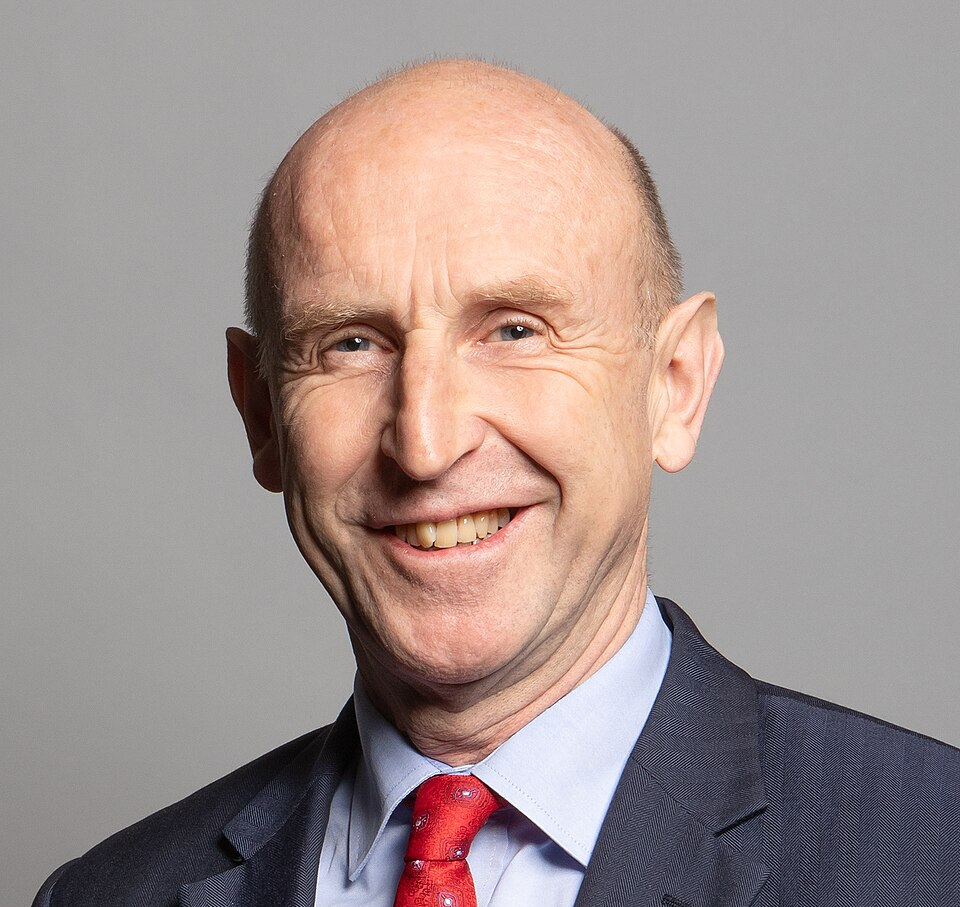
“The Budget contains welcome measures to ease the burden on households, but the Government must embrace far more radical solutions to deliver the change Britain desperately needs,” said Momentum in response to Chancellor John Healey’s first Budget.
One highlight was measures to tackle energy bills. These include a £100 payment for 20 million households in council tax bands A-D in England to help deal with rising energy bills, with equivalent funding for Scotland, Wales and Northern Ireland; the removal of standing charges from household gas bills, with costs added to the unit rate instead; and the extension of a VAT cut on electricity bills and a freeze on fuel duty to July.
The response from fuel poverty campaigners fell far short of a ringing endorsement, however. Simon Francis, coordinator of the End Fuel Poverty Coalition, said: “The Chancellor talked the talk on energy bills, but ultimately failed to walk the walk.
“The Government acknowledged that wholesale gas prices have tripled since February and that, because of this, bills are expected to rise further during the sixth winter of high energy costs.
“Yet the only immediate support is a payment that will barely dent the predicted rise households face in January. Because it is paid directly into household bank accounts in England, it may not even be spent on staying warm this winter.
“Beyond this winter, the Chancellor’s commitments appear lukewarm at best. Keeping VAT off electricity until the summer and moving older renewables onto fixed contracts are welcome steps towards breaking the link between gas and electricity prices, but these do not go far enough.
“Neither does a vague cost control commitment nor shifting standing charges onto unit rates which simply moves the cost around and may actually harm some high energy use, low income households.
“We know that the majority of the public are worried about their energy bills in January, but sadly today’s Budget will do little to ease those fears. We needed a Budget that set out substantial immediate help and a long term plan to get Britain off gas and heating oil for good, but instead we got more piecemeal support and vague future promises.”
“Removing the gas standing charge will bring real relief to many low-income households who use very little energy and for prepayment customers it could stop debt building up in the summer months,” conceded Francis. “But despite the positives of this specific proposal, millions of households won’t see a saving. This means Ministers have serious questions to answer about who they are and, if they are vulnerable or on low incomes but have high energy needs, how they will be protected.”
Dan Scorer, Director of Public Affairs at learning disability charity Mencap, said:“The £100 energy bill payment will barely scratch the surface of today’s energy costs for many people with a learning disability and falls far short of the support they need. It will leave many at risk of deeper poverty and hardship.”
Debt charities welcomed the news that the Energy Debt Relief Scheme has been given a new delivery timeline after years in limbo, but Heidi Chow, Executive Director at Debt Justice, said: “Five years and two consultations into the energy crisis, people in debt are still waiting for concrete action on energy debt. This strategy gives no clarity on how the scheme will be funded, how much debt will be written off, or how people will access it. The scheme must be paid for by energy company profits, not by billpayers. It mustn’t force people onto unaffordable repayment plans to access it. And it must write off billions of pounds, not millions, to make a real dent in the mountain of energy debt.
“What is more, the proposed loosening of regulations around forced prepayment meters risks putting people onto meters they can’t afford to top up. This will mean more cold and dark homes as people are forced to make unaffordable payments towards unpayable debts. The government must keep protections for vulnerable people in place, so we don’t return to the widespread harms seen in 2023 during the forced pre-payment meter scandal.”
Fuel Poverty Action were sharply critical of the Budget’s energy measures. A spokesperson said: “This government’s plans announced today go nowhere near far enough to addressing the fuel poverty crisis:
Warm Homes Plan campaigners said the Budget missed the chance to move levies off electricity bills and to protect investment in warmer homes. Ed Matthew, UK Programme Director for the independent climate change think tank E3G, said: “This Budget has not met the moment in getting the UK off the fossil fuel price rollercoaster. Whilst a £100 council tax discount will bring some short-term relief from cost-of-living pressures, the Chancellor failed to remove all levies from electricity bills, the number one call from business and civil society groups.”
The Women’s Budget Group also took a critical stance: the Chancellor had not done enough to help with the scale of financial pressures women are facing.
On energy, Dr Daniella Jenkins, the Group’s Executive Director, noted that “while the announcement that regressive standing charges on gas bills will be moved to the per unit charge will benefit some low-income households, there is a risk of higher costs for those in poorly insulated housing and households where individuals are more likely to need to heat their homes during the day, such as the elderly, families and Disabled people.
“The debt charity Step Change reported earlier this year that 71% of their clients with energy arrears were women. Analysis of the Government’s own data shows that single parent families have energy arrears at three times the national rate. With the Bank of England poised to increase interest rates next week for the first time this year, the cost of those debts will continue to rise. So while measures to protect households from even steeper energy bills are welcome, we urgently need to see Ofgem’s promised debt relief scheme delivered too.”
On other fronts, Jenkins said, “The Chancellor missed the opportunity to provide greater investment in women and unlock up to £113bn in Gross Value Added from the underemployment of women which would benefit us all in returns to the economy. The scale of investments announced in today’s budget did not go far enough to meet that promise and there was scant talk of women’s needs. The Chancellor’s long-term investment plans and fiscal rules continue to sideline investment in the social infrastructure that enables everyone, and especially women, to participate in the economy.
“Housing costs are one of the biggest drivers of financial hardship, with women now spending 57% of their earnings on private rent on average compared to 41% for men. While increasing funding to end rough sleeping is welcome, preventing homelessness is equally important. By failing to unfreeze Local Housing Allowance, the Chancellor has missed a crucial opportunity to ease pressure on renters and protect more women from being pushed into poverty and homelessness.
“Pre-announced changes like expanding statutory paternity pay to self-employed fathers and the removal of the cliff edge earnings threshold for those claiming Carer’s Allowance, the majority of them women, mark some real wins for families and carers. These may be smaller steps but signal a growing recognition from within the Treasury of the value of unpaid care and the importance of supporting parents and carers as a cost of living measure. Neither change will come into force for several years however with carers waiting till 2030 before being confident they can take on additional hours without being penalised.
“While he did say the paternity pay was a ‘down payment’ on wider reforms to parental leave, the Chancellor also needed to address the inadequacy of maternity pay, which continues to put many mothers under severe financial pressure. Our analysis has shown that improving maternity pay would put more than £1bn in families ‘pockets and deliver social and economic gains, outweighing costs to the Exchequer.
“And while we welcome the announcement of a fund to tackle misogyny, £5m a year for three years is a drop in the ocean, given the rising levels of open misogyny we are seeing in workplaces, schools and online. We know that misogyny translates into abuse and that it is endemic: through our work with partners we know that around one in twenty employed women – or approximately 800,000 women – experienced intimate partner violence in the last year.
“Tackling the cultures and attitudes at all levels is crucial for victim-survivors to feel safe enough to disclose and able to get the support they need and measures and campaigns to progress women’s economic independence and equality are key to challenging global threats to rollback women’s rights, including in the UK. But frontline organisations that support victim-survivors also need adequate funding. Many are still facing funding shortfalls and some are at risk of collapse. This budget is a missed opportunity to address that gap and make real progress on the government’s target to halve Violence Against Women and Girls in a decade.”
“The Chancellor should have gone further on taxing banks and ensuring that the sector that has benefited most from the cost of living crisis is paying its fair share of tax. Doubling the levy was a welcome measure to raise much needed revenue from banks that have profited from inflation and higher interest rates. But given the scale of the fiscal challenge facing both government and households, it is disappointing that the increase is only temporary and was not restored to at least the 8% rate that applied until 2023.
“We also didn’t hear anything about other significant tax raising measures such as equalising capital gains tax rates with income tax rates which is a wasted opportunity to raise much-needed tax revenue. Because women earn less, have lower savings and rely more on public services and social security than men, women always lose out when tax increases are ruled out at the cost of public investment.”
“The Budget confirmed the Government’s plans to end the triple lock on state pension. Because women earn less relative to men and often have employment gaps due to the additional unpaid care and domestic work they do, women tend to be more reliant on the state pension than men so it will be important for the Department for Work and Pensions to ensure women in this position have an adequate income, including through targeted pension credits for example.”
“The cost to the public purse of pension tax relief also continues to rise, now costing around £59 billion a year and disproportionately benefitting men and we would recommend looking at reforming this tax relief to support earners who are not currently saving enough for their retirement. We are particularly concerned about women in the early 50s who have missed out on auto-enrolment for a significant portion of their working lives.”
“We are concerned about the reforms announced by the Chancellor designed to address fraud in the social security system. The real issue here isn’t the over-claiming of benefits—it’s under-claiming. Due to stigma, poor awareness, and intrusive assessment processes, countless people miss out on the support they’re entitled to. In fact, £24 billion in social security goes unclaimed by UK households every year, according to 2025 research by Policy in Practice.
“Forthcoming support for young people to access apprenticeships and work is welcome but we are concerned about any cuts to support for young people and Disabled people to be announced with the Milburn and Timms review this autumn. Milburn’s interim findings reported that one in four so-called NEET young women were not in the labour market due to family responsibilities compared to 6% of NEET young men. Investment in social infrastructure including widening access to childcare will be key to supporting these young people.
“And our work with the collective of Disabled women and nonbinary folk Sisters of Frida highlighted that previous proposals to cut PIP would have disproportionately impacted Disabled women. Any new reforms must be put through intersectional equality impact assessments before plans go ahead.
“We are also disappointed that the Government has maintained the benefit cap when we know that the majority of families affected are single parent households, most of whom are women. Our previous analysis shows that on average single mothers who benefit from the lifting of the two-child limit will lose around half of what they gain because of the benefit cap, limiting its impact on lifting children out of poverty.
“While health and defence continue to absorb the vast majority of spending growth, the lack of meaningful increases in other departments means rising inflation and higher wage costs will further squeeze budgets in areas such as education and social care. Efficiency savings cannot become euphemisms for declining service quality, longer wait times or reduced support for those who rely on public services. We know that when public services are cut, women are hit hardest, both as the majority of service users and as the workforce delivering these vital services.”
Older people’s groups reacted to a broad range of issues in the Budget. Morgan Vine, Director of Policy and Influencing at Independent Age said: “We believe the UK Government can go further to tackle key areas driving financial hardship across all generations. Every day we hear from older people on low incomes who are cutting back on food, living in cold homes, or skipping showers to keep their bills down. This is no way to live.
“Frozen Local Housing Allowance that keeps private renters of all ages stuck in poverty needs to be up-rated to reflect the true cost of renting. We need long-term action to protect the poorest households from the frequent energy price shocks driving up bills with the introduction of a comprehensive and well targeted energy social tariff. And, to lift people out of water poverty, a single social tariff for water is needed across England and Wales to end the postcode lottery of support.”
Concerns were also raised about reports that Treasury tax forecasts may assume approval of the Rosebank oil field. Tessa Khan, executive director of Uplift, said:“We are deeply concerned by reports that Treasury calculations may assume a decision on Rosebank has been made. This would suggest that the Government is approaching the decision with a pre-determined view, which would render any approval unlawful.
“This Government has conceded that Rosebank will do nothing to lower our fuel costs or make a meaningful difference to UK energy security, as most of its oil would be exported. It would, however, see the UK breach its commitments to stay within safe climate limits. Rosebank is a bad deal for Britain, and this government should reject it.”
Friends of the Earth also highlighted threats to the UK’s climate targets. “Allowing data centres to burn gas to generate their own energy while waiting for a grid connection is yet another threat, following approvals for aviation expansion at Gatwick and elsewhere,” said Mike Childs, Head of Science, Policy and Research. “The government must get a grip on carbon emissions: ruling out Heathrow expansion and new oil and gas developments, and standing-up to the tech giants who put profits above people and the planet, while trampling over communities around the world.”
Overall, he said, ““The Chancellor’s first budget was a huge missed opportunity.” This was also Jeremy Corbyn’s verdict. James Meadway told Novara Media: “There as very little in it.”
Mainstream agreed: “There are missed opportunities in this budget – for example, the Government could have equalised the rates of income tax and capital gains tax, ir introduced a form of rent controls.”
Sharon Graham, General Secretary of Unite, also said that the chance to show tangible change for working-class families struggling with the deep cost of living crisis had been missed.
“The noose around the neck of wages, in the shape of frozen tax thresholds, must be dealt with,” she said. “Started by the Tories in 2022, it is dragging workers into unfair tax bands and reducing disposable income. This cannot continue.”
Unison General Secretary Andrea Egan said: “To improve ordinary people’s everyday lives in a way that lasts, the Government needs to move beyond small fixes and deal with the fundamental causes of the miseries so many face. There’s no doubt about what’s needed: undoing privatisation, ending the scourge of outsourcing and making the wealthiest pay their fair share to properly fund public services.”
Neil Duncan-Jordan MP agreed : “We need to take back control of life’s basics: water, energy, housing. Public need not corporate greed.”
Other overall assessments were also downbeat. “The budget was subtitled ‘breathing space today, fresh hope for the future’,” noted Labour’s former Chief of Staff under Jeremy Corbyn, Simon Fletcher. But that meant that “on its own ‘breathing space’ terms, peoples’ living standards are still set to be squeezed… very large numbers of people having no real sense that their lives are going to materially improve.”
He was also concerned that while living standards and many departmental budgets were being held back, military spending would rise significantly. Overall, “the main drivers of public dissatisfaction with British society and therefore politics are not substantially challenged by Labour’s programme.”
Former Chancellor John McDonnell MP welcomed individual measures but warned: “The important issue now is how the time secured as a breathing space is used to address the pressures people are under. The Spending Review next year is the opportunity to develop a radical agenda to deliver the investment needed in our economy and public services and to secure a tax system that redistributes wealth at scale to overcome the levels of inequality and poverty in our society.”
Kate Osborne MP also welcomed many of the measures, but added: “There is room for improvement. Work is taxed more heavily than wealth, and that can’t be right. A wealth tax could help fund the public services my constituents depend on.”
Image: Rt Hon John Healey MP https://commons.wikimedia.org/wiki/File:Official_portrait_of_Rt_Hon_John_Healey_MP_crop_2.jpg Source: https://members-api.parliament.uk/api/Members/400/Portrait?cropType=ThreeFour Author: Richard Townshend, licensed under the Creative Commons Attribution 3.0 Unported license.