
World Tribune
Iran: Empire Humbled
In the rubble of the bombing, there are signs of a future beyond domination.
English (original) ·Read in Deutsch ⇄
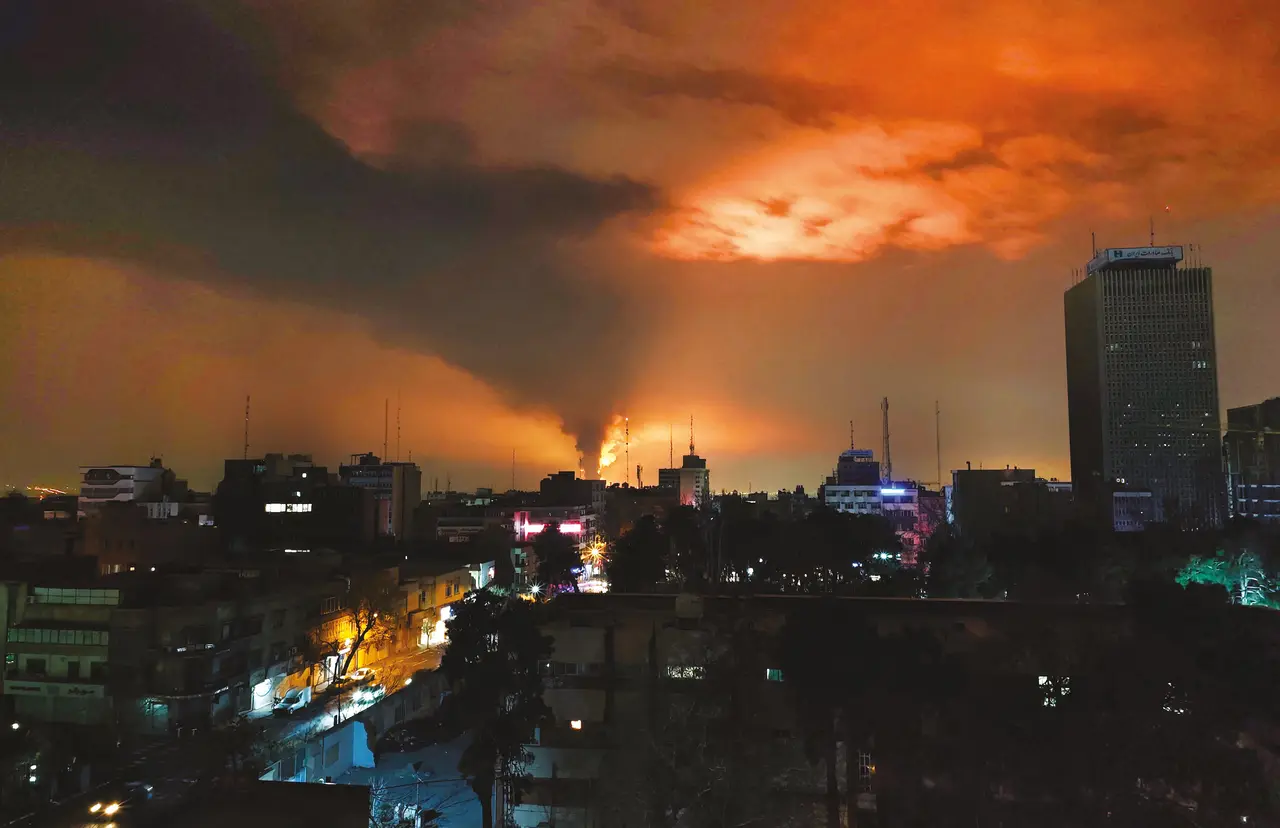
The Persian Gulf has long been both a garrison of American power and a critical artery of global capitalism. Its military bases have been used to protect allies, intimidate enemies and ensure the unimpeded circulation of commodities. Operation Epic Fury turned this logic on its head. The American assets that were supposed to safeguard client states suddenly put them in jeopardy, becoming a magnet for Iranian missiles and drones. While any analyst worth their salt predicted that Tehran would respond to an existential war by moving to seize the Strait of Hormuz, few anticipated the scale of destruction it would inflict on this archipelago of bases.
Though the full extent of the devastation remains unknown, a Washington Post investigation has verified damage to at least 217 structures at fifteen US military sites. Targets ranged from barracks, hangars and radar systems to fuel depots and communications equipment, with many of the attacks focused on the three American bases in Kuwait and the Fifth Fleet’s headquarters in Bahrain. The latter was forced to relocate to MacDill Air Force Base in Florida. US forces have had to rely on longer and more extended logistics routes, most notably via Diego Garcia.
It is hard to find any equivalent example of blowback in the annals of American empire. Washington may be unwilling to spend billions upon billions to restore bases that could yet again be placed in the line of fire, aware that this might draw resistance from both the taxpayers who would haveto fund them and the Gulf states who are expected to host them. Iran has been taking steps to institutionalise its sovereign claim over the strait, ensuring that the US cannot return to presiding over the worldwide system of ‘free trade’ once the bombing stops. Washington may have hit Iran with sanctions, blockades and fighter jets, but after seven months of war, it has not met any of its strategic objectives.
The extent to which the empire was chastened is clear from the Islamabad Memorandum, or MOU, which Trump signed in June at the poetic location of Versailles. Under the agreement, Washington was required to end its naval blockade while Iran was mandated to make necessary arrangements for safe commercial passage through the waterway. On Tehran’s reading, this meant that maritime vessels were obliged to coordinate with Iranian authorities, who would waive any fees during the MOU’s sixty-day timeframe.
Arguably the most important article of the deal stated that Iran would enter talks with Oman over the future administration of the Strait of Hormuz, in consultation with other Gulf littoral states. Even if the memorandum did not give Tehran official sovereignty, it recognised a geographical and political reality that imperial power has long sought to deny: that the strait runs through Iranian and Omani territorial waters. The provision is now being firmed up in bilateral Iran–Oman talks in the absence of the US: a scenario that would have been unthinkable prior to 28 February.
This could have major implications for the region. In an earlier effort to subordinate West Asia, the first Trump administration tried to establish a so-called Middle East Strategic Alliance, billed at more grandiose moments as an ‘Arab Nato’. It then set about negotiating the Abraham Accords to normalise the Israeli settler colony among the region’s pliant autocrats. Now, after the Iranian debacle, Washington’s regional standing is diminished and its plans for perpetual domination have faltered. Might they be displaced by the kind of regional programme that Iran has long advocated?
In 2019, President Hassan Rouhani presented the Hormuz Peace Endeavour at the UN General Assembly: a proposal for all littoral states to collectively determine their security order, based on respect for sovereignty, non-interference, non-aggression and the peaceful settlement of disputes. It received a lukewarm reception at the time, and it is unlikely that such an arrangement will be revived anytime soon. But Iran–Oman negotiations, along with the recent defence pact between Turkey, Saudi Arabia and Pakistan, suggest a growing desire for new military, commercial and legal structures for a multipolar age.
The US is in no mood to swallow this apparent defeat. It didn’t take long for the MOU to unravel, as the Trump administration directed ships to transit the strait through the so-called southern route along Oman’s coastline. Trump has refused to stick to any ceasefire and instead ramped up his apocalyptic rhetoric, going so far as to threaten Oman with bombing unless it bends the knee.
Washington’s failure to topple the Islamic Republic has prompted it to resurrect the same suite of policies that paved the way for Epic Fury: ‘maximum pressure’ sanctions and all-out economic warfare. It has reimposed the naval blockade, pledged to escalate secondary sanctions against all foreign entities transacting with Iran, and renewed strikes on a slew of targets across the south of the country. Most recently, US forces bombed a wedding in the small town of Kuhestak, killing four and injuring a further 68 people.
Following the initial shock of Iran’s closure of the strait, the Trump administration and US military have gradually clawed back a measure of control: oil traffic through Hormuz has risen again to an estimated 13–15 million barrels a day, still below the pre-war average of around 20 million, while another 4 million barrels now leave the region through Saudi Arabia’s East–West pipeline. Yet this has come at serious economic and military cost, and represents nothing like a return to normality.
The recovery depends upon an open-ended US naval commitment, ship-to-ship transfers and costly rerouting amid continuing Iranian attacks and elevated war-risk premiums. Higher fuel and transport costs, continued drawdowns of strategic reserves and mounting military expenditure are placing growing strain on the US economy. While Trump’s new round of punitive attacks is sure to pauperise even more Iranians, it is unlikely to bring about capitulation. Regime change seems unattainable.
It would be hasty to see this strategic blow to American power as the consummation of the region’s decolonisation. Iran is not an unblemished bearer of emancipation in West Asia; it is a state that has been forced into a war of survival, with its own record of repression and violence to answer for at home and abroad. Many across the region will continue to see it as an aspiring hegemon with its own narrow, self-aggrandising ambitions. Meanwhile, ruling elites from Abu Dhabi to Riyadh might still prefer imperial patronage to accommodation with their regional rivals — for they not only fear their neighbours but their own populations as well. Their aim is to strengthen their external power projection while ruthlessly silencing dissent.
All this means that the dystopia of an American restoration, in which the US rebuilds its infrastructure and uses it to spread more suffering, looms large. But the fact remains that the pre-war order can no longer lay claim to inevitability or invulnerability. Meaningful self-determination, in which the popular classes exercise effective control over how they are governed, how their resources are distributed and how their societies are organised, is still a distant prospect — but it is far from impossible.
Decolonisation has never been a morality play, and its agents have never been immaculate. The history of this political process is full of violent contradictions, opening up new possibilities even as it creates new forms of oppression. The horizon of a Persian Gulf in which American empire lies vanquished will not resolve longstanding struggles for political equality and economic justice in the region. Yet the termination of the US’s assumed right to police this part of the world would nonetheless remove one of the principal obstacles to self-determination. Today, for the first time in decades, it is possible to imagine a Persian Gulf where the future is shaped by the states and peoples that inhabit it, rather than the prerogatives of a military power located many thousands of miles away.