
Politics · Tribune · · 60m
Britain Must Not Join the War on Yemen
English (original) · Read in Deutsch ⇄
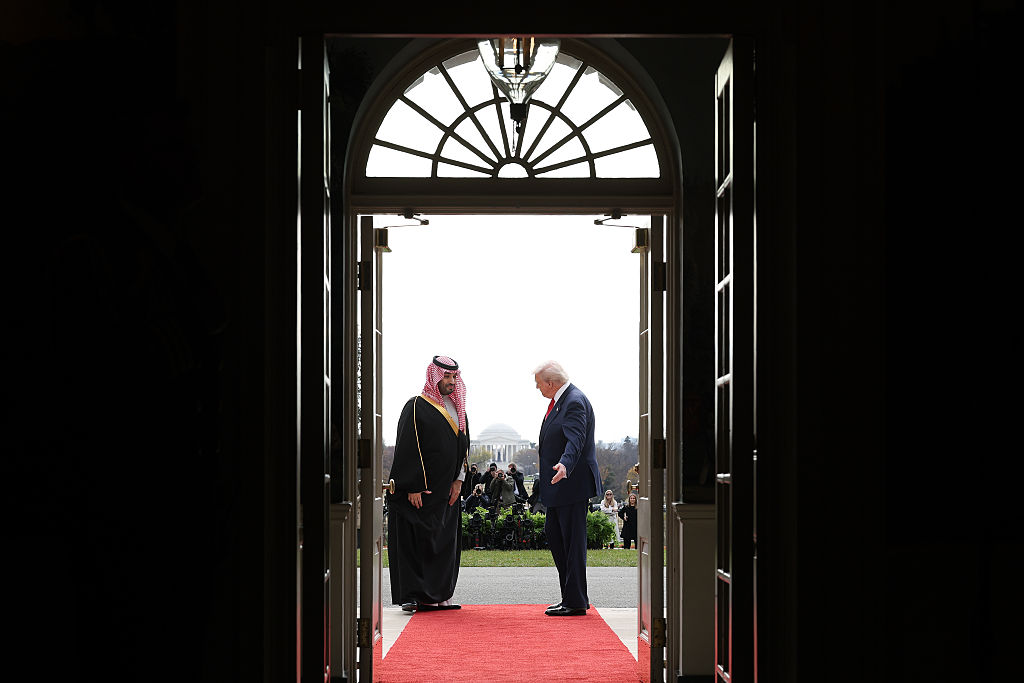
Last night, Andy Burnham announced that the UK will provide ‘defensive air to air refuelling’ support to Saudi Arabia’s military, plunging Britain into another disastrous conflict in the Middle East. Amid a worsening humanitarian situation in Yemen, the latest Saudi attacks risk more civilian deaths and an acute refugee crisis, with thousands already displaced.
Burnham’s arrival in office seemed to suggest the possibility of a break from Starmer’s complicity in Israel’s genocide in Gaza and collusion with the war on Iran — two shameful stains on Labour’s legacy. But with this new announcement, history seems to be repeating itself.
The conflict with the Houthis began in 2015 when a Saudi-led coalition, backed by the US and UK, intervened in Yemen’s civil war. Their goals were to dislodge the Houthis and to prop up the government headed by Abdrabbuh Mansur Hadi, who would keep the country in favour with Saudi Arabia. The campaign killed nearly 9,000 civilians, with many more dying from the effects of the war, from collapsed services to starvation to epidemics.
Britain supplied spare parts, ammunition and maintenance to the aggressors along with unconditional political support. The then foreign secretary Philip Hammond declared that the UK would assist the Saudi military ‘in every practical way short of engaging in combat’, which included sending military advisers.
London thus gave the Saudi coalition a free hand to commit a litany of war crimes. As early as 2016, a UN panel found that it had engaged in ‘widespread and systematic’ attacks on civilian targets. In 2018, a Saudi airstrike hit a school bus, killing 29 children. Cluster bombing targeted medical facilities and ancient heritage sites. Yet the onslaught ultimately failed. The Saudis were forced to sign a truce in 2022, but by that time it was too late: Yemen had already been shattered.
The fragile peace was broken after the recent bombing of Sana’a airport by Saudi Arabia. The subsequent Houthi offensive has seen them gain control of Yemen’s western coast and, with it, the chokepoint of the Bab al-Mandab Strait, an area crucial to Saudi Arabian oil transportation.
The UK responded by providing refueling support for US operations against Yemen last year. While Starmer tried to justify these actions as ‘defensive’, the Pentagon itself reported that they had ‘more likely than not’ resulted in the killing of 281 civilians. Human Rights Watch warned that Britain’s involvement in the operation ‘may make them complicit in war crimes’. On 29 April 2025, Starmer took British involvement up a notch, becoming the tenth British Prime Minister to directly bomb Yemen, as RAF Typhoons carried out a joint UK-US strike south of Sana’a.
This was yet another futile operation. Less than a week later, Trump was forced to sign a peace agreement with the Houthis. But the humanitarian impact of this forever war could not be clearer. Around 47 percent of the Yemeni population are currently experiencing crisis levels of acute food insecurity while nearly half of children under five are acutely malnourished, according to the UN. The World Health Organisation observes that the country is already facing ‘multiple concurrent health risks’, including cholera, measles, dengue, diphtheria and trauma. More than 112,00 people have already been internally displaced, with UN agencies warning that they lack the resources needed to support those forced from their homes.
Now, Burnham has agreed that Britain will help to refuel the Saudis’ killer jets — visiting yet more destruction and misery on the poorest country in the region. Outlandishly, he tried to frame this decision as an attempt to alleviate the UK’s cost-of-living crisis, as if deepening civilian suffering in Yemen would somehow offer respite to communities in Britain. If anything, more bombing will only exacerbate the inflationary pressures triggered by Trump’s war on Iran, which are pushing up prices for working-class people worldwide.
When the war on Yemen started in 2015, Labour opposed Britain’s involvement and committed to both suspending arm sales to Saudi Arabia and presenting a resolution at the UN to end the conflict. History now looks kindly on this position.
Burnham should follow this example and break from years of failed international policy. His government could rebuild the international aid programmes that Starmer brutally cut, and provide safe passage to refugees fleeing the war, rather than pouring further fuel into the region.
Read the full story at the source
Source: Tribune