
Germany · taz · 8h
Warsaw is becoming a green city: How concrete deserts are transforming into oases of well-being
Deutsch (original) · Auto-translated to English
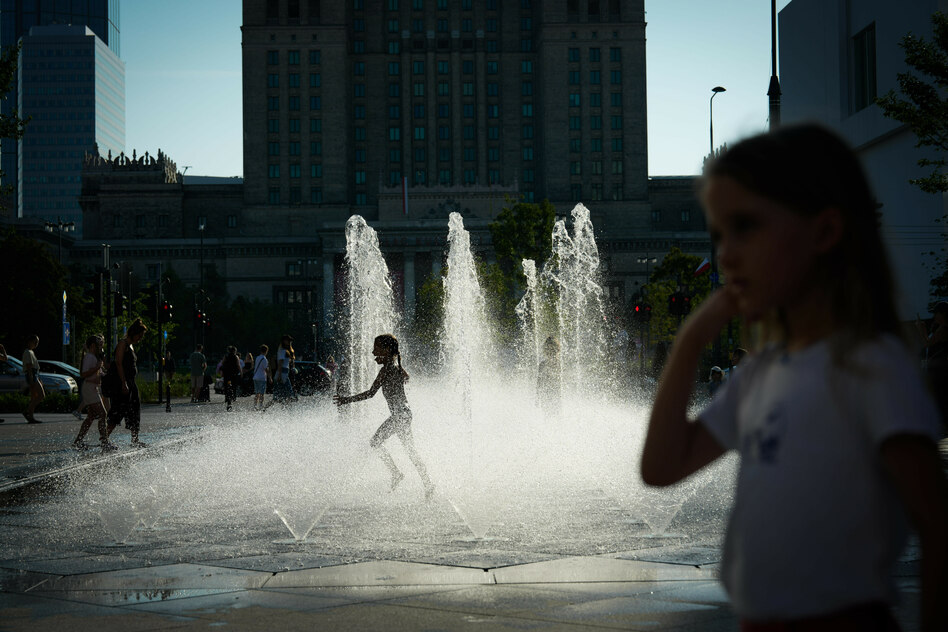
Shimmering heat, the smell of diesel and scorching hot streets, sidewalks and squares: this nightmare is gradually disappearing. In Poland's capital Warsaw, thousands of trees seem to have shot up into the sky overnight. Where the sun used to burn from the sky, the almost ten meter high trees already provide cooling shade.
Green perennials, colorful grasses and flower borders line the sidewalks. In between, benches and bubbling water in small pools or ponds invite you to linger. The former pedestrian tunnels, which were built under the wide street corridors and for the “car-friendly city” during the communist era, now serve as rainwater reservoirs. The new greenery is automatically watered from it. The first public underground car park with four floors is also popular. The cars stay nice and cool.
“The new center” is the name of the million-dollar investment by the Warsaw city administration, which, after around three years of preparatory work and many annoying construction sites, suddenly appears to be a “green oasis of well-being”.
Over 40 degrees in Germany – what was previously unimaginable is now real. The number of heat deaths is increasing and the water levels of the major rivers are falling. And we realize how ill-prepared our country is for climate change. But it affects all countries. How are people dealing with rising temperatures elsewhere? And where can we learn from them? A summer series from the taz. Published so far:
How a desert city in the USA fights the heat
[Link to post 8629168]Record heat in North Africa
The people of Warsaw are thrilled. They are finally getting their city center back, which was first blown up by the Germans after the Warsaw Uprising in 1944 and which was then finally razed to the ground by the Soviets in 1952. They had set up the gigantic Palace of Culture and Science on the 40-hectare site – “Stalin’s gift to the brotherly people of the Poles”; for the Polish communist party elite and as a huge parade ground.
After the political change in 1989, the mayors of Warsaw had no idea how the gigantic concrete square in front of the Palace of Culture, the wide city highways all around and Marszalkowska with its cheap department stores and ugly canteens could become an attractive city center again. The hawkers and parking lots for thousands of cars were not a solution.
It was only the liberal mayor Rafal Trzaskowski and his team of horticultural architects, specialists in civil engineering and sewerage and water management who came up with the brilliant idea: transforming the whole of Warsaw into a “Green City”.
Already in 2020, Warsaw joined the Green Cities program of the European Bank for Reconstruction and Development (EBRD) and began to intensively use the resources offered. Three years later, the Warsaw City Council accepted a comprehensive plan with short, medium and long-term goals for urban development and active climate protection. In it, Warsaw commits to reducing CO₂ emissions to 40 percent by 2030 and becoming completely climate neutral by 2050.
The “New Center of Warsaw” with its large trees, water features and benches, together with the new cycle paths and narrowed roadways, is an example of how it can be done. Because Trzaskowski in no way neglects the other parts of the city, he is using billions of euros in EU subsidies to build more metro lines and lay new tracks on which ultra-modern and air-conditioned trams can then run to the city limits.
Wherever possible, underground rainwater retention basins are created during the construction work, which automatically irrigate the newly created avenues, perennials and flower borders. Drinking water fountains for humans and dogs have been installed in all parks.
Trzaskowski pays particular attention to the Praga district of Warsaw on the right bank of the Vistula, which survived the Second World War undamaged but was then neglected for decades by the ruling communists.
The heat there in summer has so far been almost unbearable. The streets are extremely wide, with trams, motorbikes, pedestrians and bags, paper cups and other rubbish flying through the air. There are almost no cycle paths and hardly any trees. But now Praga is also set to become a Green City.
The first thing that was built was a pedestrian bridge over the Vistula: it connects Old Praga with the boulevards on the banks of the Vistula on the other side of the river and has become a crowd puller. Several streets have now mutated into pleasantly cool avenues, and a previously desolate concrete square will soon become another oasis of well-being with an art installation, a large smoke screen, flowers, bushes, trees, a playground and wooden benches.
Read the full story at the source →
Source: taz