Germany · taz · 49m
Remembering Ratko Mladić: Last escort for the war criminal
Deutsch (original) · Auto-translated to English
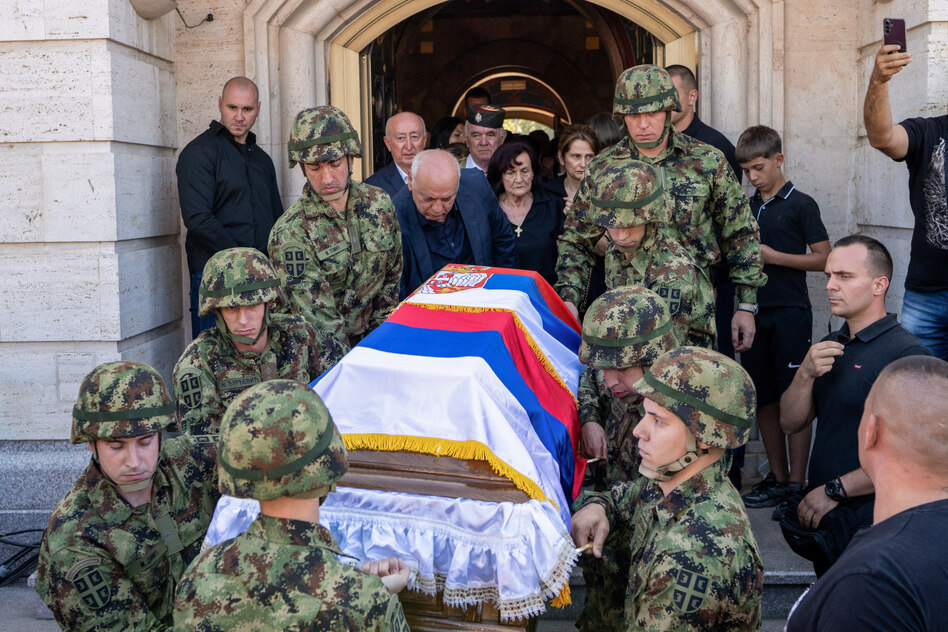
Thousands of people on Monday honored Serbian war criminal Ratko Mladić, who died in a UN prison a week and a half ago. There he was serving a life sentence for war crimes, crimes against humanity and genocide.
Before the burial at the Topčider Cemetery in the Serbian capital Belgrade, the coffin containing Mladić's remains was laid out in the Sveti Luka Church (St. Luke) in the Vidikovac district. On the coffin, flanked by a uniformed guard of honor, lay his military cap (sajkaca), his saber and military medals.
Thousands of people lined up in front of the church. Many carried Serbian flags and pictures of Mladić. Many had come from different parts of Serbia and the Republika Srpska on buses that had been specially provided. According to Orthodox custom and out of respect, at such funerals the mourners bend over the coffin, cross themselves, touch or kiss the wood of the coffin. Many mourners and companions wept, remained in prayer and expressed their condolences to Mladić's relatives, his wife Bosiljka and his son Darko.
The parade should last a few hours - long enough to consciously or unconsciously give the whole spectacle a historical depth and meaning. Mladić will be buried next to his daughter Ana, who committed suicide in 1994, at the height of ethnic crimes.
Only one wanted to be missing. Serbian President Aleksandar Vučić stayed away from the funeral procession. He cited a state visit by the President of Uzbekistan, Shahawkat Mirziyoyev, as the official reason. Vučić obviously wanted to exercise caution and not completely challenge the EU, but also not break with his own. Serbia has been a candidate for EU membership since 2012.
However, the reactions from the EU to the Mladić cult in Serbia were correspondingly decisive. EU Enlargement Commissioner Marta Kos canceled her planned visit to Belgrade this week. The glorification of Mladić is incompatible with the values of the EU. This includes confronting the past, genuine reconciliation and respect for the victims of war crimes, said Kos. This was more than a symbolic note of protest.
Only Serbian human rights activists and some intellectuals address Serbian guilt in the mass murders in Bosnia. They see the celebrations as evidence that Serbian society continues to refuse to accept responsibility for the wars of the 1990s.
In the Bosnian-Herzegovinian capital Sarajevo, after all the experiences of the past few years, no one believed that a deep discussion about the history and role of Mladić would take place in Serbia and the Serbian entity in Bosnia - the Republika Srpska. The burial ceremony only distracts from the mass graves, say some critics such as Emir Suljagić, director of the memorial for the victims in Srebrenica.
The funeral ceremonies only served the Serbian nationalists to present Mladić as a hero for the Serbian cause - as well as the Serbian nationalist leadership in Republika Srpska. Mladić, so the story goes. saved the Serbs of Bosnia from the enemies. But if Mladić were to appear as a war criminal, the legitimacy of the Republika Srpska would inevitably be called into question.
Read the full story at the source →
Source: taz