
Politics · taz · · 3h
Election campaign in Israel: With paragraph 7A against Arab parties
Deutsch (original) · Auto-translated to English
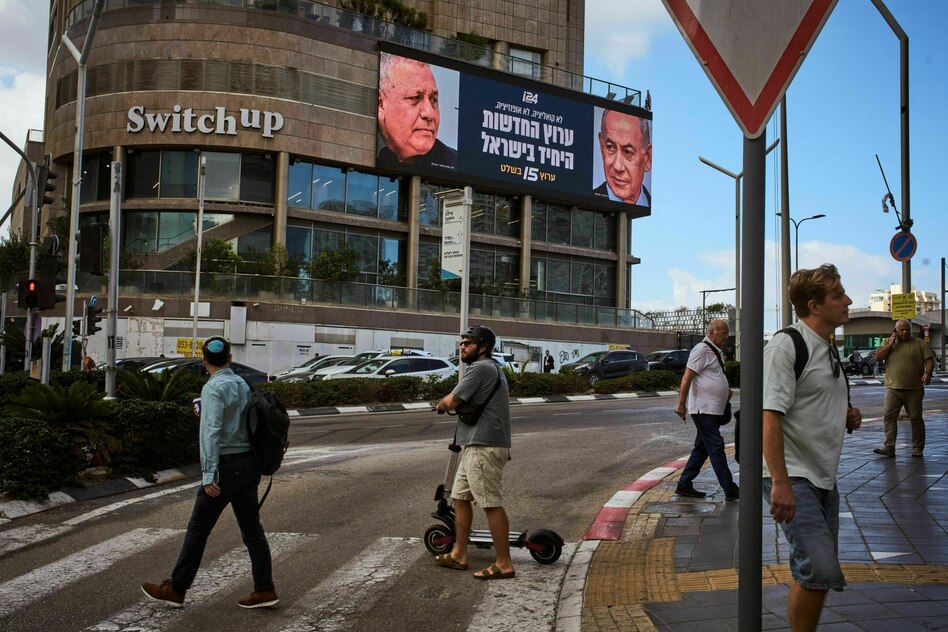
Israel's electoral commission has decided to exclude the three Arab United List parties - Balad, Hadash and Ta'al - as well as the moderate Islamist Ra'am party from the elections scheduled for the end of October. Two individuals are also affected.
However, the Otzma Yehudit party of the Minister of Internal Security, Itmar Ben Gvir, and the Religious Zionism party of the Finance Minister Bezalel Smotrich are allowed to run for election; both are considered right-wing extremists. The commission also decided that. The center-left Democrats party can also continue to take part in the election. An exclusion was considered possible, but the commission did not grant a corresponding request.
It is routine before elections in Israel that political competitors try to use the electoral commission to knock each other out of the race. Applications for exclusion can be submitted to the commission, which will then decide on the matter. The electoral commission consists almost entirely of representatives of the parties that currently sit in the Knesset. So it currently has a corresponding tendency to the right.
However, the Supreme Court has the final say, to which the affected parties submit their objections. In the past, it had repeatedly reversed the electoral commission's exclusion decisions.
The commission cited the reason for disqualifying the Arab parties as having violated Israel's Basic Law. Its paragraph 7A lists the grounds on which a party or candidate can be disqualified: denying the existence of Israel as a Jewish and democratic state, supporting the armed struggle of an enemy state or a terrorist organization against Israel, and inciting racism. The parties now excluded allegedly supported the armed struggle.
Section 7A was originally introduced to prevent the election of nationalist, far-right parties in Israel: in 1984, the Kach Party under Meir Kahane won a seat in the Knesset. In order to exclude them from now on, the Knesset changed the Basic Law the following year. Kach was barred from running in the 1988 and 1992 elections on the basis of Section 7A and was eventually banned in 1994.
To justify the possible exclusion of Otzma Yehudit, the electoral commission argued that its ideology was based on racism. It “continues the legacy of Meir Kahane’s banned Kach movement.”
The election commission's efforts to exclude all Arab parties and the Jewish-Arab Hadash are unlikely to withstand legal scrutiny by the Supreme Court. Especially since Ra'am was part of a governing coalition from 2021 to 2022.
However, the exclusion of one of the two individuals could be confirmed by the Supreme Court. Balad politician Sami Abu Shehadeh is affected. The reason for the exclusion: Abu Shehade published a text on October 8, 2023 in which he described the attack by Palestinian militias the day before as a “historic event”. He also wrote that it is physics “that excessive pressure causes an explosion.” He continued: If small, besieged Gaza had managed to hit Israel like this, “then others can do it even more effectively and easily.”
Shehadeh's comments could serve as evidence for disqualification under Section 7A, Baharav-Miara said. Shehadeh himself expressed remorse for his comments before the electoral commission and emphasized that he had always advocated for peaceful and political solutions.
It is not the first time that Shehadeh and Balad have faced calls for expulsion. Before the elections in November 2022, the electoral commission also approved Balad's exclusion. The Supreme Court overturned the decision, Balad ran in the elections, but missed the threshold and did not enter the Knesset.
Read the full story at the source
Source: taz