
World · taz · · 1h
Election campaign in the USA: That's why Trump relies on the enemy image of communism
Deutsch (original) · Auto-translated to English
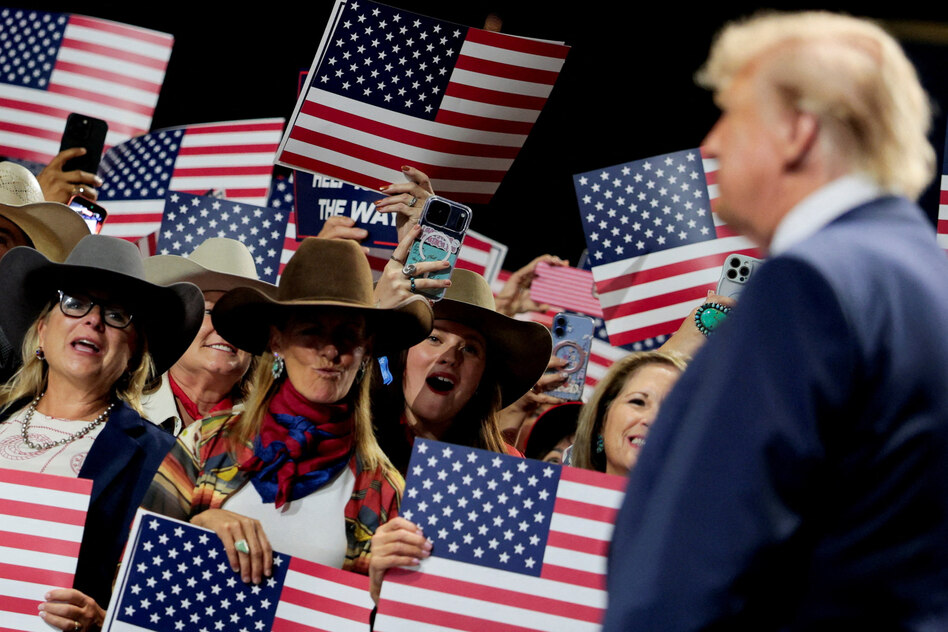
dpa | If you believe the words of US President Donald Trump, then the USA is currently facing its greatest threat: communism. He places this message constantly - at an event at a school as well as on the big stage at the 250th Independence Day of the USA or at the NATO summit in Turkey. Trump and his Republicans also invoked the enemy of communism at their party conference in Dallas, Texas, almost two months before the midterm elections: Vote for us, otherwise the radical left will come to power, is the message.
As usual, no superlative seems drastic enough for Trump: “Communism is the greatest threat to our country in its history – including World War I, World War II, Pearl Harbor and September 11th,” he said in July.
According to the Republicans, the alleged danger comes from the Democrats. For weeks now, they have repeatedly equated their left-wing representatives with communists. Is this a strategy that will pay off in the November elections?
Fear of a communist threat has a long tradition in the USA. Anti-communism was particularly strong during the Cold War. At the time, voters viewed communists as enemies, says historian Matthew Dallek from George Washington University to the German Press Agency.
However, the current situation – around 35 years after the collapse of the Soviet Union – is different. “There is no Cold War.” The idea that there was a major communist threat lurking out there has faded. At the same time, in his opinion, the recent rise of some left-wing Democrats is helping in some way to revive this idea.
In the Democrats' internal party primaries before the midterm elections, some very left-wing candidates prevailed - such as Abdul El-Sayed, who wants to get a Senate seat in the hotly contested state of Michigan. The 41-year-old calls, among other things, for universal state health insurance and greater taxation of the super-rich. When news of his victory broke, Trump promptly called him “great news” for Republicans and called him a “communist failure.”
As early as the summer of 2024, when Trump was confronted with Democrat Kamala Harris in the presidential election campaign, he relied on this strategy: “All we have to do is define our opponent as a communist or a socialist or someone who will destroy our country.”
Historian Dallek believes that calling left-wing democrats communists is inaccurate. Nevertheless, he assumes that this conjures up the idea that these are radical left-wing people. “I think it implies that they are somehow un-American,” he says.
To get closer to the question of whether or to what extent the threat scenario could find fertile ground in the American electorate, it is helpful to take a look at a survey by the opinion research institute YouGov on behalf of the British magazine The Economist.
According to the institute, the representative survey of around 1,600 adult US citizens in mid-July showed that only a minority of just under a fifth currently consider communists in the USA to be a major threat. About a quarter each see them as a moderate or low threat, while a third of those surveyed see no danger at all. Broken down by different groups, the following trend emerges: Older and conservative respondents in particular are more likely to view communists in the USA as a major threat.
Historian Dallek, who also studies election campaigns, assumes that the warning about an alleged communist threat could mobilize Trump's core electorate. “Sometimes Trump voters don’t vote if he’s not on the ballot,” he says of the US president. Dallek thinks it's possible that Trump supporters decide to vote because they fear that a "communist" or "socialist" might win.
In the elections at the beginning of November, the entire House of Representatives and around a third of the Senate will be re-elected. Trump's Republicans currently hold slim majorities in both chambers of parliament. If that changes in even one of the chambers, Democrats can block bills and scrutinize Trump's administration with committee investigations.
In addition to Trump supporters, expert Dallek points to a second group that could potentially influence the strategy: swing voters. Their votes, contested by both major parties, are often the ones that matter in the end. The label “communist” could persuade some of them to vote against the Democrats in order not to take risks.
According to critics, Trump's strategy also wants to distract from his own problems such as his unpopular Iran war, his controversial customs policy and the high inflation rate. In any case, Trump can hardly blame the enemy image of communism for the significantly higher gasoline prices as a result of the Iran war, which many voters look at very closely.
Read the full story at the source →
Source: taz