
Politics · taz · · 51m
Elections in Mecklenburg-Western Pomerania: AfD internal criticism of the election success
Deutsch (original) · Auto-translated to English
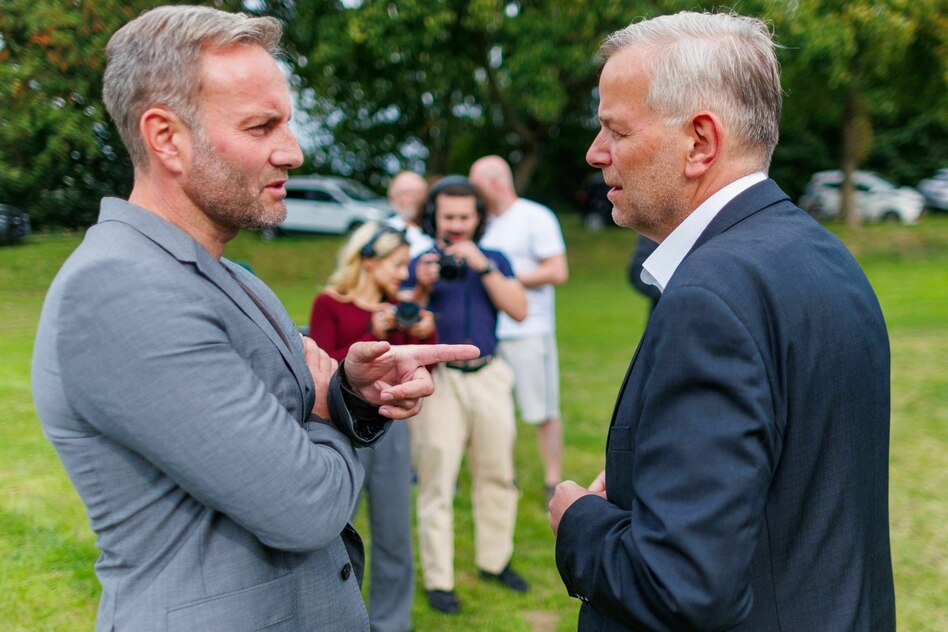
On election evening, Leif-Erik Holm was very satisfied. “Gained 20 points, that’s more than doubled,” said the AfD candidate for prime minister in Mecklenburg-Western Pomerania when his party reached 38.2 percent. The AfD is the strongest faction in Schwerin Castle. Holm, who sits in the Bundestag for the AfD, brushed off the failure of his candidacy against Prime Minister Manuela Schwesig (SPD). However, an internal analysis available to the taz laments the missed opportunity of the absolute majority. She primarily blames the candidate for prime minister for the missing percentages.
The title of the election campaign analysis “Between Claim and Reality – An organizational and strategic review of the 2026 campaign” already suggests criticism. The third page of the 25-page analysis summarizes in bold print: “A publicly desired government claim meets organizational dysfunctionality.” The possibility of taking over the government was “wasted due to an uncoordinated dual leadership, a lack of committee discipline and a lack of coordination”.
The harsh criticism comes from Daniel Fiß, who also led the campaign. The AfD employee was formerly with the NPD's youth organization, which is now called Die Heimat, and was deputy federal chairman of the Identitarian Movement. Working as a campaign manager reveals once again that the AfD's incompatibility decisions are not that binding. Even before the engagement, Fiß was employed by the AfD parliamentary group leader Holger Arppe, who had to leave after NDR and taz made public his chat logs with racist, pedophile, violent pornography and glorifying content.
In the analysis, Fiß criticizes the fact that the dual leadership of Holm and Schult could hardly have been explained to the public. In addition, it would have remained unclear why the candidate for Prime Minister was not secured with the state list and why the top candidate did not go into direct confrontation with Prime Minister Manuela Schwesig (SPD).
The analysis shows that in July 2025 the state executive Enrico Schult was nominated as the “top candidate and prime minister candidate”, which is why Holm would have been “not satisfied”. In the tussle for power, the dual candidacy arose. “A communicative disaster”, also because it was heard in interviews that Holm was leaving a “back door” open, as he could remain in the Bundestag if his candidacy failed.
Holm would have hindered the “necessary working harmony” in the regional association through a lack of “professionalism”. Holm is said to have had no binding communication with the “Election Working Group”. “The MP candidate decoupled himself”. Looking back, the analysis states, “the state spokesman, member of the Bundestag and candidate for prime minister Leif-Erik Holm” would not have brought “strategic or tactical impulses into the campaign”. And again in bold, he was “not sabotaged or actively isolated.” Holm would have maintained “independent communication channels”.
A major event in Rostock or Schwerin with 3,000 people, for which 75,000 euros were budgeted, fell through because Holm did not have a “final concept” drawn up. A concrete preparation for the government option also remained: “This is leadership weakness and organizational failure!” Fiß was also bothered by the fact that Holm repeatedly referred to the AfD as “‘the CDU 30 years ago’”. Way too moderate, way too nice.
Read the full story at the source
Source: taz