
Germany · taz · · 2h
Volksbad debate: racist exclusion with tradition
Deutsch (original) · Auto-translated to English
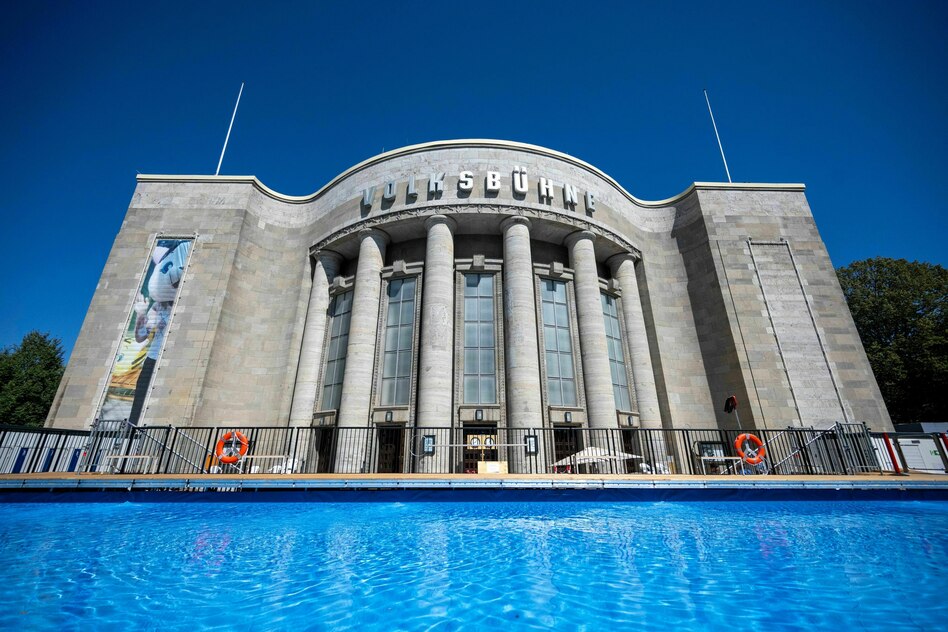
The hatred has still not died down. “Reverse racism” and “apartheid against whites” are said, and there are still people who find such irritating accusations plausible. It's about the Berliner Volksbühne's campaign to offer a public pool, the Volksbad, for a few summer months, which should be opened separately for black young people.
I suspect that the outrage would have been less pronounced if the EOTO association, which supports people of African descent, had received its own theater performance from the Volksbühne. But it is precisely in the physicality of public swimming, my thesis is, that racism is particularly evident.
A swimming pool should be there for everyone, say the opponents of the Volksbühne campaign, but they do not take into account that this public pool does not cost an entrance fee. On the other hand, the day ticket in Berlin baths costs up to 11.50 euros. The Volksbühne argues against such social exclusion in particular: It is an action for a city “in which infrastructure has been systematically dismantled in recent decades and public places are increasingly commercialized and controlled”.
The taz is an independent, left-wing and opinionated daily newspaper. We have been arguing in our comments, essays and debate texts since the taz was founded in 1979. We often cannot and do not want to agree on an opinion. That's why you'll find some completely opposing positions here - all part of the very broad left-wing spectrum of opinions.
Even the first large baths in Germany - in Berlin, for example, the Stadtbad Neukölln - were socially excluded: They consisted of a magnificent men's pool and a smaller women's pool, all built for the social elite. The public baths, on the other hand, were usually not there for swimming, but only for the proles' personal hygiene: tub baths and showers.
After the November Revolution in 1918, a lot changed: swimming pools were open to everyone, although gender segregation continued to exist in large parts. It is noteworthy that it was abolished or at least became more permeable in a number of places especially after 1933, i.e. after the Nazis came to power. This is only surprising at first glance, because the abolition of one type of discrimination can go hand in hand with the establishment of another. Not just in Germany.
In the USA, for example, the baths were initially open to the male working class since the 1880s/1890s. Women and girls were excluded. Racial segregation only began when women were allowed inside. Historian Jeff Wiltse writes, "In many cases, whites literally forcibly expelled blacks from the water at mixed-sex baths because they did not want black men to come into contact with white women in such intimate public places."
The resentment did not end with the successes of the civil rights movement. “In the 1970s and 1980s, tens of millions of predominantly white, middle-class Americans swam in their own backyards or in suburban swimming clubs, while African Americans and Latinos in particular used the urban pools in the inner cities,” Wiltse said. Over 90 percent of whites left a pool as soon as blacks jumped in. They followed the racist belief that dark skin color dirty a swimming pool.
Exclusion of social groups from public swimming pool spaces is also known in Germany. The city of Leipzig announced in 1935 that “the appearance of Jews in the swimming pools was perceived by many as extremely unpleasant.” A local newspaper noted: “Blonde German women and girls in particular were harassed to such an extent that the swimming champion had to intervene several times.”
Despite all the major differences, one thing in common is also noticeable: the new discrimination was easier to enforce because it was justified by a danger to women and girls who were supposedly in need of protection. What followed in the USA was systematic repression: hardly any swimming courses for black kids, hardly any pools in their neighborhoods. The exclusion never stopped, despite targeted programs to promote swimming in the African American community.
There are also current examples of discrimination in Germany. It was recently decreed in Halle (Saale) that bathers must speak German. In Freiburg Sintize were thrown out because they wore traditional bathing skirts. In 2023, fights in Neukölln's Columbiabad gave rise to a nationwide debate in which young men with a migrant background were branded across the board as a danger to the public swimming pool space.
A few years ago, posters were put up in Paderborn and Cologne to raise awareness of the issue of sexual assault; In one case they showed a white woman, in the other case a white man, who was grabbing. The German Police Union said that this had “hardly anything to do with reality.” Because: “Let’s call the child by its name – they are mainly men from the main countries of origin for asylum seekers.”
The racist stigmatization goes hand in hand with the belief that black people don't belong in public pools anyway, that the water is alien to them and that it was created for white people. In the sports science literature until the 1980s, the lack of blacks in the world's top swimming sports was explained by "different muscle structure", "unfavorable center of gravity" and similar nonsense.
Until the 18th century, sub-Saharan Africa was considered the continent where the world's best swimmers lived. The special ability to move quickly in water was considered dangerous by European colonizers. Enslaved people were able to swim out and discuss things unsupervised on the water or even escape.
This is where the outrage against the Volksbad in Berlin comes full circle. In short, the message is: In principle, public places must always be open to white people, and whether other social groups are also allowed in is then decided by the white majority society. In the water of a pool you can see some things a little more clearly.
Read the full story at the source
Source: taz