
World · taz · · 2h
Viral internet trend: Argentina is farming Aura
Deutsch (original) · Auto-translated to English
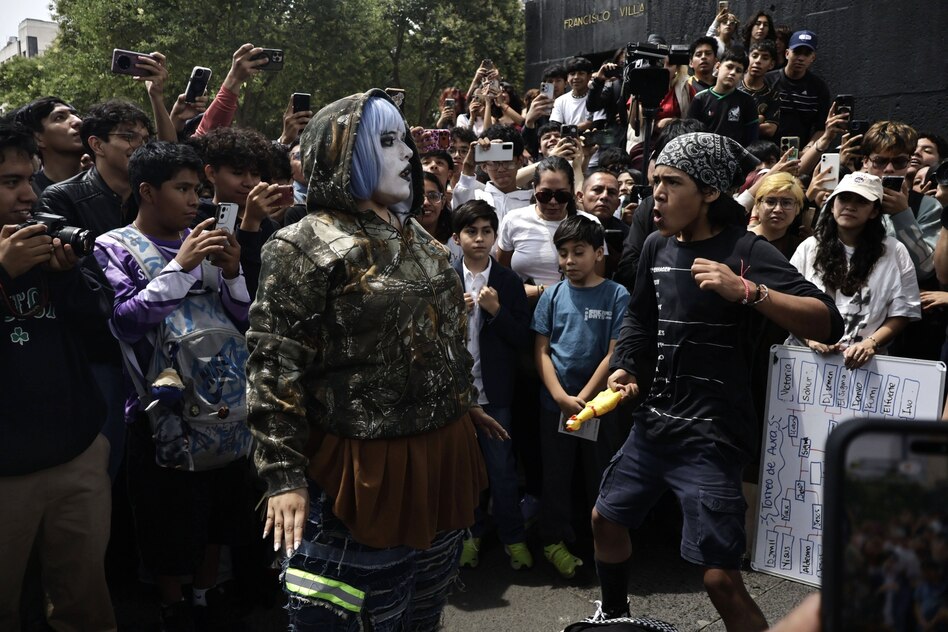
It's the first warm and sunny Saturday afternoon of this truly cold winter in Buenos Aires. Around 500 young people are jostling in a circle on the lawn in front of the popular Barrancas de Belgrano park. In the middle there are two people facing each other. They gesture, make faces, dance. The crowd cheers, claps, cheers: “Aura, aura, aura!” What at first glance seems like a dance battle from “Step Up” is actually a trend that has made it from the internet to the streets and squares of Argentina.
Just a few months ago, hardly anyone was aware of the event, but now it attracts huge crowds, including in Europe. The young people call it “Farmear Aura – farming aura”. The trend combines internet culture, self-expression, music, art and the courage to appear publicly. It's about making an impression and winning over the audience. For anyone who is not part of this digital youth culture, this trend seems just as incomprehensible as “Six Seven” and “Siuuuu”.
“Farmear” or “Farmen” is derived from the English “farm” and comes from the field of agriculture. It's about sowing, harvesting or collecting fruit. In the gaming and internet world, “farming” means collecting resources, items, or points – and is often used in games like Minecraft. When “aura farming”, on the other hand, something intangible is collected: charisma, style or attention.
Anyone who has a lot of aura exudes a mixture of presence, charisma and style. And when someone “aura farms,” they’re essentially trying to accumulate moments that make them seem more confident, cooler, or impressive. And this is no longer limited to likes on the Internet.
“I just wanted to try it out and experience what’s behind it,” says Diego Scodare. He just came from the district in Barrancas de Belgrano. His “Aura farming” performance only lasted a few minutes. He found out about today's event via Tiktok and quickly decided to come. “It was my first time, everything was improvised and therefore un poco flojo, a bit poor,” smiles the 25-year-old.
He is actually a musician and publishes under the stage name MrWodan. At the moment, however, this part of his life is somewhat on hold. As an artist, he sees connections between music and “aura farming”. It's about combining different forms of expression: music, dance, art and perhaps at some point body painting or other creative forms. “The idea of evolution is to mix things,” says Diego.
“It doesn’t work without courage,” he adds. Anyone who wants to show themselves here has to have the courage and: “You have to have spirit.” Expressing your own style to the outside world is the core of the whole thing. He takes it easy that things didn't go as planned the first time.
“As a panda, I can’t really claim to be particularly attractive,” says Leandro Chinar. The 33-year-old is dressed in a panda bear costume and has to laugh when the question of appearance and attractiveness comes up. “What counts is the reaction: laughter, joy, surprise, a beautiful moment,” he says.
Because in the end, “aura” is less a question of appearance than of effect. A pose, a dance, a costume or a surprising movement can all contribute to your personal aura. Actually a nice idea that stands in stark contrast to the standard beauty industry and the self-optimization that is shown every day on social media.
What seems spontaneous at the event, however, follows clear rules: the participants have a certain amount of time. The audience counts the final countdown and decides who has more aura. Physical contact and insults are prohibited. Weapon-like objects or political symbols are also not permitted.
"It doesn't matter what you represent. It's about representing something in a positive way," says Chinar. What matters is the reaction of the audience. “You can have a million followers and still lose to someone who doesn’t have any,” he says. “Whoever creates a stronger impact on the audience wins.”
He is not surprised that older people are less able to do this. Anyone who spends time on Tiktok and Instagram, on the other hand, knows the mechanisms behind trends, memes and viral images. Maria del Carmen is the exception: the 61-year-old stands in a circle and stands out from the crowd. “‘Come with me, grandma!’ my granddaughter said and that’s why I’m here,” she says.
Your counterpart is none other than Tung Tung Tung Sahur, the AI-generated wooden figure from Tiktok. “Abuela del Aura – Abuela del Aura,” the young people cheer them on. The Grandmother of Aura twirls her long hair around. “Tiene Aura – she has aura,” cheers the crowd. Maria del Carmen was not uncomfortable during the performance. As a freelance actress, she regularly appears on stage in front of an audience.
It's not all that new anyway. Leandro Chinar, these events are reminiscent of the disco scene of the 1990s with flashy clothing, free dancing and posing. The spectacle could also remind viewers of voguing. The expressive dance style created in New York's Harlem district in the 1960s by the Afro- and Latinx LGBTQ+ communities.
“Today’s youth are adapting this to the conditions of social media,” says Chinar. What used to happen on the dance floor is now announced, recorded and distributed online via Tiktok.
Anyone looking for the origin of “Aura farming” will come across a video from Indonesia. Rayyan Arkan Dikha, then eleven years old, stands at the bow of a boat during a traditional race. With his movements he tries to encourage the rowers sitting behind him. The video goes viral, is imitated, made into a meme, reinterpreted and finally leaves the digital world.
It is impossible to say whether this is exactly where the origin of today's “aura farming” lies, says Leandro Chinar. “But the principle is clear: someone does something that stands out from the crowd and suddenly others want to imitate that moment.” And that this doesn't happen alone in front of a screen, but publicly and together with others.
The sun has now set. And like almost every evening, tango dancers start doing their rounds in the nearby Glorieta de Barrancas. Most of the time the older people keep to themselves. “Mira, great aura – just look, they have aura,” says someone as he passes by. No wonder: Tango also offered space for self-expression, identity and physical performance from the beginning.
Read the full story at the source
Source: taz