
Germany · taz · · 4h
Violinist Jessie Marino: She causes forms to collide
Deutsch (original) · Auto-translated to English
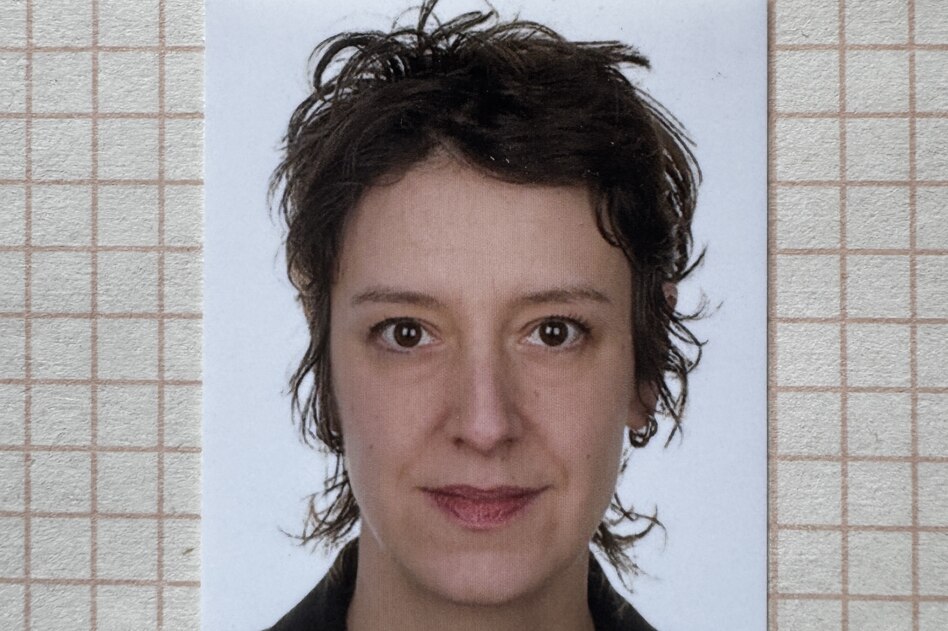
Jessie Marino doesn't fit into any category. Too tight. Too comfortable. "Why should I repeat myself? I don't have the time for that," says the Berlin-based artist. There is a common thread that connects their works. Jessie Marino is a musician, composer, media artist, performer, improviser. Lecturer. And quilter.
Marino's musical output is enormous; three works are examined in more detail here. All three unite – common thread! – that they take other people's existing works as a starting point and Marino shapes them into something new in very different ways.
In 2019 she dealt with the Milli Vanilli scandal, a low point in pop in which manipulative structures became apparent like hardly ever before. Milli Vanilli played a stadium concert in the USA in 1990 and the backing track stuck. As if they had the hiccups, the two dancers stuttered “Girl you know it’s…” until they ran off the stage in shame. So it turned out that they had never sung the music themselves and were only using it as a placeholder because the actual singers didn't fit into the desired image.
Jessie Martino with Inga Margarete Aas & Pinquins: “Murder Ballads Vol. II – The Positive Reinforcement Campaign” (Harlow Etc./Bandcamp)
Live: September 17th, “Kulturraum Zwingli Kirche” Berlin Jessie Marino with Jasmine Guffond and Kai Fagaschinski
October 9th, Neslihan Schmidt and Korhan Erel play works by Gudrun Gut, Jessie Marino, Grgur Savic and their own works in the “KM28” Berlin
October 10th, Magda Mayas, Biliana Voutchkova and Miako Klein play music by Jessie Marino and Juliana Hodkinson at “KM28” Berlin
Jessie Marino's “Girl, ya know” extends the hang to eleven minutes. After a few repetitions, she shifts the phases. The hiccups keep getting out of sync until everything is right again. During this seemingly endless time, you relive the shame.
Marino began playing the cello when he was still in elementary school. "It wasn't a real lesson. No technology." This is exactly what motivated her to continue. While studying cello at the Manhattan Music School, she realized: "I can recognize phrases, I'm an expressive performer, I have a good sense of rhythm and all that. But I don't have any sophisticated technique."
The realization that she would not become an orchestra musician led Marino to explore the European contemporary music scene. “There I found out how to hold my instrument and use my hands, voice and body in such a way that I can produce the sounds that a contemporary composition demands of me.”
With her bachelor's degree under her belt, she came to Berlin for the first time in 2006, gave cello lessons, learned German and made connections with like-minded people. "Until then, I had no idea that it was possible to play almost no note at a concert. That was a revelation!"
With the piece “Portsmouth NH, 1978” she takes the opposite approach. Musicians from the Spektral Quartet and the Jack Quartet play their way through the text-based white noise score until they arrive at “Cavatina” from Beethoven’s String Quartet Number 13 opus 130. The violins sound like creaking doors, a ghost ship appears in your mind's eye.
When the artist returned to her hometown of New York in 2008 after two years in Berlin, she became closer to the theater, especially off-Broadway productions; This awakened in Marino the desire to think about music and theater together in an abstract way.
She deepened this concern starting in 2011 while studying at Wesleyan University in Connecticut with Ronald Kuvila – “a master of electronic music,” as Marino says – and the composer Alvin Lucier, who was already retired at the time. There she tried out – there were ensembles for gamelan, taiko and African drumming.
How to compose for specific instruments was never interesting to Marino. She also thinks the idea of genre boundaries and genre-specific playing styles is “pointless”. Attention: Red thread! “I don’t orchestrate technically correctly; I’ve never opened an orchestration book,” she explains.
Learning composition wasn't her main concern when she took this subject with Paul DeMarinis at Stanford in 2013. "What interests me about the unusual combination of music, musical theater and musical dance is what happens when these forms collide. Although they are very simple, they combine well with music because they are based on repetition."
In 2019, Marino returned to Berlin with a doctorate, various awards and an already long list of diverse recordings. When the Covid pandemic broke out, she realized that she not only had to stay in Germany, but also wanted to.
"To compensate, I started quilting. I needed a different art form, something that was immediate. With quilting, I can see what I've done after an hour. Completely different from composing, where it sometimes takes years before I have something in my hands."
Marino needed an emotional and musical bridge to her country of birth. Murder ballads! "I'm not from the South, nor from the Appalachians. But these folk songs are anchored in the cultural memory of all Americans. They're in the music of Bob Dylan, in the songs of Willie Nelson, they're everywhere." Furthermore, the overarching theme of murder ballads – the portrayal of women as defenseless victims – is still relevant hundreds of years after they were written. Unfortunately.
In her recently released album "Murder Ballads Vol. II - The Positive Reinforcement Campaign" (there is a recording of "Murder Ballads Vol. I - Sister Sister", but not an album) she uses themes from classic murder ballads.
"There is either an original melody or an original text in the songs. Sometimes I added my own parts, sometimes I brought them from elsewhere. Sacred harp a cappella pieces are woven into all the songs. I really like this energetic traditional singing form and the idea that there are no solos. The polyphony expresses female solidarity and strength."
This happens very impressively in “Pretty Polly”. Marino uses the chord changes of the Sacred Harp piece “Amelia” and was inspired by the many different lyric versions of this classic murderer ballad, which, delivered with determination, leaves no doubt: the victim will avenge the murderer.
In the song “Vessel,” Marino combines the Dolly Parton song “The Bridge,” in which a single pregnant woman considers throwing herself off a bridge, with the Sacred Harp piece “Idumea.” Marino evokes the disturbing scenario of the fetus speaking out and convincing its mother to jump to its death: a life in a society that condemns them both is not worth living.
"What I like about murder ballads is that they are often misleading. There are really devilish lyrics in a happy major key, you can't rely on anything." In 2023, Marino premiered “Murder Ballads Vol. II – The Positive Reinforcement Campaign” with bassist Inga Margarete Aas and the percussion trio Pinquins at the Donaueschinger Musiktage. They had expected headwinds for bringing folk to this bastion of electronic music.
Because Marino holds her violin like a cello. Which feels completely natural for the 42-year-old (she gave up playing the cello because it caused her physical pain). Both brought her accusations of amateurism. But what happened next in Donaueschingen still leaves her speechless today. Shortly before the live broadcast on the radio began, a man jumped up and left with the words “Too many women on stage!” cursing the hall. "I knew then how important it was to bring this type of music to events like this. We hadn't even started yet. Five women, too many?"
Until this incident, Marino had never felt that she was disadvantaged as an artist or denied access to institutions as a woman. Anyway.
She has better experiences than in Donaueschingen at KM28, a place for jazz, electronics and free improvisation in Berlin-Neukölln, where Marino not only regularly sits on stage, but also stands behind the bar. "People are open to everything new, listen intently and think about it. And if they don't like something, they stay and ask afterwards 'Why did you book that?'; they are interested in exchanging ideas."
The biggest common thread in Jessie Marino's work is everyday life. "I don't like using musical equipment. I prefer things that we use every day: cups, lamps. Let's say I see two performers on stage clinking their glasses together. Then I'll be reminded of it myself later when I clink glasses with someone. Such little appreciative moments are significant that I've experienced together with other people. Something that might make me think differently about something than before. Or that I remember something because I'm with an object or something idea.” As an artist, Jessie Marino creates unique moments out of everyday things.
Read the full story at the source
Source: taz