
Germany · taz · · 1h
The truth: Please don't dismantle everything!
Deutsch (original) · Auto-translated to English
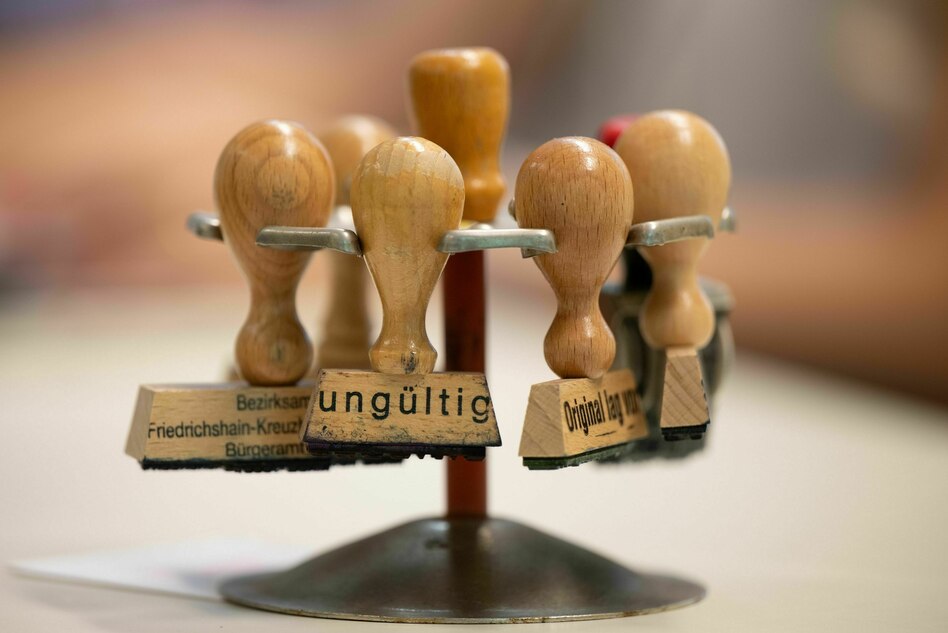
Asking about your profession used to be a shockingly superficial matter. As a boy, you reliably answered with one of three pipe dreams: train driver, lighthouse keeper or clerk. And when Robert Lembke blissfully asked “What am I?” on television, things were only slightly more complex.
But fortunately we still have our state. And he now gives the question of all questions about earning a living the depth it deserves, as he wants to use a cover letter and various selection options to capture the sector of the economy in which people work. Finally, the people who work day in and day out with the “manufacture of heavy open-form forgings” are also seen. Or with the “trade brokerage of agricultural raw materials, live animals, textile raw materials and semi-finished goods”. In retrospect, it is hard to believe that these trades have been so little appreciated so far.
As is well known, Germany is the country of hidden champions. All over the Swabian region, globally active screwdrivers are working on products whose names are full of metallic poetry. And inevitably this one question suddenly pops up in your mind's eye: What would I actually have liked to have done? The “manufacture of nonwovens and products made from them (excluding clothing)”? The exciting life in “tugsier and salvage shipping”, perhaps with the “additional fish stock advisory qualification”? Or rather “water production with external sources for distribution”?
These are also important questions for my bank. She recently wrote to me saying that she is legally obliged to record the exact sector of the economy in which I work. The letter from the bank was very short. And now I know why. The link provided – also record-breakingly short: “gls.de/wz” – leads to a list of around 900 industry names. So nothing with clear categories like “crafts, agriculture, services, industry” and “intelligence,” as it was called in the GDR. No, things are finally differentiated. So I have to decide whether “extraction of limestone, dolomite and chalk” applies to me – or whether “extraction of limestone and gypsum stone as well as anhydrite, dolomite and chalk” applies to me. And of course “keeping sheep, goats, horses and donkeys” is a completely different industry than “keeping horses and donkeys”.
The relevance for the banking industry is obvious: the loan interest for someone who earns his living with the “manufacture of mills, grinding stones, grinding stones, whetstones and polishing stones as well as abrasives” must logically be completely different than for someone in the “wallpaper pasting” sector. Anyone who works in the “transport of goods in inland waterway transport by Particuliere” does not need a real estate loan. And no bank can be expected to have business relationships with someone who deals with the “manufacture of safes and safes” on a daily basis. Of course, the locker becomes more expensive when it comes to “manufacture of jewelry, gold and silverware (excluding fantasy jewelry).” It is a collegiate situation when the account holder clicks on “Multilateral development banks not subject to minimum reserves and without zero weighting”. And directly relevant to security, yes: democracy, is the “production and processing of fission and breeding materials”.
At times I am deeply impressed by the thoroughness of my bank. Or the authority that created this list. Someone is really measuring it very carefully. And the “production of cold strip with a width of less than 600 mm” is likely to lose out again compared to the “production of metal containers with a capacity of more than 300 l”. But there is also some humane and sympathetic sloppiness: the “industry of local architectural offices” leaves a lot of room for imagination. It also becomes clear in which decades the authors of the list moved through department stores: “Manufacture of woven outerwear for men and boys”.
By the way, the busy officials in the bureaucratic inquiries are by no means just concerned with the production of all conceivable substances and things. When you think the end of the list is finally in sight, it starts again - this time with the resolution "Wholesale for..." instead of "Manufacture of...".
And at the very end comes what undoubtedly made the list makers at the office's hearts bleed: If you don't want to scroll through the total work of art of 900 industry names, you can simply tick: "I can't find my industry." Is it any wonder that in the bureaucratic offices people look at us citizens and our laziness with hatred?
Read the full story at the source
Source: taz