
Germany · taz · · 38m
UN General Assembly: Germany presents counterproductive climate protection plans
Deutsch (original) · Auto-translated to English
“Roadmap for Transitioning Away from Fossil Fuels” is the name of a resolution from the International Climate Conference COP28 in 2023. At that time, the contracting states agreed that each country would present a roadmap for phasing out fossil fuels.
And because the Brazilian presidency called for these “roadmaps” at the most recent climate conference, Germany now had to deliver: On Thursday night, Federal Environment Minister Carsten Schneider (SPD) presented the German program to the United Nations (UN).
“Our roadmap is intended to set an example internationally,” said Schneider on the sidelines of the UN General Assembly in New York. “I am sure many more countries will follow.” Which is of course pretty cheeky: 115 countries have already submitted their roadmaps, the Federal Republic is number 116.
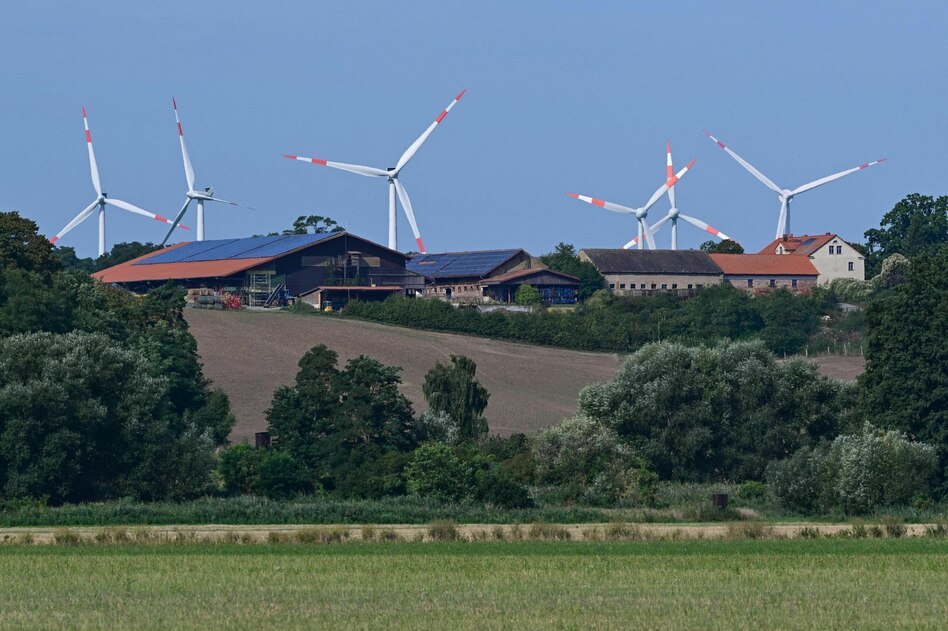
The German roadmap states: "In Germany, renewable energies already cover around 55 percent of gross electricity consumption; this share is expected to rise to at least 80 percent by 2030." In order to achieve this, however, a firework of investment would have to be set off: Since 2000, the Renewable Energy Sources Act (EEG) has been driving expansion, with an average of 2 percent more wind turbines, solar panels, etc. being added every year. But in order to get to 80 percent, more than 6 percent would have to be built annually over the next four years - that would be tripling the pace.
In this respect, the bill for the reform of the EEG was eagerly awaited in Germany, which Federal Economics Minister Katherina Reiche (CDU) wanted to submit to the Bundestag for first reading late on Thursday afternoon - after this text went to press. This “EEG 2027” is flanked by a grid connection package.
Reiche obviously doesn't know the German roadmap: Instead of improvements, the draft from her ministry envisages massively worsening the conditions for expansion.
First of all, there is the end of the funding for small roof-mounted photovoltaic systems: In order to make their refinancing easier to plan, there was previously a remuneration for electricity fed in for over 20 years, currently 12.22 cents per kilowatt hour. This compensation should be eliminated. Anyone who wants to build a solar power plant on their roof will have to sell their electricity directly on the electricity market from the third year onwards.
The Federal Association of the Solar Industry criticizes the fact that “neither the technical nor economic prerequisites for this are foreseeable”. The consequences are calculable: private expansion of photovoltaics will collapse instead of growing.
Secondly, there is the partial elimination of compensation payments for grid-related curtailments: If the grid cannot transport the electricity, the grid operators are entitled to take large solar parks or wind turbines off the grid. Because the network operators are responsible for the failure to expand the network, solar or wind power producers have so far received compensation. This should now be eliminated.
Because no one knows how often their system will be sealed off without compensation, this creates uncertainty among investors: the green electricity industry criticizes this so-called redispatch reservation, as does the fossil energy industry and energy companies such as EnBW, LEAG and RWE. Not Eon, however: The concept comes from the large Essen corporation - and until she took office, Reiche was CEO of Westenergie, Eon's largest subsidiary.
Thirdly, the new EEG provides for a cap on the rental of wind turbine areas - this comes from the very minister who refers to Ludwig Erhard's "More competition, less state". When looking for free land, investors have previously been able to negotiate the price with a farmer themselves. Even the Federal Association of the Energy and Water Industry (BDEW), the lobby association for the fossil fuel energy industry, criticizes this lease cap. BDEW boss Kerstin Andreae: “An artificial cap endangers the availability of space and the project pipeline.”
When it comes to solar energy, “in the future there will be a stronger focus on cost-effective open-space systems,” as the law states. In addition, more wind energy is to be achieved through additional tenders and so-called bioenergy is to be expanded - the cornification of the landscape will therefore continue. However, the industry agrees: “If the laws are not significantly improved, Germany will face a standstill in energy policy,” says Ursula Heinen-Esser, President of the Federal Association of Renewable Energy. Incidentally, Environment Minister Schneider had previously also approved it in the cabinet.
Read the full story at the source
Source: taz