
World · taz · · 2h
Ukrainian defense industry: returning to its roots
Deutsch (original) · Auto-translated to English
In the rubble of the Soviet Union after its collapse in 1991, a third of the former Soviet arms industry was located on the territory of the new Ukraine: space rockets and satellites were assembled at Pivdenmash in Dnipro, and the world's largest aircraft were assembled at the Antonov Works. Tanks rolled off the assembly line in Kharkiv and aircraft carriers and cruisers were launched in the Mykolaiv shipyards.
Within a generation, the production capacities of the state-owned companies largely went to the dogs. Since the Russian invasion of Ukraine, more than 1,000 new defense companies have emerged, over 90 percent of which are private companies.
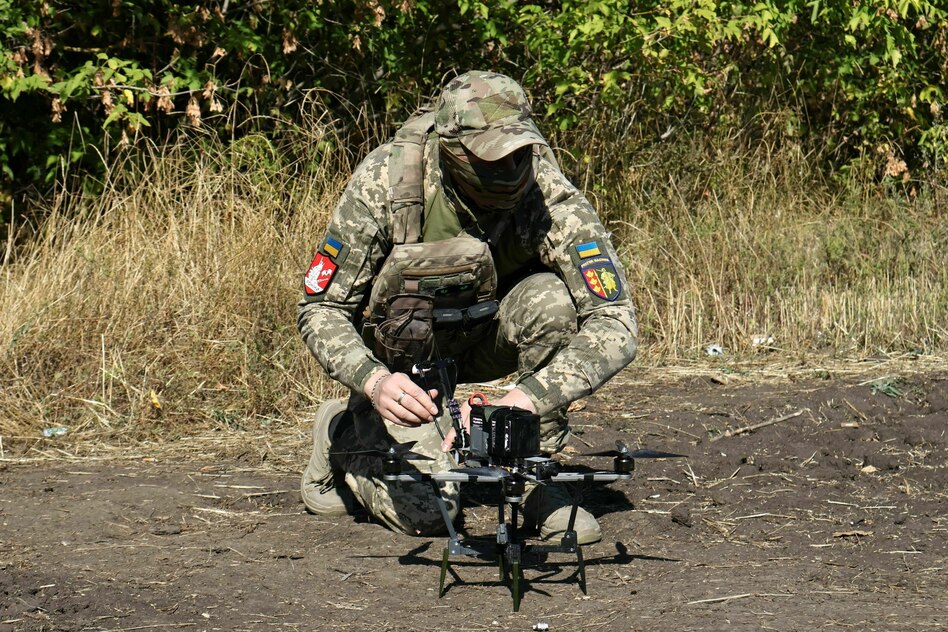
Ukraine is considered a world leader in the construction of flying drones and water drones because of its combat experience and cooperation between army units and defense companies. But also with mobile robots, which even shelled Russian positions during the war in such a way that Russian soldiers were captured and transported away on the remote-controlled vehicles. Howitzers, armored vehicles and the first ballistic missiles are also produced in the country.
“Our advantages are obvious: unmanned systems in all domains, electronic warfare and – most valuable of all – combat data,” says Daria Janiyeva, president of Defense Builder, an association of producers and venture capital firms. "This advantage has already been paid for, at a price that no other country will want to repeat. And that's exactly what the international partners are willing to pay for - with orders, joint ventures and investments."
German arms giants such as Rheinmetall and Leopard-Panzer-Bauer KNDS have already founded joint ventures with Ukrainian arms companies. The Munich start-up Quantum Systems has founded a joint venture with the Ukrainian drone manufacturer Frontline Industries to build unmanned aircraft. ARX Robotics developed the mobile robot “Combat Gereon” together with the Ukrainian company Frontline.
There are also other German-Ukrainian collaborations and the federal government is financing procurement from both German and Ukrainian companies for the Ukrainian army - a model that is expressly intended to be expanded as a joint venture program.
In 2025, the Ukrainian defense industry produced defense equipment worth $13.1 billion, almost a third more than the previous year, according to the National Security and Defense Council (RNBO) in Kyiv. Overall, the Ukrainian defense sector has production capacity of $55 billion - but the government does not have enough funds to order Ukrainian military equipment on this scale.
In July, after much pressure, the government generally allowed arms exports. But to date not a single export license has been granted. So far, Kyiv has insisted that the weapons remain in the country - for the war against Russia.
Ukrainian manufacturers, however, argue that they can produce much more than the government can buy for the army. The export proceeds would bring taxes into the country - including for more procurement - and money for the expansion of defense companies.
According to Anastasija Mischkina, director of the defense industry association Tech Force in UA, there is still no regulation as to which countries can be delivered to and which military equipment is fundamentally too critical for export. However, the internal market is not sufficient to utilize all production capacities.
In addition, Tetjana Uzhvyj from the drone manufacturer BlueBird Tech complains that 20 percent export taxes are due on exports of drones, and even 30 percent on parts. This largely eats up the cost advantages over Chinese products, especially when it comes to components, and Ukraine loses its competitiveness. Above all, Ukraine must quickly ensure that it becomes independent of Chinese parts imports, according to the Ministry of Technology.
Read the full story at the source
Source: taz