
World · taz · · 1h
School strike in France: Class struggle in France
Deutsch (original) · Auto-translated to English
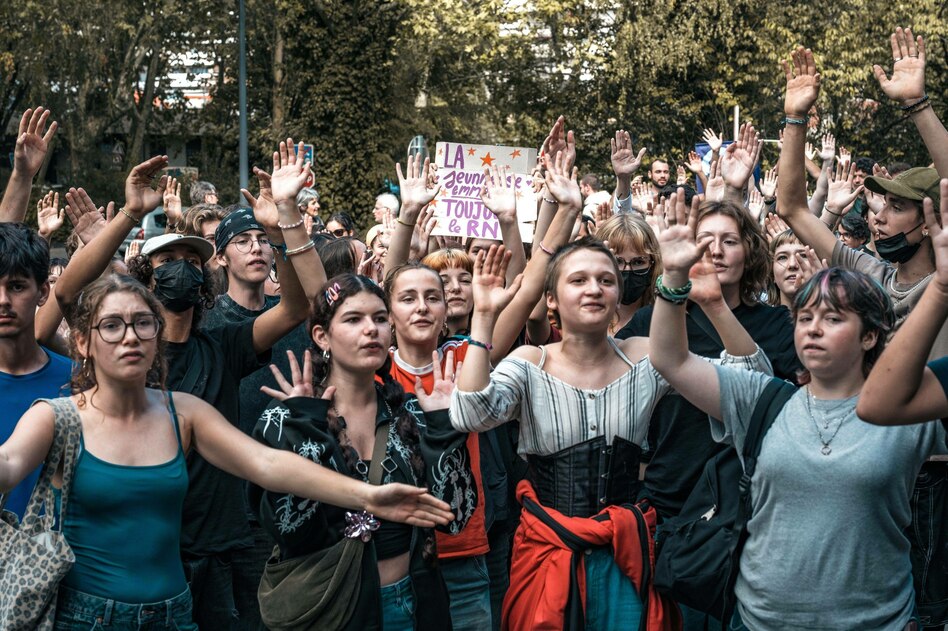
There is currently no end in sight to the French student protests. Initial discussions with Education Minister Édouard Geffray on Friday also failed to bring any rapprochement. Representatives of student organizations and unions reported after the meeting in the ministry that Geffray had primarily tried to sound out the mood and balance of power within the protest movement. However, he did not make any concrete suggestions that would address their demands.
Since the end of September, students in French cities have been protesting against miserable conditions at schools and planned budget cuts.
The confrontation between young people and the police has escalated massively within just a few days. According to the Interior Ministry, 305 police and gendarmes were injured on Thursday alone, a temporary high point in the protest movement, most of them from projectiles. A plainclothes police officer was beaten up in Belfort. Two teenagers were then arrested. The judiciary accuses them of attempted murder.
The authorities responded to the protests with a massive police presence and thousands of arrests. According to Le Figaro, around 5,000 young people have been arrested since the end of September, 90 percent of them minors - partly for taking part in protests, partly as onlookers on the sidelines. This has not yet ended the protest movement.
The authorities primarily blame outside “casseurs” (rioters and provocateurs) for the violence, but also accuse the left-wing party La France insoumise of adding fuel to the fire with its appeals and active support and explicitly accepting the escalation of violence. In this context, the former interior minister and conservative presidential candidate, Bruno Retailleau, called for a ban on Jean-Luc Mélenchon's party.
Conversely, there is also discussion about “disproportionate force” used by the police in law enforcement operations. At least 170 teenagers and 65 school staff were also injured, some of them seriously. In Tours, a student who was hit by a police grenade lost an eye. In the town of Saint-Ouen-l'Aumone, northwest of Paris, a 16-year-old suffered a double broken jaw from a tear gas grenade that was allegedly fired at close range. Videos on the networks not only shock young people, but also some parents who now want to protect their children from schools.
The sociologist Sebastien Roché, who deals with police and security issues for the National Research Center CNRS, criticizes on X: “There hasn't been this much serious police violence in a long time” in France. Police officer Rudy Manna, who looks back on 30 years of service, also said on the public broadcaster France-Info that the violence in this conflict escalated unexpectedly quickly: "I cannot remember such violence spreading in this way in the country. Police officers are also family men, which makes it extremely complicated for us when we have very young louts in front of us who have no scruples."
The debate about appropriate means for law enforcement operations, in which the Interior Ministry systematically denies allegations of police violence, is reminiscent of the yellow vest movement in France in 2018/2019. Certain weapons used extensively by the law enforcement forces (rubber bullets and various grenades) appear to be problematic. They are actually only intended to be used as a last resort, but are now used to break up protesting gatherings or even for preventative intimidation - in this case against very young demonstrators, who are often just 14 or 15 years old.
At the weekend everything indicated that the movement would continue with blockades in front of middle schools and demonstrations in the beginning of the week and would probably gain in strength. Because on Tuesday, young people from the Lycées (upper secondary school in France) want to demonstrate alongside state civil servants and employees in the nationwide strike.
In many ways their interests and demands overlap. For the government, this means that it may be facing a much broader social conflict, which is ostensibly about an austerity budget for 2027, but at its core is about defending the French social model for future generations.
Education Minister Geffray announced on the radio on Sunday afternoon that classes would be canceled in 400 to 500 schools on Monday because the necessary safety conditions were not in place.
Read the full story at the source
Source: taz