
World · taz · · 2h
Elections in Bosnia and Herzegovina: What is at stake geopolitically in Bosnia
Deutsch (original) · Auto-translated to English
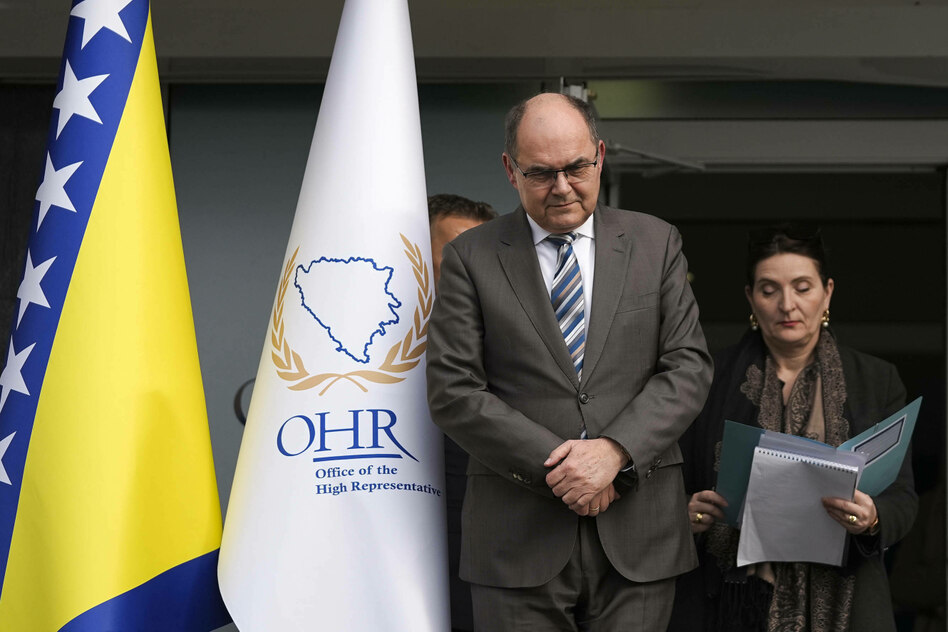
A few months ago, some still believed in a positive turnaround in Bosnia and Herzegovina in the elections in October 2026. The electoral system should be changed and secured with new technologies. The vote falsification that has so far been widespread, especially in the Serbian-dominated Republika Srpska region of the country, should be put to a stop.
But the hopes associated with it have already evaporated. In the middle of the year, the High Representative of the international community, the German Christian Schmidt, who had implemented the changes to the counting process in March, had to resign.
The High Representative has extensive powers to oversee the existence of the entire state of Bosnia and Herzegovina, consisting of the Muslim-Croat Federation of Bosnia-Herzegovina and the Serbian Republika Srpska. The USA, Europe and more than 50 other countries - including Canada, Turkey, Japan and Australia - have so far supported this construct, which was created in the Dayton Treaty in 1995, which was intended to end the Yugoslav wars. But the realignment of the USA creates uncertainty.
The U-turn in US foreign policy follows massive lobbying by Bosnian Serb politician Milorad Dodik, president of Republika Srpska until 2025 and a close ally of Russia. Dodik mobilized an estimated 9 to 28 million euros for lobbying firms and influential political actors in Washington, such as former national security advisor Michael Flynn, according to reports from the US Department of Justice, for whom around 100,000 US dollars per month are said to have been raised at times.
The greatest success of this lobbying campaign was the lifting of all US sanctions against Dodik, his family and 47 associated companies and individuals in October 2025. The US State Department justified this by saying that Dodik had resigned from his government positions and that his SNSD party had withdrawn unconstitutional secession laws. In reality, it was about tangible business interests: parallel to the lifting of the sanctions, the US government brokered the construction of the natural gas pipeline [Link to https://bisi.org.uk/reports/the-southern-interconnection-gas-pipeline-a-politically-critical-node-for-bosnia-and-herzegovina]Southern Interconnection Gas Pipeline (SIC), which is supposed to carry liquefied natural gas from the USA from the Croatian Adriatic coast to Bosnia. Michael Flynn's brother Joseph Flynn and Donald Trump's lawyer Jesse Binnall run this company.
In return, Dodik gave up his years-long opposition to the pipeline project. For this, Christian Schmidt came under massive pressure from the USA: He blocked the pipeline deal and took legal action against Dodik. Now he had to go. The USA then tried to impose the Italian diplomat Antonio Zanardi Landi, who was considered close to Trump, as his successor.
In line with Republika Srpska, the USA is openly turning against current international policy and is thereby changing the security structure in southeastern Europe. In addition, the country's integration into the EU is being blocked by Croatian and Serbian nationalists. Is the USA now against the EU in the Balkans?
In September 2026, the Constitutional Court of Bosnia and Herzegovina stopped parts of the RS lobby funds by declaring the financing of foreign missions for unconstitutional purposes such as promoting secession illegal. But Dodik doesn't mind such judgments. Who adheres to laws and judgments, not their role model in Washington, not even their “good friend” in Moscow, so why should they?
The Sarajevo-based US social scientist Kurt Bassuener sees “a bit” black. “When two high-ranking US officials speak at the Munich Security Conference about the danger of a civilizational collapse, a civilizational extinction in Europe, then you have a real problem,” he says. “We are in a global war of values.” It culminates in Bosnia and Herzegovina, as it did in 1914, 1941 and 1992.
The European population and the European Union are not clear about this, he says. "The forces that have been defending the territorial integrity of the state and peace in the country have been European, the Eufor, since the end of 2004. But Europe is currently showing no clarity, no self-confidence and no will."
Europe is divided, with German politics in the forefront, says Balkan expert and journalist Marion Kraske. She accuses Berlin of focusing too much on the ore deposits in Serbia instead of promoting democratization. She agrees with Bassuener that Germany and Europe have a responsibility not to let Bosnia drift into chaos.
The elections will show whether this can be achieved. Preventing electoral fraud would be particularly important in the Serbian entity, as Dodik was initially voted out in the last elections before miraculous gains in votes were reported for him a short time later.
The nationalist HDZ is firmly in the saddle in the Croatian areas, but Bosniaks and minorities could support the opposing candidate from Sarajevo for the presidency. Only in areas with a Bosniak and non-nationalist majority population, such as Sarajevo and Tuzla, is there democratic competition between left-wing and conservative parties.
Read the full story at the source
Source: taz