
World · taz · · 2h
Drones, AI and Military: The Future of Technology
Deutsch (original) · Auto-translated to English
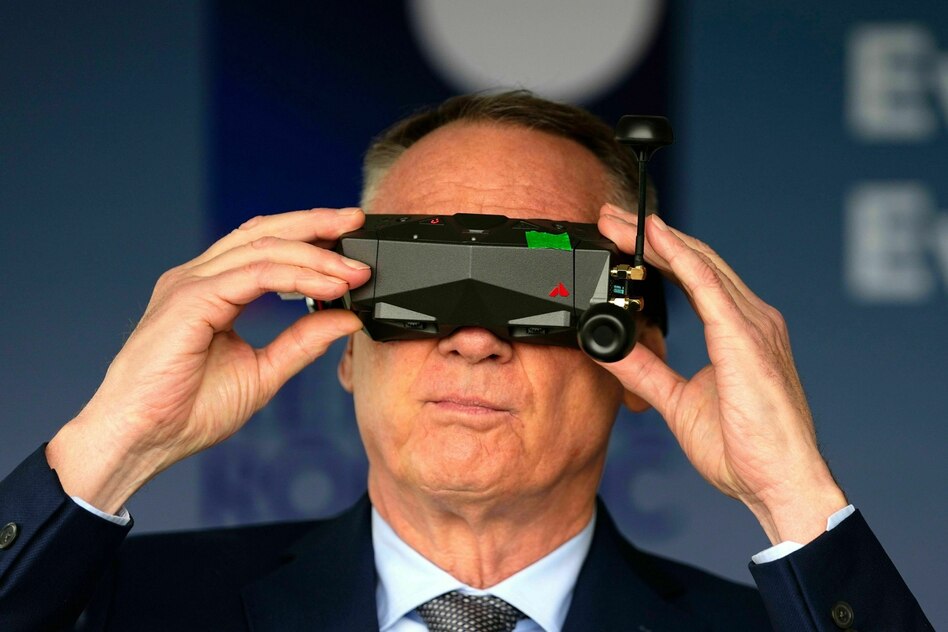
"Dronophobia" is the name of the increasingly common disorder with PTSD-like symptoms that people in frontline areas of Ukraine are developing. Those affected react in panic to the sounds of lawnmowers and insects because they remind them of killer drones.
I think about this as I watch the ducks quack happily. Drones are colloquially called “birds” in Ukraine. The outlines of the Alps can be seen in the background.
Here, at the Tutzing Evangelical Academy on Lake Starnberg, the “Technologies of War” conference of the Federal Agency for Civic Education will take place in mid-September. A calming backdrop for the frightening and fascinating developments of the present day that are on the agenda.
Yelizaveta Landenberger is a freelance author. She regularly reports from Eastern Europe and Ukraine for the taz.
Lyuba Shipovich, one of the speakers, once led a comfortable life as an IT entrepreneur in New York City. In Ukraine, she and her NGO “Dignitas” are now pushing forward technological solutions for the military to ward off the Russian attack. She wants to “replace boots with bots,” she says.
Their vision: “Hopefully robots can replace all humans on the battlefield.” When ammunition became scarce in 2023 due to a lack of Western deliveries, “Dignitas” campaigned for FPV drones as an alternative to artillery and helped with procurement and training of pilots. Now the focus is on ground drones.
Shipovich explains that her NGO intervenes wherever state structures are too slow. But the Russian side is not sleeping; it is also constantly developing new technologies. This drone race has created a dead zone in eastern Ukraine. "We no longer use the term front line. It is a kill zone, sometimes 50 to 60 kilometers wide," said Shipovich.
Ukrainian military personnel also traveled to Tutzing. A commander describes that 90 to 95 percent of all losses on the Russian side can be attributed to unmanned systems. He believes that a quarter of his brigade's infantry soldiers could soon be replaced by machines.
“We use cheap things to destroy very expensive things,” is how journalist Nataliya Gumenyuk sums up the economic factor of the drone revolution, about which she recently wrote a book. Like Shipovich, she underlines the grassroots nature of the Ukrainian defensive struggle. It is not arms giants at work, not “the state”, but society. Automation is playing an increasingly important role - sophisticated software forms a symbiosis with the drones.
In clear contrast to the Ukrainian positions are the contributions of the two German keynote speakers at the conference, which focus primarily on Silicon Valley. Political scientist Elke Schwarz from Queen Mary University in London denounces the apocalyptic rhetoric of the tech bros, their “techno-eschatological tropes” and the increased use of AI for military purposes. And of course there are very worrying developments.
But Schwarz leaves out the great war in Europe and the drone revolution currently taking place there, as does Constanze Kurz from the Chaos Computer Club, who talks about “Power, Data and War”. Right at the beginning of her lecture, she made it clear that she would not be talking about Ukraine - much to the astonishment of those present.
Bogna Konior, a media scientist from Poland who teaches at NYU in Shanghai and spends a lot of time in Ukraine, says: Even if it is shocking how little awareness of the war there is among many people in the tech sector, the strategy of making them feel guilty about their ignorance will not work. Putting Ukraine on the cognitive map is more likely to be achieved “through the back door”.
That's why Konior really wants to think of Ukraine as a place that's not just about war - but about the future of technology.
Read the full story at the source
Source: taz