
Politics · taz · · 3h
U16 election in Berlin: “I have to be able to live in the world for a long time”
Deutsch (original) · Auto-translated to English
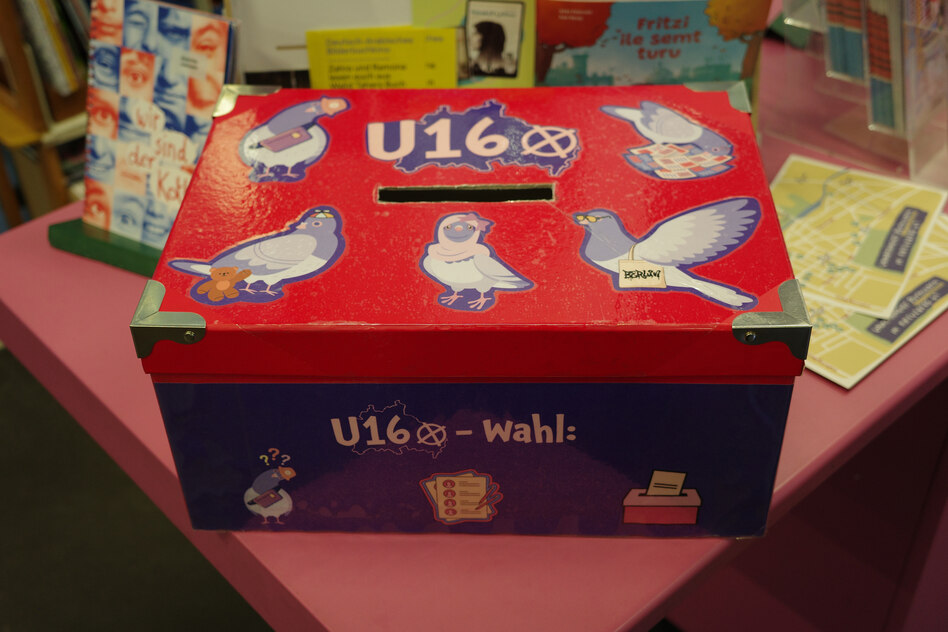
Charly, 10 years old, calmly has the ballot paper explained to him. He nods briefly, disappears into the voting booth and comes out again shortly afterwards. The cross is set. Folded twice, he puts the piece of paper into a ballot box decorated with pigeons, which an employee holds out to him.
Charly says he voted for the Greens because he is for climate protection: “I have to be able to live in the world for a long time.” He was dismayed by the election results in Saxony-Anhalt; the AfD's policies there mean the end of climate protection. He is worried that something like this could also happen in Berlin.
Charly is not yet eligible to vote in the election for the Berlin House of Representatives. That's why he's taking part in the U16 election here at the Wilhelm Liebknecht / Namık Kemal Center Library at Kottbusser Tor in Kreuzberg. The library is one of 222 polling stations for voting, where children and young people can express their opinions until Friday. The results are due to be published next Monday.
Children's and youth elections have been taking place throughout Germany for 30 years around local, state, federal and European elections. A polling station can be set up anywhere children like to hang out.
For example, more than 23,000 children and young people voted in Berlin for the 2025 federal election. At that time, the Left was ahead of the SPD (19 percent) and the Greens (17 percent) with 28 percent. Because the voting age for the House of Representatives election has been lowered to 16, this year young people aged 6 to 15 can vote in advance and also demonstrate their artistic skills in a ballot box competition.
10-year-old Hiranur and her friend Esila, 11, also came to the Kreuzberg library today. But the two have already voted – at their school. They said they chose the left. They know from the “Logo” children’s news, from school and from their parents and siblings that the left wants “good rules,” as they say: “The left wants lower prices and foreigners are allowed to stay.”
The two look very serious as they talk about the fact that there are parties that want to send foreigners away: “That affects us too.” If they were mayors, they would advocate for everyone to be able to vote regardless of their nationality, for school toilets to be cleaner and for prices to fall.
Not everyone who comes here knows about the elections beforehand. “What is that?” asks a little boy. Would he also like to vote? He shrugs his shoulders – why not? The librarian and his mother explain the ballot paper to him, and shortly afterwards he is sitting alone in the voting booth.
Next up is a seventh grader. She gets tutoring here. But she wants to go vote quickly before her physics homework. Because she doesn't know the parties exactly, she chose the Greens, she says: "They have a stand near me and are always very nice." But it wasn't easy, admits the 12-year-old: "The choice was complicated, but felt very important." Issues such as deportations, environmental pollution, the term “foreigner” and high prices would concern them.
Not many children come in the evening, election day is coming to an end. About 20 children voted here today, some decided quickly, others curious, some a bit overwhelmed - but proud to be able to express their opinion. Charly jokes that he also wants to ensure more democracy at home - and have a say in his family's music selection in the future.
Read the full story at the source →
Source: taz