
Politics taz
Diary from Azerbaijan: The fight is on the heads
The government in Baku bans wearing the hijab in schools. She justifies it with secularity, but she wants to prevent social strength. more...
Deutsch (original) ·Auto-translated to English
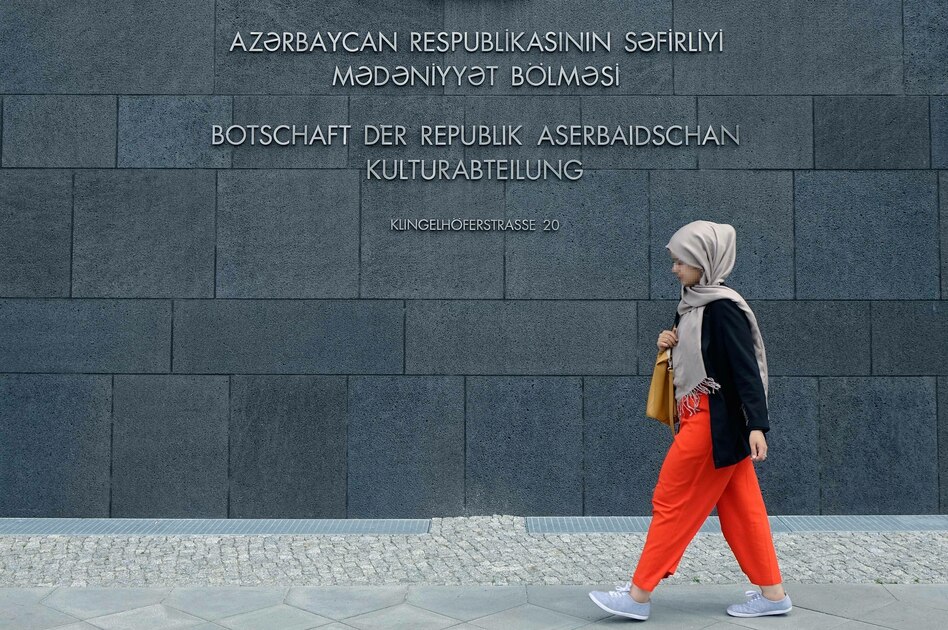
I n Azerbaijan, it is now enough to wear a headscarf to be excluded from school. In some places, girls wearing hijabs are no longer allowed to attend classes, and protesting parents are being targeted by the police. However, what the government portrays as protecting secular education raises a more fundamental question: How much social autonomy is allowed in a state whose leadership wants to control as much as possible?
The trigger is a government decision from September 21st. A few days after the start of the new school year, the cabinet tightened the regulations for school uniforms. Clothing that impairs the uniform appearance of the school uniform or contradicts the secular character of the education system is prohibited.
From October 12th, affected students and parents published videos on social networks. Several school administrators had told them that girls wearing Islamic headscarves were no longer allowed to attend classes. When parents and students protested, the authorities responded with criminal proceedings for allegedly organizing mass unrest. According to the Interior Ministry, 37 people were arrested. Other parents were summoned for police questioning, and three months of house arrest were imposed on several of those affected.
Donations to the taz panter foundation provide financial support for independent and critical journalists. The taz panter foundation promotes young talent, international exchange and moral courage.
It is not the first time that the headscarf has become a political conflict in Azerbaijan. Dress codes led to protests as early as 2010. In May 2011, police broke up a demonstration in front of the Ministry of Education.
This time too, the regulations are not limited to schoolgirls. New clothing rules for teachers also effectively amount to a ban on headscarves. According to official information, around 96 percent of Azerbaijan's population are Muslims. Nobody knows how many girls and teachers actually wear a hijab: there are no official figures.
The criticism goes that those in power in Baku are demonstrating their intolerance towards individual freedoms - even if these are only expressed through clothing.
The dispute has now also reached Turkey. Demonstrations against the government of President Ilham Aliyev took place in front of the Azerbaijani embassy in Ankara. Oktay Saral, advisor to Turkish President Recep Tayyip Erdoğan, sharply criticized the exclusion of students wearing headscarves. “What conscience, what sense of justice allows a girl to be denied access to school just because she covers her hair out of religious conviction?” he asked on X.
The Azerbaijani ruling party New Azerbaijan (YAP) reacted angrily. She described the criticism of Saral and some politicians from the Turkish ruling party AKP as “populist and irresponsible” and accused them of exploiting religious issues for political pressure.
But the real fault line does not run between Baku and Ankara, nor between YAP and AKP. It runs between the state's claim to power and social self-determination.
According to the Azerbaijani historian Altay Göyüşov, there is a much more fundamental problem behind the headscarf dispute: the fear of Azerbaijan's authoritarian leadership of any political force that is beyond its control. After the government eliminated the secular opposition and large parts of independent civil society, it now fears that political Islam could fill this gap.
From this perspective, the headscarf ban is less about religion than about political power - and the question of whether the government even tolerates social freedoms outside of its control.
Aytan Farhadova is an Azerbaijani journalist. After leaving her homeland, she lived in exile in Georgia for several years. But she couldn't stay there either: she recently had to flee again and leave Georgia. She now lives in another country of exile. Among other things, she writes for the online platform OC Media and took part in an Eastern Europe workshop organized by the taz panter foundation.
Donations to the taz panter foundation provide financial support to independent and critical journalists on site and in exile as part of the “Diary of War and Peace” project.