
Politics taz
Can Jewish and Arab parties join hands for a coalition? History shows: it works. It is questionable whether this still applies today. more...
Deutsch (original) ·Auto-translated to English
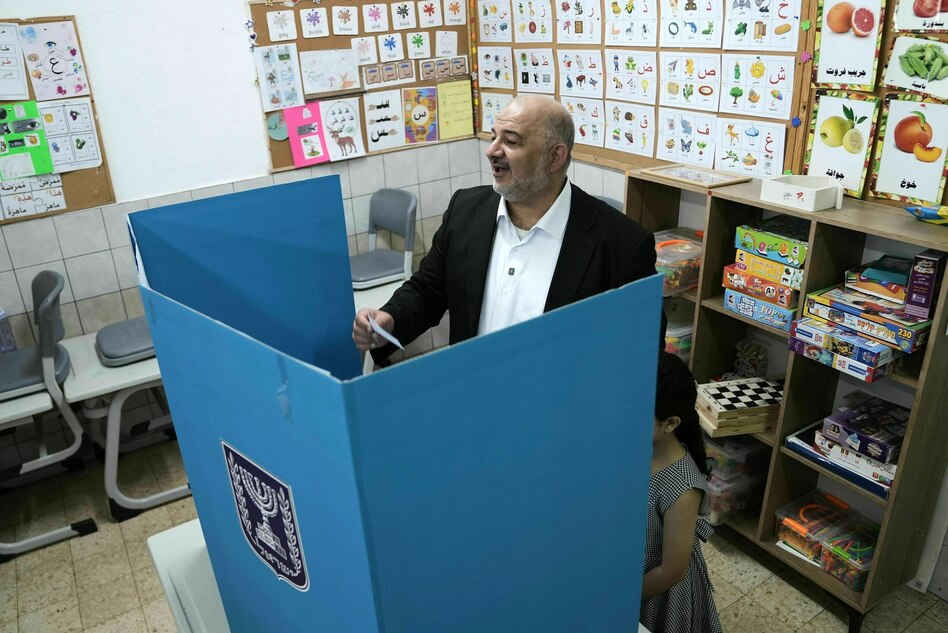
T he Arab parties have achieved a historic victory in Israel. After 90 percent of the votes were counted, the Islamic party Ra'am received 7 seats, the United List, which includes left-wing and conservative Palestinian Israelis, 12. More than ever before. While many Palestinian Israelis had previously boycotted the elections, the gigantic voter turnout now shows that for Palestinian Israelis, too, there is a difference between the Zionist governments of the past and the right-wing extremist government under Benjamin Netanyahu. In their eyes, it stands for ethnic cleansing, devastation in the Gaza Strip and discrimination against Palestinian Israelis.
Palestinian-Israeli voters wanted to prevent another four Netanyahu years. It is appropriate to be happy about it. However, this historic success must now be translated into concrete policy. Not only Ra'am, but also the United List - in a departure from its previous stance - has signaled its willingness to cooperate with the Zionist anti-Netanyahu bloc. They care about securing money for the underfinanced Arab communities, taking action against crime in Arab areas, and opposing state discrimination.
Now the ball is in the Jewish parties’ court. In advance, the parties in the anti-Netanyahu camp have ruled out a coalition with Arab parties. And yes, for many Jewish Israelis, working with Palestinian Israelis is a red flag. And yet a look into the not too distant past shows: It can work.
In 2021, among others, the right-wing Naftali Bennett and Mansour Abbas from the Islamic party Ra'am shook hands as part of an anti-Netanyahu coalition and ruled the country together, with some successes - until the coalition broke up again after a year, supposedly due to a dispute over unleavened bread. In fact, it was about the occupation and the construction of settlements. The broad coalition had tried for a long time to ignore this breaking point, because it was clear to everyone that agreement on this issue was impossible.
This time too, it will not be possible to square the circle - and all sides will probably try to ignore the question of all questions in this region that stretches from the Jordan to the Mediterranean. Because a real policy change is not in sight. It remains to be hoped that the Zionist parties understand that they now have to approach the Arab parties. Because the alternative – another government under Netanyahu – would be a disaster. One would think that the head of government has proven this over the past four years, during which he has ruined the country and isolated it internationally.
New elections would also probably play into Netanyahu's hands. This could be the last chance for the opposition and a liberal, democratic Israel. May she use them. Or, to say it in Arabic: Inshallah.