
Germany taz
Overthrow of autocrats: The principle of hope
Learn from Barack Obama and Ernst Bloch: Leftists should simply acknowledge successes. And “hope” is much more than an empty formula for pathos. more...
Deutsch (original) ·Auto-translated to English
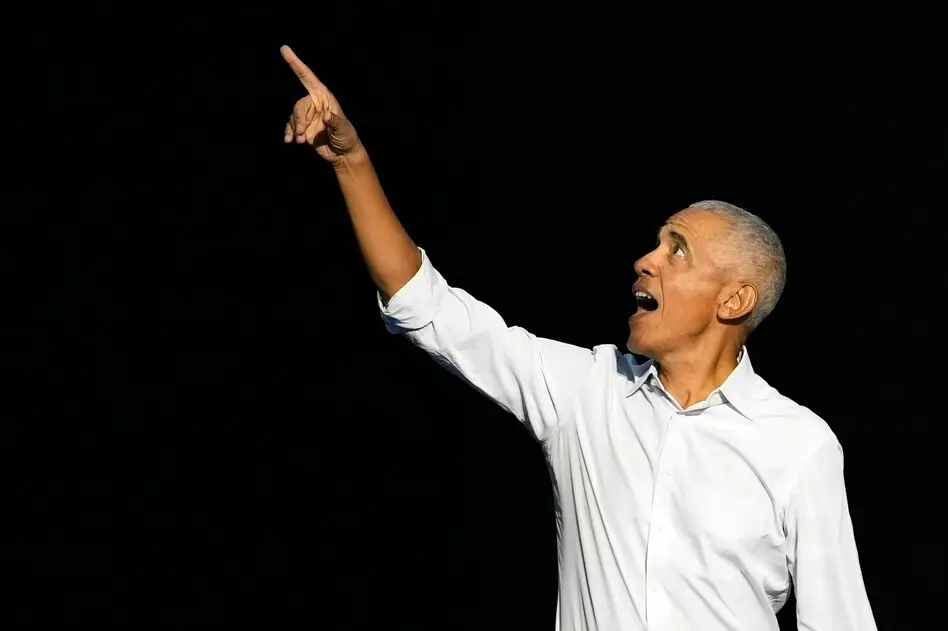
A goosebump moment: December 2007, South Carolina, Barack Obama is in the primary campaign and shouts in a hoarse, cracking voice at a rally: "A voice can change a room. And if a voice can change a room, it can change a city. And if it can change a city, it can change a state. And if it can change a state, it can change a nation. And if it can change a nation, it can change the world." It was not only in South Carolina that he repeatedly spoke of the fact that “the politics of hope must not capitulate to the politics of cynicism.”
Today we know that Obama's rhetoric was exaggerated and his pathos for change was not fulfilled. As is well known, after his term in office, a cynic took over the White House, who still sits there with a break. Right-wing authoritarian movements have taken over governments around the world or have a significant number of seats in parliaments.
But Obama showed a side that was particularly important for the left, even if, by US standards, he was more of a left-wing liberal as president with excellent connections in the financial industry: no matter how bad the political situation is (the USA had to deal with the catastrophic consequences of the Iraq war at the time), no matter how divided a society and no matter how threatened democracy is: it is always worth working towards better times and not giving up hope.
The world witnessed a series of elections this year, the results of which are worth remembering. In Serbia, a student alliance drove out an autocrat who had complete control of the state. In neighboring Hungary, his long-time autocrat colleague also suffered a clear defeat - and both transfers of power were bloodless. In the USA, the clear victory of the Democrats has a force that is likely to have greater structural and regional consequences than Obama's first victory in 2008. The “Dems” have a whopping majority in both chambers, and as far as the states are concerned, even formerly Republican southern states are now governed by the Democrats.
No one is talking anymore about Trump overriding the ban on running for a third term in a coup or something similar. And Project 2025, with which the MAGA movement wanted to carry out the authoritarian restructuring of the state, has suffered a significant setback. The elections show: US democracy is vital.
The taz is an independent, left-wing and opinionated daily newspaper. We have been arguing in our comments, essays and debate texts since the taz was founded in 1979. We often cannot and do not want to agree on an opinion. That's why you'll find some completely opposing positions here - all part of the very broad left-wing spectrum of opinions.
In Brazil, a right-wing populist oligarch's son failed to become president. The 81-year-old incumbent Lula may not represent the future of the Brazilian left, but his narrow election victory means that a Flávio Bolsonaro cannot worsen the living conditions of millions of women, poor and queer people.
Last, but not least: In Israel, a prime minister for whom the life of a Palestinian has no value has lost his majority in parliament. Yes, challenger and ex-general Gadi Eisenkot is not a leftist and of course not a pacifist. But he relies on the rule of law - and has prevented Netanyahu from ruling any further.
But instead of simply being happy about this amazing chain of election results and pausing (both can provide strength), the left-wing and democratic public routinely resorted to emphasizing their knowledge.
Example USA: Left and liberal commentators immediately knew exactly what pitfalls lay in wait for the Democrats and that there would now be a “power struggle” between left and center Democrats. Some of them are the same analysts and political observers who painted the dystopian picture of the end of US democracy just a year ago.
“Hope” is originally a religious term that then found its way into the left-wing canon. The German labor movement was suppressed and at times persecuted in the Empire, but it continued despite great resistance and much hardship because it was motivated by the hope that one day it would be able to break the chains of its oppressors.
Without the hope for a better future, students in Serbia would not have started networking and organizing a few years ago. What started out small and local grew larger until there was a broad social coalition that won a national election.
A leap into the relatively comfortable German conditions: Without the hope that their political agenda could one day actually be taken politically seriously, the activists of the Berlin association “Mietenvolksentscheid” would not have started standing alone in drafty pedestrian zones with their leaflets years ago.
Today, their socialization agenda is part of the program of a possible new state government. You can reject the plans, but you should recognize that a real grassroots movement emerged at that time that recognized a social conflict.
In his book “The Hope Principle”, the philosopher Ernst Bloch divided between the “cold flow” and the “heat flow”. The former are the sober economic analyzes of the present. The heat flow, that which is “possible”, on the other hand, encompasses people’s hopes, longings and dreams. According to Bloch, anyone who wants to understand society must take both streams into account.
It can be added: Anyone who wants to change society also has to absorb the heat flow. The Serbian students, the grassroots Democratic activists in seemingly hopeless diaspora areas, the Lula supporters in Brazil understood this.
One vote can change a state. And leftists should pick up the momentum of hope.