
Politics · taz · · 2h
Rising arms spending: Union fears “gold rush mood”
Deutsch (original) · Auto-translated to English
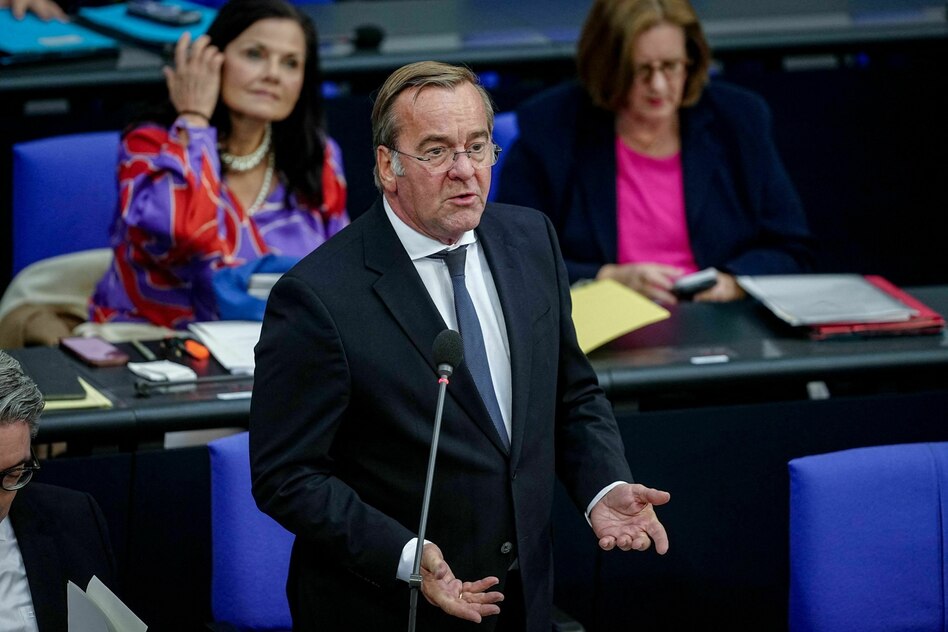
The historically high defense spending in Germany is also fueling doubts in the Union about the sensible use of this money. When Defense Minister Boris Pistorius (SPD) was questioned in the Bundestag, the chairman of the defense working group in the Union parliamentary group, Thomas Erndl (CSU), expressed concern that the federal government was purchasing military equipment at “overpriced prices”. “If we allocate so much money through the budget, then perhaps a kind of gold-rush atmosphere will arise in the defense industry,” said Erndl, addressing Pistorius.
In the coming weeks, the Bundestag will discuss the defense budget for 2027. The draft envisages spending of around 140 billion euros for the coming year. Of this, almost 110 billion euros will come from the core budget, plus 25 billion euros from the special debt pot for the Bundeswehr created in 2022. This means that defense spending of around 108 billion euros from the current year is expected to increase by another 30 percent.
“What means do we use to ensure that we don’t buy at excessive prices and ultimately don’t spend the money efficiently?” Erndl wanted to know from Pistorius in this context. In his answer, the Defense Minister admitted that he was confronted with price increases in defense spending - but he left it open how he planned to deal with this.
Pistorius himself spoke of a gold rush atmosphere last year. “You know that there are various reasons for these price increases,” he said in the Bundestag. “One is the one that is inherent in the nature of capitalism.” There is an increased global demand for defense equipment, which is affecting prices, said the minister. Another reason is that the expansion of production capacities is “not yet running at full speed”.
So does it only take more weapons production worldwide to drive down prices? The Defense Minister did not expand on this idea. Instead, he said that there were constant controls in his company to prevent manufacturers from driving up prices due to delays in the supply chain. We also work closely with Parliament and the Defense Committee to enable such control.
In the past, however, the budget holders in the Bundestag had repeatedly complained that the price increases in procurement projects were hardly comprehensible. A prominent recent example of this was tank containers, which are also needed to set up the new Bundeswehr brigade in Lithuania: the purchase price here had apparently doubled in price from 142,000 euros to 291,000 euros per unit for no reason. According to the Bundeswehr, around 1,000 of these containers were used - until the budget committee put on the brakes because of the cost explosion.
But things don't always work out that way: According to recent research by the ARD magazine "Kontraste", the Bundeswehr bought 35 fire engines in the past for use at airports. Despite the high number of units ordered, the purchase price per vehicle was around 800,000 euros higher than for similar vehicles from the same manufacturer for civil airports. The left-wing politician Ulrich Thoden wanted to know from Pistorius how the price increases came about in this case - the defense minister promised to provide the answer later.
Read the full story at the source
Source: taz