
Politics · taz · · 1d
Dispute over the Hanover-Hamburg railway line: Black-red Lower Saxony Connection is putting the brakes on new railway construction
Deutsch (original) · Auto-translated to English
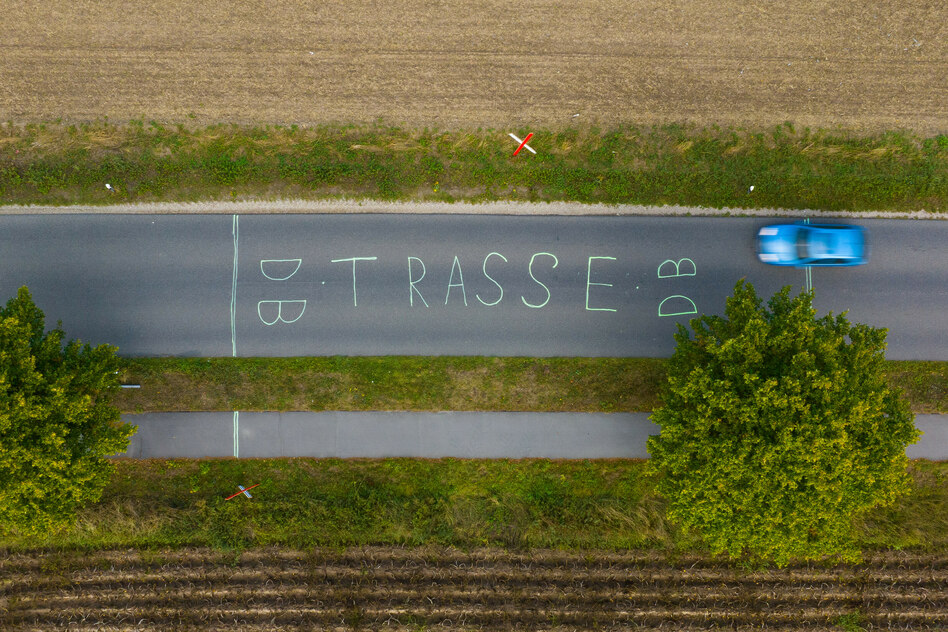
Last week it almost, but only almost, looked as if there could be a breakthrough in the endless and deadlocked dispute over the overloaded railway line between Hanover and Hamburg.
Last Wednesday it was suddenly said that the transport politicians from the SPD and CDU in the federal government had agreed on a draft that was clearly in favor of a new route through the Lüneburg Heath, but also envisaged improvements to the existing route. The Bundestag should have voted on it on Thursday of this week.
But at the beginning of this week the item disappeared from the agenda again. It was officially said that there was still a need for internal coordination. Unofficially it is said that the Lower Saxony MPs from the CDU and SPD have pulled the emergency brake.
This means that the vote has been postponed at least once until after the runoff elections in various affected communities. The runoff elections for district administrators and mayors will take place on September 27th, following the Lower Saxony local elections on September 13th. The Bundestag could not deal with the issue again until October 2nd at the earliest.
This age-old conflict is now heating up again. It is interesting to see where the fronts run: once across the red-green state government and twice across the SPD and the CDU. In the two parties that run the federal government, the state and federal politicians disagree.
On the one hand, there are the supporters of the new route, which will partly run along the A7 and the B3 via Bergen and Soltau. These are the Greens in the state and federal government, the mayors of Hamburg, Lüneburg and Hanover, Deutsche Bahn, various business associations, passenger associations such as Pro Bahn, the alternative transport club VCD, Fridays for Future and other transport transition fans and climate protectors as well as specialist politicians from almost all parties at the federal level.
On the other side are various citizens' initiatives, nature conservation associations, the Prime Minister of the State of Lower Saxony, Olaf Lies (SPD), his Transport Minister Grant Hendrik Tonne (SPD), the CDU state chairman and parliamentary group leader Sebastian Lechner as well as the Vice Chancellor and Finance Minister Lars Klingbeil (SPD), through whose constituency the new route passes. As well as almost all other constituency representatives, mayors and district administrators in the affected area, regardless of party affiliation.
They insist on the eleven-year-old compromise proposal Alpha-E, which was drawn up after a long participation process - in which Lies played a key role as minister. This provides for an expansion of the existing route.
Proponents praise it primarily as a cheaper, faster, more pragmatic option compared to a new line. In their opinion, this is primarily glossed over by the railways. In the end, it would only be available in 20 to 30 years due to the lawsuits that would undoubtedly be directed against it.
Proponents of the new line, on the other hand, argue that the expansion also requires planning approval procedures in many places, which pose a risk of lawsuits - especially in densely populated areas. In addition, building a new route is significantly faster and easier than renovating and expanding it during ongoing operations.
They also accuse the Alpha-E proponents of working with outdated traffic forecasts and ignoring the fact that existing expansion does not create enough additional capacity.
In view of the impending decision to set the course for the new line, the opponents had turned up the rhetoric once again: The SPD has been saying for a long time that there is no need for Stuttgart 21 for the north. The railway doesn't even control the bread-and-butter business and now they're trying to serve haute cuisine at the same time, said Sebastian Schumacher, spokesman for Lower Saxony's transport minister.
But these may also be retreat battles. Transport Minister Tonne said elsewhere that he wanted to achieve significant improvements in noise protection and for commuters. Ultimately, however, the decision lies with the federal government. This is the formula that was already agreed upon in the coalition agreement to defuse the conflict with the Greens.
Read the full story at the source
Source: taz