
Politics · taz · · 3h
Steelworks in southern Italy: The last blast furnace goes out in Taranto
Deutsch (original) · Auto-translated to English
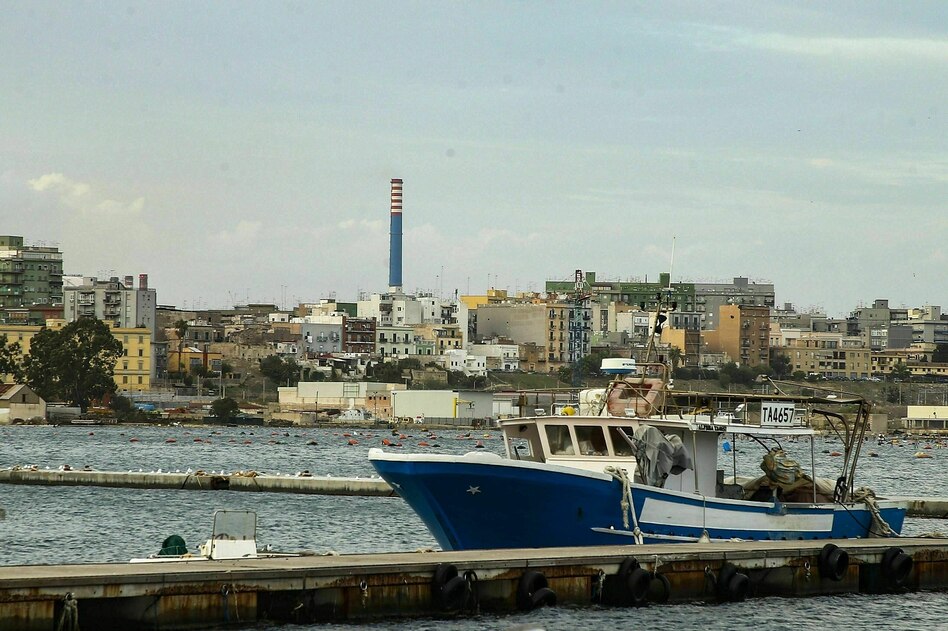
“The people of Taranto finally know what it means to cry for joy,” says the parents’ association from the southern Italian city on the Gulf of Taranto in the Ionian Sea. The unions' view is completely different: they believe that "a social bomb" has just been detonated in Taranto - with possibly catastrophic consequences for the economy and employment.
Both sides are commenting on the same decision by a court in far-away Milan, which ordered on Friday to shut down the last blast furnace in the Taranto steelworks by October 28th at the latest. That would be the end of the entire hot area of Italy's largest steelworks; only the cold rolling mill could continue to operate.
The parents' initiative from Taranto fought for this decision for five years, driven by the catastrophic consequences for the health of citizens that the dirt thrower in the middle of the city had for decades.
For the court, things are clear. “Citizens’ right to health” always takes precedence over the “right to conduct business.” Continuation of operations cannot be permitted as long as 2,600 tons of asbestos are still used in the Taranto blast furnaces and as long as particulate matter emissions are too high.
In the city, the lower court judges who issued the first decommissioning decision calculated last July that the number of lung cancer deaths was 33 percent above the national average, and the number of mesothelioma cases (caused by asbestos) even reached 400 percent of the national average.
This could actually finally bring down the curtain on Italy's largest steelworks. It was put into operation in 1964 as part of the state-owned company Italsider. Then in 1995 privatization came – and the Riva family took advantage. They continued to operate the shop under the name Ilva as part of the Riva Group, earned good money, but didn't think a single thing about investing in environmental protection, while the steelworks contaminated the whole of Taranto and, in particular, the Tamburi district right behind the factory.
However, that ended in 2012. The owners were brought to court for serious environmental crimes and the company was confiscated. It was therefore under state provisional administration. It could have been the turning point towards steel production that balances the preservation of jobs with the protection of the environment and the health of citizens.
However, the takeover of “Ex Ilva” – that’s what everyone in Italy calls the company – by ArcelorMittal in 2018 did not bring about the hoped-for turnaround. Critics today accuse the French-Indian operators of wanting to use the plant in Taranto primarily for short-term profits without making the billions in investments necessary in the long term. Nothing changed when the Italian state came back in three years later with 38 percent of the capital.
Afterwards, further public billions flowed. Since 2012, the state has injected a total of around 2.5 billion euros in direct aid into the former Ilva. In addition, there are further indirect expenses worth billions, for example from the short-time work fund. In total, around 4.5 to 5 billion euros from public budgets have flowed into the steelworks over the last 14 years.
In 2024, Arcelor Mittal pulled out again - and since then the government under Giorgia Meloni, who had to take over the plant, has been desperately looking for a new private buyer. The Indian company Jindal is an interested party, but it only wants the cold area without the blast furnaces. This means that half of the 8,000 jobs in Taranto would be lost and the feared “social bomb” would be detonated.
The ex-Ilva would only have a real future if it switched to green steel, although the costs are estimated at 2.5 to 3 billion euros. The government wants to meet with the unions on Tuesday. Then it will become clear whether she can finally present a promising plan.
Read the full story at the source →
Source: taz